More than 90 young co-operators and entrepreneurs from 19 countries gathered last month for the three-day event, Youth Voices, Cooperative Choices: Advancing a Democratic Economy in Enlarged Europe (YVCC26).
Organised by Cooperatives Europe and Hungarian student co-op DiákÉSZ, with the support of the Young European Cooperators Network (YECN), in the framework of #coops4dev, the event included panels, workshops, peer-to-peer sessions, policy labs and co-operation-in-action experiences at the MagNet Közösségi Ház in Budapest.
Focusing on four themes – Empowerment & Engagement; Employment & Skills; Entrepreneurship; and Cooperation in Action – YVCC26 brought together key stakeholders to discuss and take action around the power of youth co-operative entrepreneurship in addressing current and future challenges, intergenerational turnover in co-operatives, and the perception of the co-operative business model in Europe.
“This event is very dear to Cooperatives Europe,” said YVCC26 organiser Annalisa Vallone, an international development co-ordinator at Cooperatives Europe. “It’s the first time ever that we’ve been gathering youth, specifically from across the continent, to try to address some of the current and the future challenges, and how today’s youth can better leverage the co-operative business model to be part of this change.”
YVCC26 organiser and Cooperatives Europe operations officer, Paola Rosatelli, added: “We have been trying to shed light on the challenges that young co-operators, but also just young entrepreneurs overall, have to face in starting a business and making sure that it runs, that it’s sustainable, that it grows as well, so that it brings in income and can provide employment opportunities for young people and others.”
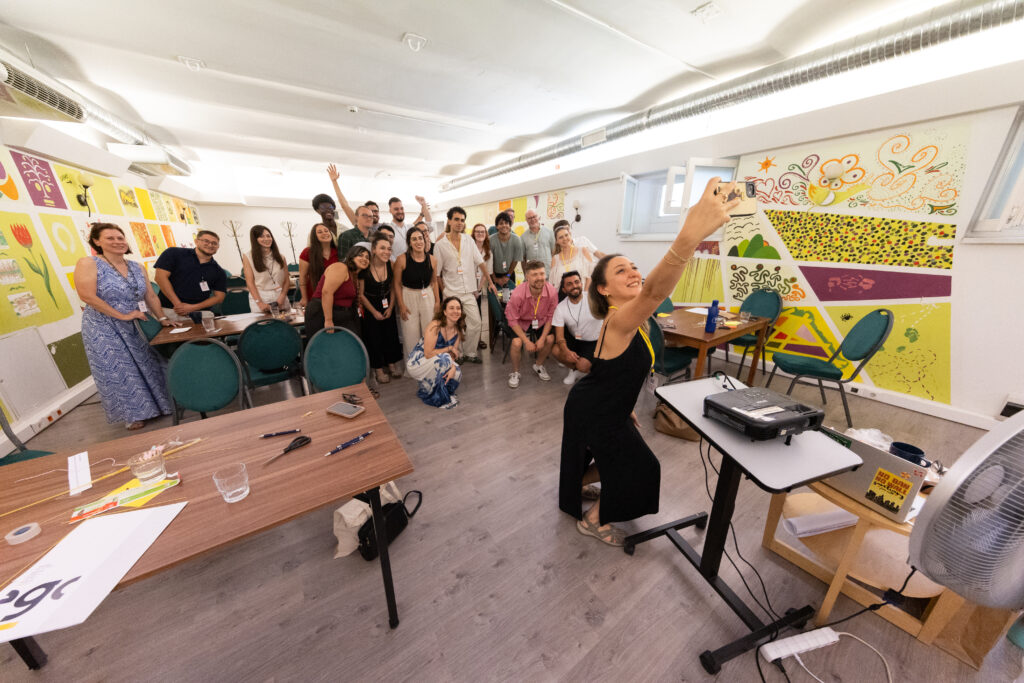
Rosatelli stressed that YVCC26 was an event for established members of the co-op movement, but also for those who are new to it. “What we want to do is offer a forum for young people – and also try to reach out a bit beyond the movement – so through young co-operators, but also through young people involved in society that would like to learn a bit more about the co-operative model, and how it can be a tool for economic sustainability, for their everyday life, and for youth entrepreneurship overall.”
Opening the event was the president of Cooperatives Europe, Giuseppe Guerini, who described it as “a truly significant sign of vitality that gives us hope for a bright future for the European co-operative movement”.
A panel followed on youth and the co-operative model in an enlarged Europe, which included speakers from Central and Eastern Europe, to explore the perception of the co-operative business model within national historical contexts, as well as today’s employment potential of co-operatives for the socio-economic inclusion of young people.
Related: Butterflies: Co-op lessons from the street children of New Delhi
Stressing the importance of narrative in this conversation, Helena Gorroño, president of the Young European Cooperators Network, said: “We need to hold on to our story; we just need to rethink how to tell it.”
Participants put theory into practice through a series of interactive sessions, including: Core Values and Pathways for Youth; Navigating Challenges Together; Cooperative Leadership and Communication; and Future Formats of Youth Engagement in Coops.
Day two built on these discussions, while turning to the question of what conditions are needed to make youth co-operative entrepreneurship a reality. A panel debate on how to create an enabling environment for youth co-operative entrepreneurship discussed the policy, legal, and institutional frameworks required to enable youth co-operative entrepreneurship, and featured speakers from the ILO, OECD, EESC and Copa-Cogeca.
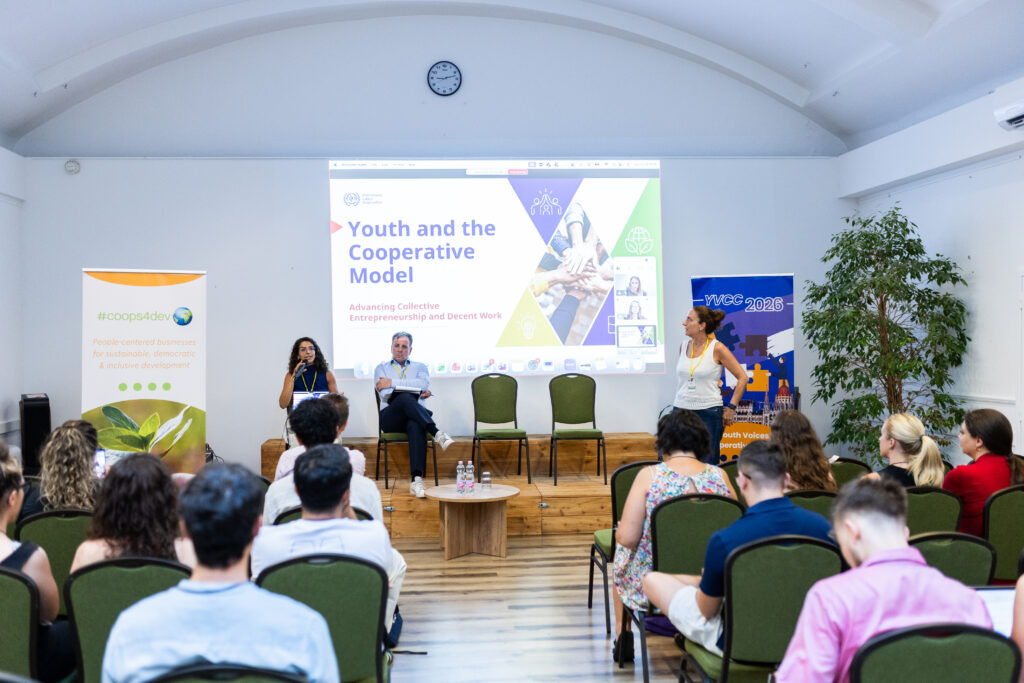
More interactive sessions followed, including an ILO-led business game, a co-creation and resource strategy session, a visit to Hungarian pensioners’ co-operative Szomszédok Nyugdíjas Szövetkezet, an early celebration of the International Day of Cooperatives, and a game of co-operative board game Let’s Coop.
Later sessions included cooperative tech4good, and a demonstration of the Plus+ Welcome Journey, a creative tool used to onboard new members to co-operatives.
Attendees were also given opportunities to socialise and see Budapest, including during a dinner and cruise on the Danube River, while reflecting and sharing experiences.
“Events like this are essential because what we do here is matchmaking, at the end of the day,” said Rosatelli.
“We try to offer the opportunity to young co-operators and young entrepreneurs to exchange with more experienced representatives of these international organisations, and not only get training but also offer training themselves, because they do develop their skills and they want to share them.”
The final day of YVCC26 culminated in the presentation of a set of draft Budapest Recommendations, a living document developed over the course of the three days which outlines seven policy recommendations. Currently being finalised through collective inputs by the attendees, the document will result in key demands to policymakers in areas including: an enabling legal framework for youth-led co-ops, a hub for financial support, co-operative education, and enhanced cross-border inter-co-operation.
The Budapest Recommendations will hopefully, said Vallone, “be a new starting point for the next actions of Cooperatives Europe on youth entrepreneurship”.
Related: How do we build youth participation in co-operatives?
As with the development of the Budapest recommendations, YVCC26 was developed by and with young people and young co-operators.
“We really wanted to involve [participants] in the design of the agenda and in the inputs to the overall activities,” said Vallone.
“So we conducted consultations with members of the YECN to make sure that all their voices were heard from the beginning. And contrary to the usual formats, we really made it an action-related model, where each session was a capacity building and training opportunity for all of them, but also a moment for peer-to-peer exchange on their current challenges, and maybe trying to find solutions through their personal experiences, going across sectors and across countries”.
YVCC26’s collaborative approach was carried through to a final live feedback session, where participants submitted their thoughts and experiences from the three days via online survey tool Mentimeter, and the event’s organisers read and responded to the feedback in real time. As well as generating an interactive and open discussion in the room, this feedback will now be used to inform and improve on the next event of its kind.
Reflecting on the event, Rosatelli and Vallone highlighted a number of key themes that had emerged over the three days.
“Partnerships and general support, especially in terms of financial tools and instruments that are accessible and that last over time, [has come out as a key takeaway],’” said Rosatelli.
“They are essential to provide the initial push for young entrepreneurs, to harness that potential, create startups, become owners of their own businesses, and do it differently.”
The dual nature of the co-operative business model, and how young co-operators relate to this, was also highlighted throughout the sessions, added Vallone.
“What emerged was that our young co-operators are really, really faithful to the model, they’re really attached to the co-operative values that underpin their businesses, and they are ready to fight and push for policy change, to ensure that social purposes and environmental purposes come before the profits.”