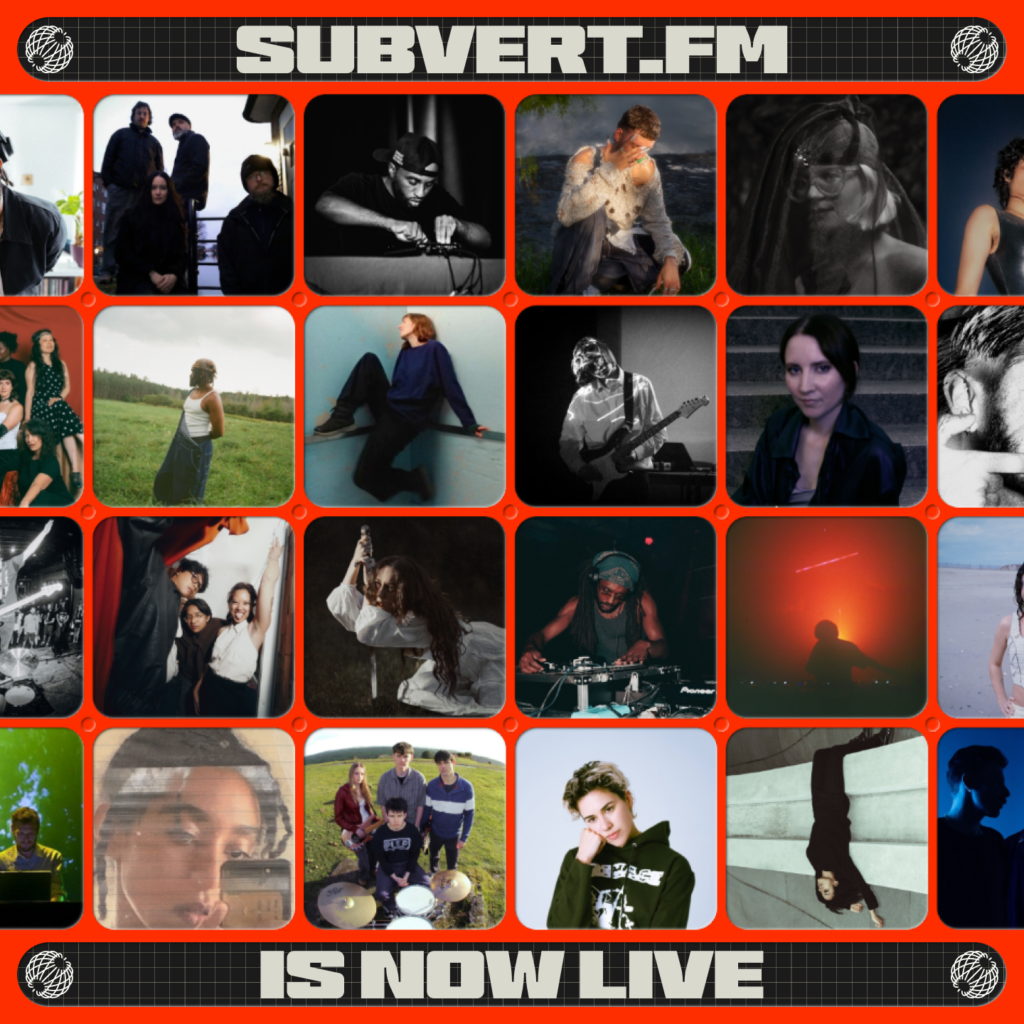
A co-operatively owned music platform has launched this year – with over 20,000 members and a vision to become a ‘Mondragon of music’.
Subvert is an online music marketplace which enables artists and labels to sell digital music directly to listeners, who buy and own what they pay for. The platform is owned by those who use it, including artists, labels and supporters.
The origin of the co-op can be traced back to 2020, explains Subvert co-founder Austin Robey: “I think Covid was really a turning point for the streaming economy. There was a lot of discourse around frustration with Spotify and streaming economics.”
Streaming giants such as Spotify have regularly come under criticism for poor compensation and exploitation of its artists, while alternatives such as Bandcamp appeared as a counterbalance to this, with Bandcamp even being named the ‘anti-Spotify’.
But in 2022, when Bandcamp was sold to Epic Games with no input from its users, “it left a lot of people really anxious,” said Robey. “It made sense why people were upset, or felt betrayed. You know, like, ‘I thought this was supposed to be the good guy – what happened?’”
A year later Bandcamp was sold again to Songtradr, which laid off 16% of staff including all union members, which, says Robey, “was the moment where it just seemed like the only real answer is that the community needs to own it and control it together.”
Robey began working on an idea for a new music platform in 2017, and was introduced to the co-operative movement via the book Ours to Hack and to Own by Trebor Scholz and Nathan Schneider.
“Reading about this idea of how [co-ops] could be applied online was something that made me fully dive in, because [it] just made so much sense to me.”
Before Subvert came Ampled, Robey and his co-founders’ first attempt at a co-operatively owned music platform. The co-op ran between 2020 and 2023 until it closed down facing financial challenges.
Learning from the Ampled experience, the following year Robey gave a talk to the Platform Cooperativism Consortium on the lessons of platform co-op failure, which shared a post-mortem for Ampled and reminded listeners that co-operative failure is not evidence for weakness of the model (especially given that 90% of Silicon Valley startups fail) but part of the broader eco-system’s development.
Related: Report on the platform co-op conference in Istanbul
Taking these lessons into account, Subvert is off to a strong start, gaining its first 10,000 members between 2024 and 2025, then doubling this figure by 2026 before it was even open to the public. Since officially launching in May this year, Subvert now has over 22,000 members.
To tackle the issue of finance, Subvert is also experimenting with a two-entity structure which aims to harness the strengths of both co-op and corporate models, and mitigate the weaknesses of each. Under this structure, the member-owned co-operative handles operations, governance, and ownership, while a corporation, owned by the co-op, holds the platform’s intellectual property and can take on outside investment without giving investors any control over how the platform is run.
This model is explained further in Subvert’s business strategy, Plan for the Artist-owned Internet, a 134-page zine that members purchase when they join.
By making the business plan an artfully designed physical product which people can hold and own, members are encouraged to participate deeper in the activities of the co-op.
“The zine has served multiple purposes for us … it’s been an organising tool, a fundraising tool, but it’s also an educational tool, which is really helpful… I’ve seen folks in our members forum answer questions that other members have by referring to the zine.”
Robey stresses that the engagement Subvert is currently generating comes down to “how ownership becomes an invitation to participate, and creates a meaningful experience.”
“Very little of the traction that we’ve had is because of some legal manoeuvring … I really think that it’s all about community building and storytelling, and bringing people along to participate in something that’s bigger than all of us on an individual basis.”
Part of Subvert’s promising start could also be down to good timing, says Robey, adding, “it could have been, in the past, that the message was just too early for people to receive … We’re in a weird world right now, and some of these ideas that seemed kind of far-fetched five years ago feel like common sense to people now.”
This idea of challenging cynicism has been key for Subvert, says Robey.
“If I were to think about challenge, [our business plan has] a competition section, but it doesn’t mention any other companies. What we say that we’re competing against is cynicism – this scepticism that’s been hardened into this feeling that nothing better is even possible, so why try? I think that cynicism keeps us from actually building the world we want to see.”
Limited or negative perceptions of co-ops in general has also been a challenge at times, Robey adds. “People make assumptions that because something is a co-op, that it gets bogged down in bureaucracy, it’s slow, and it builds poor quality products, at least online.
“We haven’t experienced that. We’ve been moving quickly with the full involvement of the community, building with, not for, and I think we’ve built a great product too.
“There are also folks that are just not really familiar with co-operatives as even a concept at all, and we’re also living in an age of scams, too, so if you combine those two things… we’ve encountered people that say this sounds too good to be true.”
Despite this, responses to Subvert’s vision have on the whole been positive, says Robey, who thinks it is unsurprising that this is happening with an artist-led initiative.
Related: Sister Midnight – Lewisham arts co-op looks to create a grassroots music venue
“I believe that a lot of cultural change historically has started with art, with people that are bold enough to express more imaginative possibilities for our culture and our society. It makes perfect sense for me why something like Subvert would start with art.”
Subvert is publishing its documentation openly so that co-operators in any sector can use it, too.
“We’re treating our organisational design as being kind of open source, and sharing that.
“We want people to copy us, and we would love to see a future, and even help be a part of enabling this, where there is a co-operative community-owned alternative for every kind of service and every industry.”
While Subvert is currently building a co-operative-owned music marketplace, it sees this as the start of a long-term project, with the larger ambition of becoming a “Mondragón of Music: a constellation of community-owned ventures that form the foundation of an alternative economy owned by artists and workers”.
“It’s my opinion that [Mondragón] is one of the most interesting organisations that’s ever existed, and it should be a precedent that people know about, particularly, because I think many people struggle to believe that something like what we’re hoping to accomplish is even possible.”
“That is why we’ve made that comparison to Mondragón – to show that, yes it is possible, it exists in other forms like large scale co-operatives, and we can do it too.
“Our ultimate goal is to make people believe that this is not only possible, but it’s obvious, and it’s inevitable.”
Subvert’s first AGM will take place in September. You can find more info about Subvert and joining as an artist, label or supporter at subvert.fm