Organisations representing workers in informal employment – waste pickers, home‑based workers, street vendors and domestic workers, including migrant workers – have issued a statement responding to concerns that, in the context of ongoing UN and ILO reorganisation processes, the role, visibility and institutional support for SSE may be significantly reduced.
This is particularly concerning given the important role these approaches have played in improving working conditions and livelihoods, especially for workers in precarious and informal employment.
“[We] recognise the social and solidarity economy (SSE) as a critical pathway to improving livelihoods, strengthening collective organisation and advancing decent work,” reads the statement. “This is particularly important given that women are disproportionately represented in informal employment due to structural inequalities, including limited access to opportunities and persistent gender and cultural biases.”
The statement is issued by HomeNet International (HNI), International Alliance of Waste Pickers (IAWP), International Domestic Workers Federation (IDWF), StreetNet International (SNI) and Women in Informal Employment: Globalizing and Organizing (Wiego). These organisations have witnessed first-hand how SSE entities – including co-operatives, associations, mutuals and self-help groups – have served as practical economic infrastructures through which workers organise production, stabilise incomes, access resources and strengthen their collective voice.
HomeNet International is a global network of membership-based workers’ organisations that represent more than 1.3 million home-based workers, from 71 organisations across 30 countries. Its HomeNet Thailand network, for example, has supported home-based workers to form production groups and savings co-operatives. These collectives coordinate orders for garments and handicrafts, enabling members to meet bulk buyer requirements that individuals could not manage alone. Shared purchasing of raw materials lowers costs, while savings groups provide small loans that stabilise incomes between contracts. Members also collectively negotiate with local authorities for workspace recognition and access to utilities.
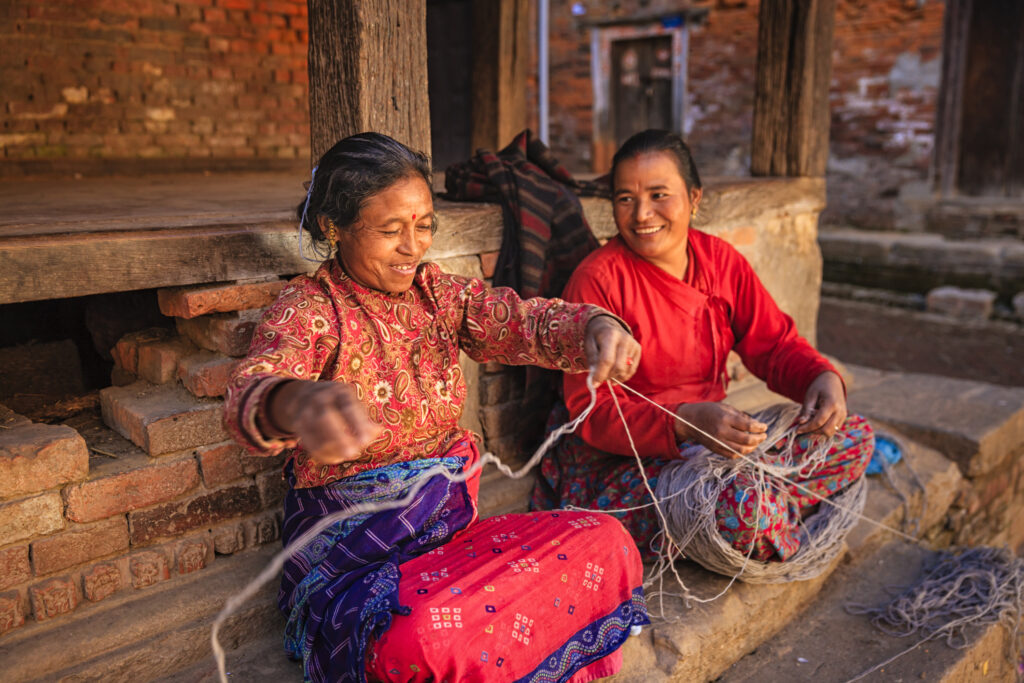
It’s a similar story in Nepal, where organisations linked to HomeNet South Asia have supported home-based artisans to form co-operatives producing textiles and handicrafts. These groups pool production, standardise quality and collectively market goods to urban and export buyers.
Another of the statement’s authors, Wiego, is a global network focused on empowering the working poor, especially women, in the informal economy to secure their livelihoods. It supported India’s Self-Employed Women’s Association (Sewa), and in South Africa, supported waste pickers as they organised into co-operatives linked to municipalities.
Groups such as the South African Waste Pickers Association coordinate the collection, sorting and sale of recyclables. This enables members to negotiate access to landfill sites and contracts with recycling companies. Meanwhile, having shared infrastructure, including storage space, transport and safety equipment, improves efficiency and income stability. And through organised representation, waste pickers also get the chance to engage in policy dialogue over recycling systems.
“We are concerned that growing global uncertainty is placing renewed strain on international co-operation at a time when multilateral efforts, including those of the International Labour Organization (ILO), remain essential to advancing decent work for workers in informal employment,” the statement adds.
Related: Europeans overwhelmingly support the social economy, poll finds
It highlights how workers in informal employment face severe decent-work deficits, from unstable incomes and limited access to social protection, to restricted bargaining power and persistent barriers to formal recognition as workers. It also notes that this isn’t just a reality for a small slice of the world’s workforce: in fact, 58% of the global workforce – representing two billion people – are informally employed, across a range of sectors such as waste picking, home-based work, street vending, domestic work and care services.
“For these workers, the social and solidarity economy represents far more than an aspirational concept,” says the statement. “For millions of workers in informal employment, SSE entities function as concrete pathways to improve incomes and livelihoods. Through co-operatives, associations, mutuals, self-help groups and other collective economic organisations, workers are able to coordinate production, reduce costs, stabilise incomes, access solidarity-based finance and build forms of social protection where formal systems remain inaccessible.
“These collective and solidarity-based economic arrangements are particularly crucial for women in informal employment, who face structural inequalities, lower incomes, greater exposure to violence, harassment and discrimination, and a disproportionate burden of unpaid care work.”
The statement’s authors believe their work demonstrates how collective economic organisation “strengthens workers’ bargaining power with municipalities, governments, employers and enterprises … By pooling resources, knowledge and infrastructure, SSE entities help workers overcome structural barriers that would be impossible to address individually,” they write. “They do this while reinforcing democratic governance and collective representation.”
The organisations welcomed the recognition of co-operatives and the wider social and solidarity economy in international labour standards, such as ILO Recommendation 193 on the Promotion of Cooperatives, 2002, and Recommendation 204 concerning the Transition from the Informal to the Formal Economy, 2015, adding that the “2022 ILO Resolution concerning Decent Work and the Social and Solidarity Economy and the 2023 and 2024 UN resolutions to promote the social and solidarity economy also reflect important milestones in recognising the role of collective economic models in advancing decent work. In addition, the 2025 ILO policy guidelines for the promotion of decent work in recycling highlight the importance of SSE approaches in supporting workers in informal employment, particularly waste pickers.”
Leadership within the UN system, particularly through the ILO’s work with its constituents and partners, has played a critical role in furthering research, policy dialogue and international co-operation to advance the social and solidarity economy, it adds.
“We greatly appreciate the partnership that has developed over the years between our global networks and the ILO, including its Cooperative and Social and Solidarity Economy Unit, and we look forward to continuing and deepening this collaboration in the years ahead.”
But it also believes that in the context of tightening fiscal space, competing priorities and heightened global uncertainty, “it is essential that the progress made in recognising and supporting the social and solidarity economy not only continues but expands”.
There is a danger, the authors believe, that the SSE is regarded as a marginal or secondary approach to economic development rather than an established, effective economic practice through which workers in informal employment collectively build more stable livelihoods.
“We urge governments, workers’ organisations, international institutions and development partners to boost the policy and institutional frameworks that will enable the SSE to deploy its full potential.”