Britain used to be powered by coal – and a lot of the world still is. When Margaret Thatcher closed the coal mines in the 1980s, the UK started moving towards gas instead, much of which was – and continues to be – imported. In 2008 Ed Miliband introduced the Climate Change Act, which put action to reduce carbon emissions into law for the first time.
As time passed, the UK co-op movement generally accepted the need to reduce carbon emissions, both for environmental reasons and for cost-cutting. The big retail co-ops, including the Co-op Group, Central and Midcounties, began refurbishment programmes, installing LED light bulbs and doors on previously open fridges, which saved millions for these societies.
In the energy sector, a host of community energy co-ops sprang up and installed solar panels on community buildings, funded by the Feed-in Tariff (a policy mechanism designed to encourage renewable energy adoption by paying producers for the electricity they generated). This initiative offered a guaranteed price for the power generated, giving co-ops the security to fund the capital for the panels.
These installations were paid for by community share offers, a model which brought democratic ownership to the energy co-ops. It also allowed the recipients of the solar panels to have cheap electricity, often at less than 10p k/wh for a period of 25 years. But the previous Conservative government phased out the Feed-in Tariff, leading to the near-collapse of the community energy sector, with many community energy co-ops going dormant.
The renewable portion of the UK’s energy mix was growing, but with this intermittent source reliant on ageing infrastructure designed for coal (which could be turned on or off) and the country increasingly dependent on imported gas, the system was vulnerable to external shock.
The first of these shocks came in 2020 with Covid-19. When the world opened up after lockdown, demand for energy skyrocketed as countries looked to ramp up their energy use, with their economies fighting to return to normal. The reliance on imported gas in the UK was found to be a weakness that dramatically increased energy prices for co-ops, with the price of electricity linked to the price of gas.
Energy prices across Europe rose further with a second major shock in 2022, when Russia invaded Ukraine. Countries like Germany relied on imported gas and oil for their energy needs; with Russian energy exports off limits, the imported price of gas hurt countries in central and eastern Europe. The UK does not directly receive much Russian gas, but when the normal supply was no longer an option, prices on the wholesale market hit a record high.
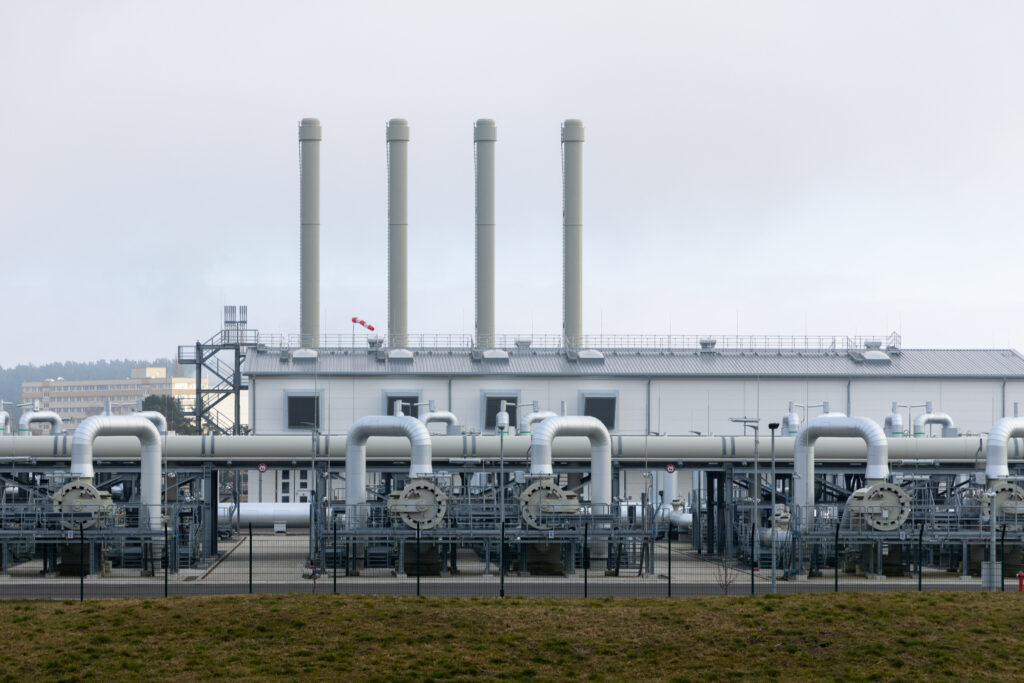
In the UK, the Conservative government intervened in the domestic market to reduce bills where possible, while businesses received equivalent support for six months, at a cost of over £100bn. Over the last four years, wholesale prices have fallen from the peak of 2022 and stabilised. Now, the Labour government has announced measures to reduce the cost of bills to domestic consumers in April 2026, by moving some of the obligation costs that energy providers put into bills into general taxation.
But this plan was abruptly derailed by the US and Israel’s military action against Iran, which controls approximately 20% of the global oil and gas supply through the Strait of Hormuz. In 2019 the average customer was paying £1,179 a year for their energy; the 2026 estimate is £1,972.
It’s also worth noting that around 25-30% of global nitrogen fertiliser exports pass through the strait, affecting agri businesses (including co-ops) and food prices across supply chains, raising questions about food security.
Related: World’s co-ops respond to food crisis as Middle East war cuts off shipping
The co-op sector believes it has the solution to our energy issues through co-op values and principles, including self-sufficiency. Co-ops of all sizes and structures, across sectors, know that being exposed to the volatile price of energy is a weakness that can hurt their societies. Businesses are not subject to the energy price cap and are at an especially vulnerable position, with government support likely to prioritise the domestic market.
On the flip side, there is an opportunity here. In the UK, community energy co-ops have found a purpose again, with many overcoming their identity crisis after the Feed-in Tariff disappeared. Increasing energy costs make locally produced energy that the community can directly access very appealing; the economics of community share offers have changed, and they are now viable once more.
The renewed appetite for renewables is not restricted to the UK. Speaking to Co-op News, Chris Vrettos (senior policy advisor at REScoop.eu, the European federation of energy communities) said that while the suffering and death caused by the Iran war is profound, the crisis does open an important political opportunity. “Fresh from the (energy) scars of Ukraine, even the most conservative politicians in Europe now agree: the faster we decarbonise, the safer, and more prosperous we will be. Every kwh of renewables produced in Europe helps keep runaway climate change in check, while also reducing our dependencies on petro-dictatorships, on both sides of the Atlantic.”
Co-operatives have a role to play here, he says. “When citizens, local authorities, and businesses come together in energy communities (usually co-operatives) to produce and consume their own energy locally, they build true resilience and security. By participating in an energy community, an average household can save up to €1,100 per year – a considerable buffer against the cost of living crisis.”
Energy communities have proven their quick reflexes against energy crises, Vrettos adds. “The first wind co-operatives were formed in Denmark in the 1970s as a reaction to the first oil shocks. Co-op suppliers in Belgium capped their energy prices both as a reaction to the Ukraine shock, and the Iran shock now. In Greece, energy communities are producing solar energy locally, increasingly integrating storage and demand response, to maximise self consumption, and reduce reliance on the market. In Ireland, co-ops are helping local citizens renovate their households through One Stop Shop services.”
He also agrees that an energy system that causes an existential-level collapse every three to four years is not sustainable – for people, for the planet, for our wallets. “While the world seems scary in its instability, we must rally around a collective mission: every heat pump, every solar panel, every electric bike, every new bus, every housing renovation, every energy community lead us one step closer to a safer cleaner, more stable future.”
Recent success stories in the UK include Kent Community Energy and Grimsby Community Energy, which have run successful solar-based community share offers. In Wales, YnNi Teg raised money for an onshore wind turbine. In the retail sector, UK co-ops have continued to decarbonise and reduce their energy bills, investing in solar PV for depots and retail sites. And other co-ops – like People Powered Retrofit and Carbon Co-op – offer energy advice to businesses and householders.
There is generally a growing realisation that relying on imported energy supplies is risky – and in the UK outside of an anti-net zero lobby comprising of Reform and some Conservatives, who are funded by the fossil fuel lobby, there is a growing demand to change the status quo.
Not every country has got the memo (in March, the Trump administration agreed to pay French energy giant TotalEnergies nearly US$1bn to abandon its plans to build wind farms off the East Coast – which will be invested in oil and gas projects in the US) but the current UK government has recognised that our energy predicament has a partial co-op solution.
To sit alongside its goal to double the co-op and mutual sector it has started GB Energy, a renewables-first state energy endeavour the government says will have a co-op element.
A co-op solution to our energy problems is a great opportunity to expand the co-operative movement and improve energy independence.
Shaz Rahman is an energy professional, who has worked within the industry for the last 15 years. He is a director of Community Energy Birmingham as well as a director of Co-op Press.