These are dangerous times for the world. As global politics continues in its precarity – and on the back of the 2025 UN International Year of Co-operatives – we must stand up for all our co-op principles as never before.
Last year, International Cooperative Alliance president Ariel Guarco reported on LinkedIn about a number of international visits: two of which were to Iran and Russia.
In my view, this should be a matter of serious concern for co-operators everywhere, principally because of the close connections that the co-operative apex bodies in both countries have to the undemocratic, repressive governments that operate there.
Guarco reports that he discussed ‘peace’ in both places, but surely there is a difference between peace and appeasement?
Russia is responsible for an aggressive war against the people of Ukraine, daily bombing the citizens of Kiev with Iranian-manufactured drones. Iran itself has repeatedly demonstrated its support for many groups that promote deadly violence across the Middle East. The country now faces massive nationwide unrest after months of protests against the government’s economic and political policies, with security forces carrying out a brutal crackdown that has killed thousands and led to tens of thousands of arrests amid an ongoing communications blackout.
Related: How Coop Ukraine mobilised to support its country through the war
Neither of these states embraces democracy or human rights.
How can the co-operative sectors of either country be seen as separate from these actions? We may have great sympathy for individual members of co-operatives who are powerless to dissent publicly from their state. Not so for the leadership of the co-operative movements in each of these countries who are part of the fabric of their governments.
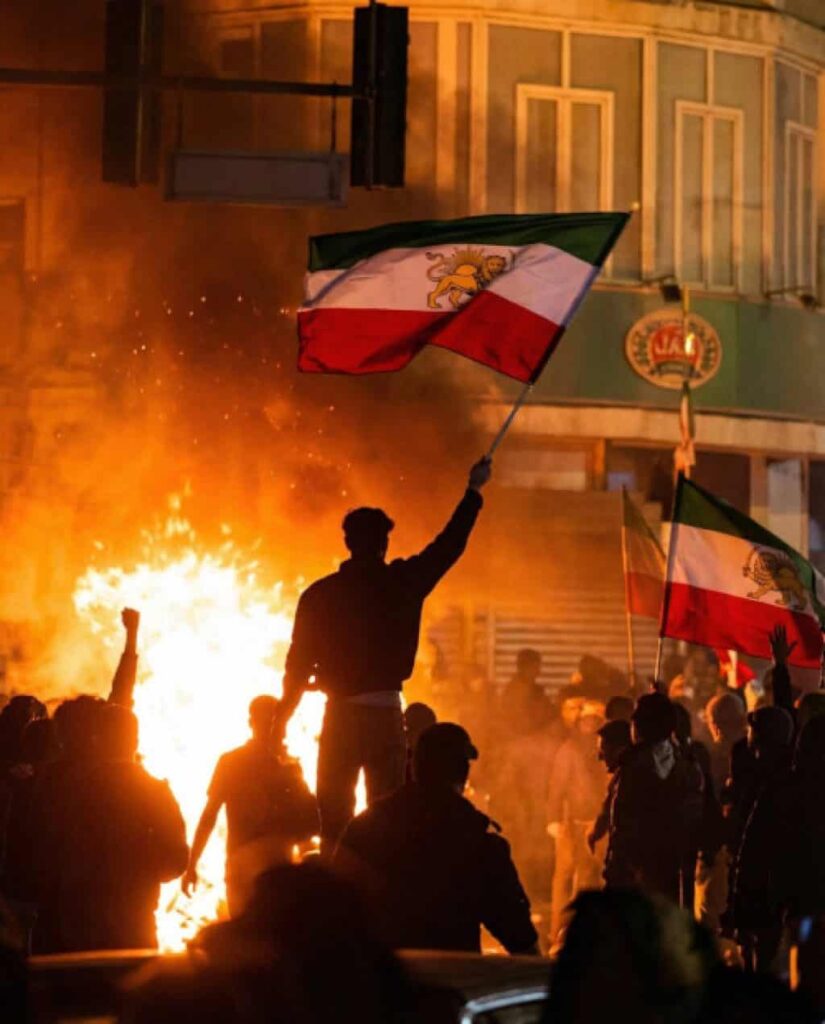
Iran’s co-operative movement is politically and financially subordinated to the regime. Despite being constitutionally enshrined and formally independent, ministers approve national co-op elections, oversee the Iranian Chamber of Co-operatives, and have the power to appoint or dismiss key executives in apex organisations.
In Russia, the long-serving and ‘unanimously’ re-elected chair of Centrosoyuz’s Council, Dmitry Zubov, was awarded the Order of Alexander Nevsky last year by the Kremlin. This is a state decoration, conferred by president Putin, and signals both his political connectivity and approval by the regime.
In these examples, and certain others around the world, the financial relationships between co-operative apex bodies and the state are impossible to untangle. Totalitarian regimes simply do not tolerate autonomous, democratic co-operatives, instead controlling their leadership and direction.
As a result, neither could ever be expected to criticise or oppose their government’s abuses of human rights or international law, mainly because they are accepted, informally at least, as part of those systems of power. The co-operative apex bodies are used internationally to project ’soft power’ on behalf of Russia and Iran.
The fourth co-operative principle literally talks of ‘autonomy and independence.’ This means from the government, too. As guardian of the international principles, the ICA should not simply ignore their abuse when inconvenient. Our movement cannot be taken seriously for its values and principles if we are selective in how they are applied.
We should have a debate about which countries can qualify for full ICA membership, and which ones might need some looser relationship until they can demonstrate an authentic adherence to the principles we hear so much about.
But we should also be prepared to disengage from nations where the connection between apex bodies and the state is so entwined, particularly when that state behaves consistently against the basics of international law.
In the UK, the Co-operative Group has pioneered a values-based approach to its international trade. Its ‘countries of concern’ policy lists nations with which it will not trade, due to human rights abuses or violations of international law. Both Russia and Iran are on the list. This is an example of a co-operative living up to its values and demonstrating that they are more than words.
Related: Co-op Group to stop sourcing from 17 countries including Israel and Iran
In the aftermath of the First World War, the International Co‑operative Alliance chose to keep organisations from the Soviet Union in membership even though it was controversial, ultimately allowing Soviet co‑operatives to remain part of the international movement as a sign of co-operative internationalism rather than excluding them outright.
However, a few decades later, the ICA took a stand against Nazi Germany and fascist Italy, whose co-ops ceased to exist as ICA-recognised entities – effectively ending their membership during the Second World War. The Soviet bloc’s attempt to use state-controlled co-operatives as a means to backdoor influence was similarly rebuffed.
I believe the current ICA leadership should not be sharing conference platforms with individuals from compromised apex bodies in countries, as they literally wage war on their neighbours. We would also hope that the ICA does not accept financial support or gifts in kind from either Iran or Russia that would indicate tacit approval for either sanctioned regime.
There are challenging times ahead. But co-operatives can help build a better world if we stand up for our values.
Peter Hunt was general secretary of the UK’s Co-op Party for 10 years until 2008, and is founder and managing partner of think-tank Mutuo