Four years ago in Seville, near the Alcázar palace complex, where cool stone corridors opened onto orange-scented gardens and tiled courtyards, with fountains murmuring in the heat and swallows cutting the air, I spoke at an International Cooperative Alliance (ICA) event. I was on a panel with the president of Mondragon and a representative of a platform co-operative for delivery from Grenada that already employed some 800 workers, a co-operative I realised, with some surprise, I had never encountered before. As the discussion went on, I felt a bit lost. I don’t speak Spanish, and when the simultaneous translation failed, I couldn’t follow the conversation, even as I sat on stage with all eyes on us. The heat was torrid.
What I didn’t yet grasp that afternoon in Seville – despite the panel, the talk of scale, the language of co-operation – was how quickly the ground beneath platform delivery work in Spain was shifting. In the years just before the pandemic, delivery companies such as Deliveroo, Glovo, and Uber Eats had spread aggressively across cities like Madrid, Barcelona, Valencia, and Granada. Couriers were treated as self-employed contractors, paid roughly €2.50 per delivery, with gross hourly earnings hovering around €5–7 once fuel, vehicle maintenance, insurance, equipment, and social security contributions, borne entirely by the workers, were deducted. There was no paid leave. No protection if a courier on a bicycle or motorcycle was struck by a car while making a delivery. No fixed schedule.
By the time the Covid-19 pandemic arrived, many riders already knew the system was untenable. In Granada, a group of experienced couriers, some already delivering for Burger King alongside KFC and Popeyes, understood the work intimately. They could see its limits. They weren’t looking for more gigs or marginal incentives, but for a way out of persistent insecurity. What began as a practical question about whether a delivery service could function economically, legally, and reliably without reproducing platform exploitation soon turned into an experiment in building something else. That experiment would become Givit, a platform co-op.
Givit is a worker-owned delivery cooperative providing last-mile courier services in Spain. In 2025, it generated €12.11m in revenue from €13.57m in billed sales, with over 900 active worker-members. The co-operative delivers more than 200,000 orders each month. That scale was not assumed from the start; it was built through experimentation under conditions where failure was a real possibility.
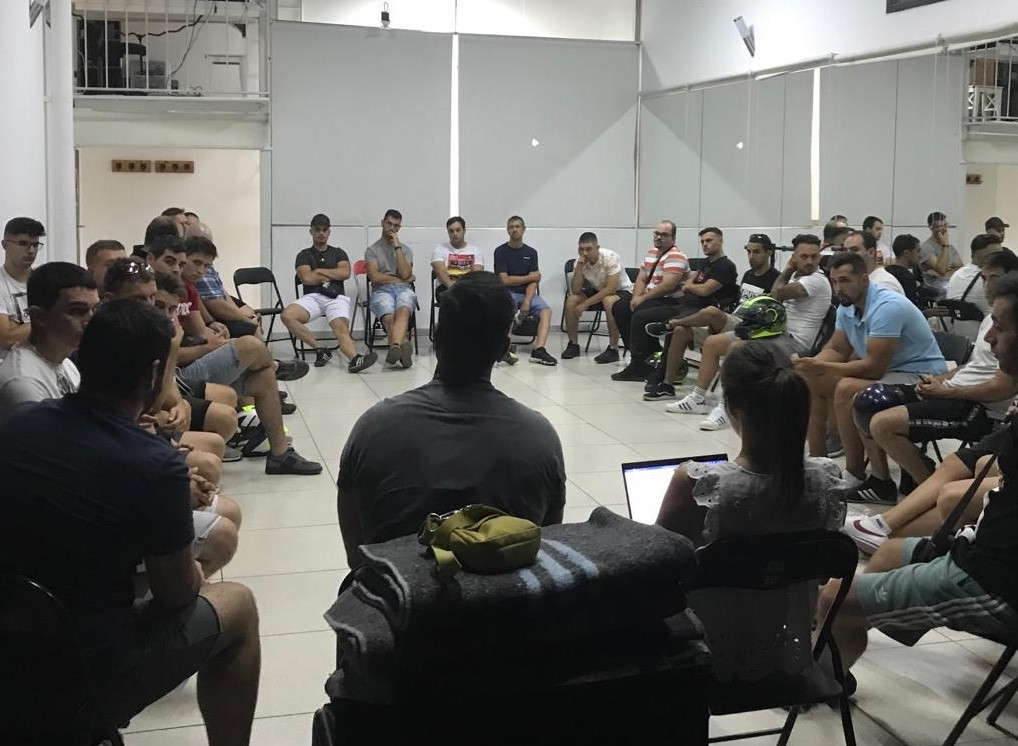
While motorcycle couriers focused on keeping deliveries running day to day, the backbone of the project was developed in parallel by Maica Motos and David Robles Llanes through what later formalised as Gestcoop, itself a worker co-operative, which functioned as an anchor institution for the emerging delivery co-operative. At the time, there was no guarantee that a worker-owned delivery operation alone could absorb the legal, logistical, and financial pressures of operating at scale. Gestcoop provided continuity and expertise in governance, legal structuring, business management, and data analysis as the project took shape. This dual structure mirrors a broader pattern among platform co-operatives, where worker-owned operations are paired with separate worker-owned technology co-operatives.
I later met David Robles Llanes in New York, when he visited the Platform Cooperativism Consortium, PCC. Since that panel in Seville, Givit has become a member of the Consortium, and our conversations have continued over time. David comes across as direct and grounded, someone who speaks plainly about constraints as well as ambitions.
Related: Report from the Platform Cooperativism Consortium conference
One of the earliest risks for Givit was technological. Rather than relying on existing delivery platforms, Gestcoop chose to build Dataloc, a web-based tool designed specifically to organize Givit’s operations and keep data under co-operative control. The decision to build rather than buy white label software was a gamble. The initial version was financed entirely by David Robles Llanes and his partner using their own resources, with no external funding and no certainty it would move beyond a local experiment. Only later did the platform stabilize and evolve into a system now used even by other co-operatives.
The pilot phase in Granada was the decisive test. If the co-operative failed to meet service standards under everyday conditions – missed deliveries, unreliable scheduling, dissatisfied clients – the experiment would end there. Instead, the pilot showed that a worker-owned delivery co-operative could function reliably at scale. On that basis, Givit was formally constituted as a worker co-operative under Spanish law, providing last-mile delivery services to clients such as Burger King, alongside smaller local businesses. As the model proved itself, partnerships expanded to include KFC and Popeyes.
The decision to work with such capitalist fast-food titans drew criticism from some co-operators, who worried about compromising co-operative values. For Givit, however, these partnerships were a pragmatic means of securing volume and stability. But more about that later.
With formalisation came a fundamental shift in how work was organized and paid. Givit moved away from per-delivery rates and adopted an hourly wage model. Using operational data generated by worker members and analysed collectively, productivity increased from roughly 1.7 deliveries per hour to more than 3.2. That productivity was invoiced to clients, while workers were paid by the hour rather than by task. As a result, Givit pays workers roughly 17 percent more than the sector average, with gross hourly wages exceeding €9 per hour. The cooperative also absorbed costs previously borne by individual riders, including social security contributions, paid leave, sick time, vehicles, and safety equipment. The higher pay reflects collective organisation and shared efficiency gains, not longer hours or intensified algorithmic control.
Related: Platform Cooperativism conference in India charts new course for digital equality
Scheduling was rebuilt around short time blocks based on client demand forecasts, allowing the co-operative to balance service reliability with predictable hours and rest periods. Coordination roles were compensated based on group performance rather than individual algorithmic scores. As Fran Saez, now a controller at Givit, explains: “Joining the co-operative has been a real opportunity for me… I started as a rider, and now I’m doing things I never imagined I would learn.”
Today, Givit’s membership is concentrated primarily in southern Spain, with Andalucía as its core, complemented by a substantial presence in Extremadura, the Comunitat Valenciana, and a smaller footprint in the Comunidad de Madrid. Notably, the co-operative remains absent from regions with the strongest and most established regional co-operative identities, such as the Basque Country and Catalonia. This geographic pattern is notable and invites further reflection.
Worker-controlled technology
For Givit, Dataloc is a mobile-first website that organises the co-operative’s daily work. Built by Gestcoop to meet the needs of a worker-owned delivery operation, it captures operational data as couriers work and uses it to plan shifts, assign vehicles, organise routes, and monitor service in real time. Schedules are set in short time blocks based on client demand forecasts, allowing the co-operative to balance efficiency with predictable hours and rest periods. Dataloc is proprietary to Gestcoop, but not exclusive to Givit, and is now used by other co-operatives and organisations as well. It brings member records, contracts, communications, and performance data into a single shared system. Data is used to assess productivity and service quality at the group level rather than to rank individuals, keeping technology under co-operative control while supporting transparency, legal compliance, and reliable operation at scale.
A central challenge for Givit
Givit is organised around a dual governance structure that separates everyday operations from collective decision-making. Operations and governance remain clearly distinct. Day-to-day coordination takes place through regular meetings among zone, area, and team coordinators, supported by shared data and locally adjusted workloads. Broader decisions are made through two annual General Assemblies, an elected governing board made up of current or former riders, and a shared system for recording agreements and decisions, ensuring transparency and member oversight. The co-operative explicitly seeks to include young people, migrants, and groups at risk of exclusion as part of its governance and representation goals.
Related: Implications of the new European Platform Work Directive for co-ops
An Extraordinary Assembly held in March highlights how strategic authority remains with the membership, reinforcing the co-operative’s effort to navigate economic pressure while maintaining legal compliance and collective responsibility in a demanding sector. While democratic governance is central to Givit’s identity, participation varies across decision-making spaces. Attendance at General Assemblies typically reaches between 20 and 25% of members, despite efforts to lower barriers through in-person and online options and by covering travel and accommodation costs.
This reflects the realities of delivery work, which runs around the clock and is often combined with other jobs or family responsibilities. By contrast, engagement in operational decision-making remains robust: daily and weekly coordination meetings at team and area levels are well attended because they relate directly to organising everyday work. Research on co-operatives consistently shows that as co-operatives grow and mature, member participation in formal governance tends to decline.
Givit’s collaboration with Glovo
After Spain’s 2021 “Rider Law” required delivery platforms to treat couriers as employees with full labour rights, Glovo began working with smaller delivery companies that hire couriers directly and manage contracts and social security. Most of these arrangements changed little on the ground. In practice, this shift has often resulted less in genuine worker ownership than in the fragmentation of the sector into small firms, frequently founded by former riders, that compete by lowering prices, rely on self-employed arrangements, and reproduce precarious conditions without meaningful organisational autonomy. As legal scrutiny intensified, including the risk of personal criminal liability for company representatives, Glovo also sought partners capable of combining full labour-law compliance with operational reliability. In this context, collaboration with a genuinely worker-owned platform co-operative such as Givit emerged as a structurally compliant alternative.
Related: As the tech revolution accelerates, Project Liberty calls for mutualised data
The roles are clearly separated. Givit’s collaboration with Glovo takes the form of a service agreement in which Glovo supplies delivery demand, while Givit retains full control over labour organisation, governance, and data. The platform co-operative uses the dominant platform only to receive orders while scheduling, pay, vehicle management, data processing, and labour coordination are handled through its own platform. Givit does not rely on algorithmic labour-management tools, and pay scales and governance remain collectively determined by members. All operational and labour data are stored and governed internally, enabling decisions based on co-operative-owned data rather than external algorithms. This clear split is central to the model.
When co-operatives follow viability
When Givit speaks about prioritising business over co-operative form as an end in itself, it is drawing a precise distinction. Many platform co-operatives struggled because they began by adopting the co-operative form before solving a concrete problem or building a system capable of operating under real market conditions. In those cases, technology and operations tended to follow commitment, rather than lead it.
Givit took a different path. The co-operative model emerged as a response to a specific operational challenge: how to build a delivery service that could work economically, legally, and reliably in a highly competitive sector. Only after that model proved viable was it formalised as a co-operative. Co-operativism, in this sense, was not a slogan or moral starting point, but a demanding organisational discipline grounded in practice. As David Robles Llanes puts it, the co-operative became “not an ideology, but a practical response to labour systems that repeatedly fail to provide stability and dignity.”
From the outset, the guiding question was not how to promote co-operativism, but how to build a delivery operation that actually worked and improved people’s conditions. The co-operative form followed from the effort to solve a problem, rather than preceding it. Looking back, that afternoon in Seville reads differently. What felt like an abstract discussion about scale and co-operation, held near the Alcázar, was already pointing toward something taking shape on the ground. The co-operative from Granada that surprised me on that panel, and the model Givit and Gestcoop have since built, suggest that the question is no longer whether co-operative alternatives to platform logistics are imaginable, but under what conditions they can endure. In regulated markets like Spain, platform co-operative hybrids appear less as temporary compromises than as practical ways of working within structural constraints.