It is getting hotter outside – but the new season is also one of mergers. Across the mainstream corporate sector, we are seeing businesses getting together to achieve economies of scale, greater buying power, increased marketing investment, strengthened balance sheets. Some of the largest food and consumer conglomerates have recently announced plans to consolidate, while others are restructuring.
A similar process is going on among retail co-ops. Southern Co-op is to be taken over by the Co-op Group, while Midcounties, Central Co-op and Chelmsford have come together as OurCoop.
Ireland’s agricultural co-op sector provides a particularly radical example of sector consolidation and restructuring. Food producers are facing a range of challenges, exacerbated by the Iran war – which has further driven up energy, fertiliser and animal feed costs. Pressures on dairy co-ops include global over-supply of milk, downward price pressure from supermarket chains and food processors, plus increased competition between dairy businesses. And then there is the negative impact of climate change.
Significantly, the re-alignments amongst Irish agricultural co-ops are all-island – not limited by the two nations’ boundary. This might be regarded as ironic given that one of the fears of Brexit implementation was that it would damage dairy and other agricultural businesses, because they tend to operate on an all-island basis.
The Windsor Framework and the so-called ‘Irish sea border’ protected the ability of agri-businesses to continue operating on an island of Ireland wide basis. Without this agreement, the viability of some of the Irish agricultural co-ops would have been challenged and potentially might have led to some forced divestments into smaller uneconomic segments.
Instead, we have seen a constant stream of mergers and restructures taking place before and after Brexit. One of the biggest was a restructuring involving two of Northern Ireland’s largest co-ops – Dale Farm and Fane Valley. This was initiated in 2010 and was of a size and scale that needed approval from the Office of Fair Trading.
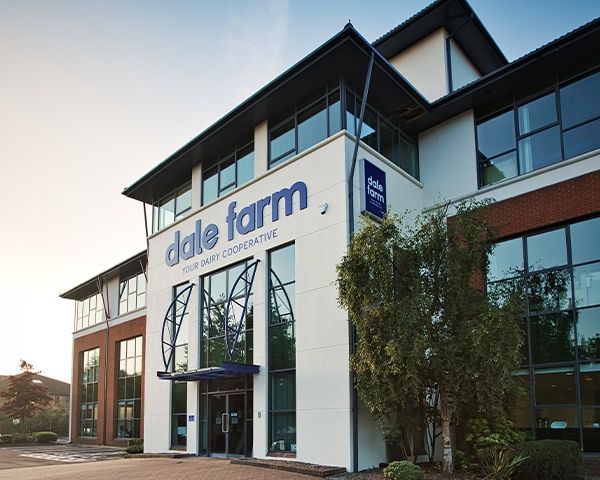
Both these agri-businesses are farmer owned co-ops, though Dale Farm – a subsidiary of United Dairy Farmers – emerged in 1995 from the old Northern Ireland Milk Marketing Board and as such is a unique co-op. Under the deal with Fane Valley, Dale Farm acquired its fresh processed liquid milk operation, which had traded as Armaghdown Creameries. This allowed Dale Farm to increase its presence in the dairy trade, while enabling Fane Valley to strengthen its animal feed and farm supplies operations.
Fane Valley retained a dairy processing business, which in 2015 became a joint venture with another large agricultural co-op, Lakeland Dairies, an all-island business. The following year, Lakeland took full ownership of the operation, which it was already managing on behalf of the two co-ops.
Lakeland Daires was itself the product of a 2018 merger, of Lakeland with another co-op, LacPatrick, to form Ireland’s second largest diary processor with an annual turnover of €1bn. Lakeland traces its history back to 1896 and is today headquartered in Co. Cavan – one of the three counties in the Ulster province within the Republic of Ireland. One of its largest operations is in Artigarvan, Co Tyrone – also in Ulster, but on the other side of the border. LacPatrick had been formed in 2015 by the merger of Ballyrashane co-op, based near Coleraine in Northern Ireland, and the Town of Monaghan Co-op, in the Republic.
Related: Irish co-ops apex expects ‘managed transition’ for dairy sector
Mergers and restructurings continued, in both the North and the South of the island. Last year, the Arrabawn and Tipperary co-ops came together to form the ArraTipp dairy and agricultural co-op, based in the South West of Ireland. The merged society has nearly 5,000 members, with 1,400 farmers supplying milk and with an annual turnover of €700m. The business calculates that the merger has produced annual cost savings of €6m to €7m.
Another large deal was being discussed between Dale Farm, based in Belfast and with operations across Northern Ireland, with Aurivo, which is based in Sligo in the Republic. Aurivo reported a turnover of €725.1m in the 2024 year, producing an EBITDA of €27m. Its business had increased in size as a result of its acquisition in 2012 of Donegal Creameries. In addition to its dairy operations, Aurivo also has an animal feed division and a retail business, Homeland, which sells agricultural supplies, household, clothing, footwear and items for gardens and pets.
Dale Farm reported turnover of £722.4m for the 2024/25 year, up from £631.4m for 2023/24, with a pre-tax profit of £31.9m, up from £29.8m in 23/24. Increased turnover was on the back of higher dairy commodity prices, which particularly influenced butter prices.
However, negotiations on a full-scale merger between the two co-ops did not complete, but instead led to an all-island strategic partnership. Dale Farm declined to comment on whether there remained the prospect of a full merger. In a joint statement, the two co-ops stated “both co-operatives have decided that now is not the right time to proceed with a merger process”.
Instead, the two boards have agreed to work together on projects including what they described as “byproduct utilisation and added value protein”. This arrangement will continue and strengthen joint working between the two co-ops that had developed over the previous five years, with the objective of the two co-ops being able to “maximise synergies, optimise market opportunities and drive operational excellence”. The co-ops are developing the joint operation through a steering group, with immediate implementation.
Nick Whelan, group chief executive of Dale Farm, said: “In an increasingly competitive global market, farmer-owned co-operatives on this island must continue to work together to unlock scale and support long-term growth. This partnership marks a historic moment for the industry and strengthens our ability to deliver value for our members and the sector as a whole.”
Donal Tierney, chief executive of the Aurivo Co-operative Society, added: “Aurivo and Dale Farm share the same ethos as farmer-owned, community-focused co-operatives. Through our collaboration in recent years, we have identified key areas where we can work together to benefit our farmers, shareholders and the wider dairy industry. This partnership sees two commercially strong dairy businesses work together to enhance processing efficiency, improve market returns and deliver long-term value.”
This is almost certainly not the end of the story in terms of the evolution of Ireland’s agricultural co-op sector. Farmers supplying milk and other produce to the co-ops are struggling in a very difficult environment and some are likely to cease trading, undermining supplies to the co-ops. Across the UK, twice as many farms are closing as new ones are established. In Northern Ireland, the rolling average of farmgate milk prices is 35.87 pence per litre, compared to the cost of production as at January of 40 to 50 pence per litre, according to Farmers Weekly magazine.
If that suggests a worsening crisis in Northern Ireland, farmers in the Republic are dealing with similar cost pressures at the same time as changes to the EU’s Common Agriculture Policy leading to lower support payments. The Bank of Ireland predicts that farming incomes in the Republic will fall by 19% over the course of this year.
While the interests of farmers and farmer-owned co-ops are not always fully aligned, in the long run what is bad for one is surely bad for the other.