The Channel Islands are an archipelago in the English Channel, sitting off the Cotentin peninsula of France, about 80 miles south of the English coast. They have been dependencies of the British Crown since 1066, and now have a population of around 178,000 people across the four main islands: Jersey, Guernsey, Alderney, and Sark.
They are also home to the Channel Islands Co-operative, a consumer co-op founded in 1955 following the merger of the Jersey Co-operative Society (founded 1919) and the Guernsey Society (1947). Current chief executive Mark Cox was born in Weymouth but grew up on the islands, and for him, the co-op was a constant feature.
“When I left school, I joined a local competitor,” he tells Co-op News, “but my mum was in the Co-op, and it was always a business that fascinated me in terms of the ownership structure and how you can use that purpose to make a difference. So being able to join the leadership team sat really close with my values and was just a natural fit.”
He did an MBA in retailing at Stirling University and joined the organisation in 2010 as chief operating officer, before being appointed CEO in 2020.

Today the co-op works across food, funeralcare, pharmacy and travel, and runs petrol stations, post offices and homeware departments. It also has a large property portfolio, including commercial and residential units connected to its trading properties (including £129m of property-related assets, out of £134m total net assets) – and in February, launched Coop Mobile.
Its largest competitors on the islands are Waitrose, M&S Food, Morrisons, Iceland and Alliance (an independent chain which also stocks Waitrose products) – but three-quarters of the population of Jersey and Guernsey are members of the Channel Islands Co-op, and 86% of its trade is from members. “This is by far the largest membership participation we’ve got in the UK [retail co-op sector],” says Cox. Its Millennium Park store does £650,000 a week.
Related: Channel Islands Co-op grows trading profit to £7.2m
“The strength of this brand and the trust that the community has in us is so unique. And it just shows the loyalty that we have across the organisations. It’s helped by the fact that geographically we’re very close, albeit two main islands, but you can touch and feel what the co-op does, and that makes a real difference.” The society’s strapline is “Belonging is Everything”.
Jersey and Guernsey operate in distinct jurisdictions, “and we have to be very mindful of that, particularly given most of our support is based in Jersey,” he adds. “We’re managing Guernsey from Jersey predominantly. We have to be conscious of those cultural differences, but we are Channel Islands Co-op, so we treat it as one.”
While Guernsey has retained a lot of its heritage, Jersey is more cosmopolitan and has received greater government investment, he explains. There are also different employment laws on the islands; Jersey has allowed more immigration, which increases the transient workforce. Over 9% of the population of Jersey is Portuguese and 3% are Polish. There are also growing Irish, Romanian, Filipino and Kenyan communities; the Channel Islands Co-op head office itself is home to 24 nationalities.
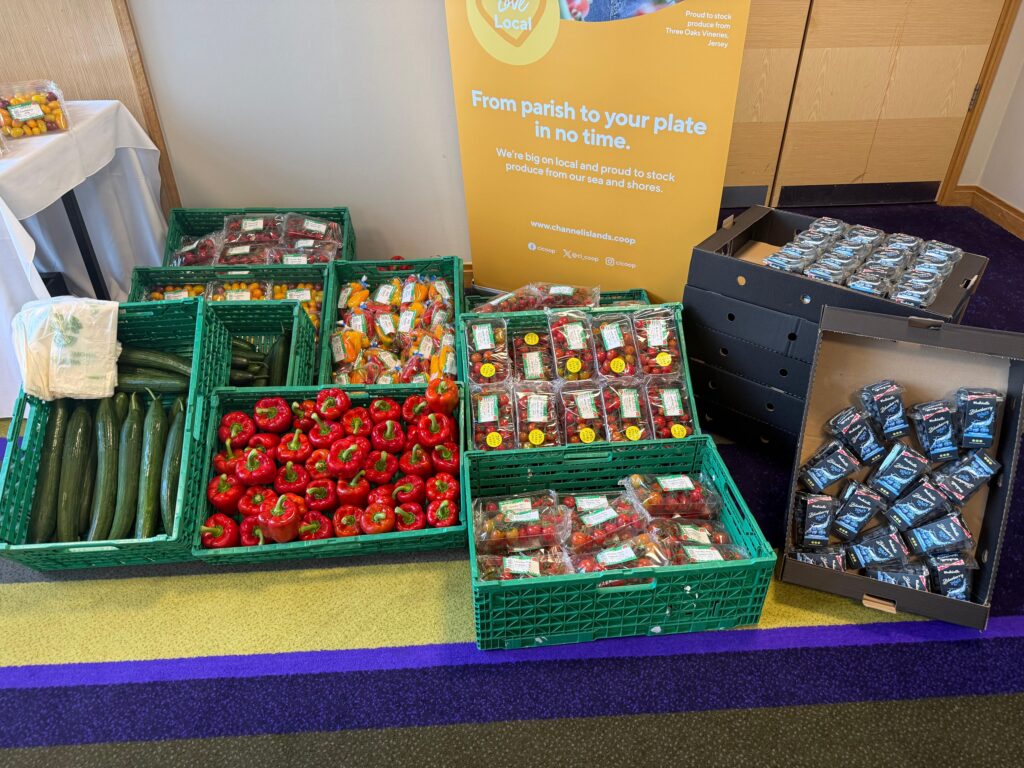
This diverse population – combined with local sourcing policies – means the shelves look markedly different to other UK retail co-ops. Jersey and Guernsey both strictly prohibit importing liquid milk to protect local livestock and dairy industries, and the co-op spends over £8m a year on produce from local growers, including Three Oaks Vineries (which grows exclusively for the society) and Richardson’s Jersey Royals. There’s a French range from Carrefour, and sections in its largest stores catering to Portuguese, Polish and Irish tastes, developed by Daphne East, head of buying.
“We put a lot of effort into local supply because it’s really important,” says Cox. “We want to see active fields, active greenhouses, and the money going back into the local economy. So we are on a mission to try and drive and improve that.”
Related: CI Coop launches community fund from dormant member balances
The majority of its products are still sourced through Federal Retail Trading Services (FRTS, the central buying group for co-operative retail societies in the UK), which arrive on daily boats from Andover.
“The economies of scale that brings is hugely important to us,” says Cox, adding that they have strong relationships with other co-ops too. “We work with VME Co-op on our technology side, and we’ve embarked on a good relationship with [Danish co-op] Lobyco around our app. Where we can, we’re really keen to work with other co-operatives because that drives our success.”

Internationally, that also includes support for the Fund for International Cooperative Development, and closer to home, the development of Co-op Bikes. “That came out of a sports business we owned,” says Cox. “When we closed it, we gave those guys an opportunity to take on an element of that business, and worked with Co-operatives UK to help them set up as a worker co-op. They’re now based outside of our St Peter’s store.”
He adds: “From our point of view, understanding the success we can have as a co-op, and helping build and develop more co-operatives, is really important. This model, and the difference it can make, is something we should all be aiming to support. I think we have an obligation as co-ops to try and drive more of that – because if there were more co-ops throughout the world, it would definitely be a better place.”
Related: Channel Islands Co-op’s climate targets win backing of SBTi
The Channel Islands Co-op led the way in the transition to electronic shelf labels (ESLs) in 2015, and in 2022 it introduced the Coop marque into its branding. Its next big digital project is its member app.
“We’ve seen some real success in that digital space,” says Cox. “The member sign-up piece is an example of that; being able to give people the opportunity to join when they’re in store has transformed our sign-up process, the engagement we get, and particularly from younger members who weren’t willing to follow the old, outdated process.”
The society gained 5,123 new members last year – 56% of whom were under 35.
From transformation to impact
Transformation has been a watchword at the organisation, and was the central theme at its Leadership Conference in early July, which brought together head office teams and store managers along with suppliers, partners and other stakeholders. Channel Island Co-op leaders shared the changes happening in different areas of the business, alongside a showcase of some of the local produce sold in stores.
Cox’s central message at the event was that “we don’t make our progress alone”.
“Success in this business isn’t built on board papers or PowerPoint presentations, it’s created by people making thousands of good decisions every single day,” he told delegates.
But, he added, while the society “should absolutely be proud of what we’ve achieved, legacy is not a strategy – it should give us pride but doesn’t give us permission to stand still”.
Having reached market saturation through new store openings, the business is shifting toward investing in its existing estate and reprioritising its activities. Co-ops can sometimes fall into the trap of doing things out of habit or comfort rather than genuine member value, he said, but in his view, “stopping certain activities within a businesses is not failure, it is discipline”.
Cox highlighted ongoing investment in colleagues through new systems, restructuring, pay and bonus reviews, and challenging established working practices, backed by improving engagement survey results that inform decisions.
Some of the biggest challenges for the organisation came around the Covid years, including the departure of former CEO Colin MacLeod (who signed off sick in 2019, was dismissed in 2020 and eventually awarded £3.5m in compensation last year – which the society is now appealing) and the reduction of member dividend from 4% to 2% at the end of 2022 on performance and cashflow grounds.
Cox acknowledged that while the dividend reduction was “the right call for the business,” it caused significant pain. Leadership underestimated the emotional attachment members had to the divi, which “confused members and customers and lost trust”.
The biggest revelation, he told the conference, was how much the dividend had been masking underlying weaknesses: “members just didn’t respond to the reduction in dividend… They started questioning the long-term sustainability of business,” he said. Fundamentally, members and customers had previously tolerated poor availability or uncompetitive pricing because they felt rewarded through the divi.
This, he added, was a “genuine wake-up call” that prompted a full back-to-basics review of the retail proposition (space, range, price, store ops KPIs) and led to a test-learn-scale approach to change. “Visible, over-communicated change and making member feedback tangibly shape decisions are what rebuilt trust.”
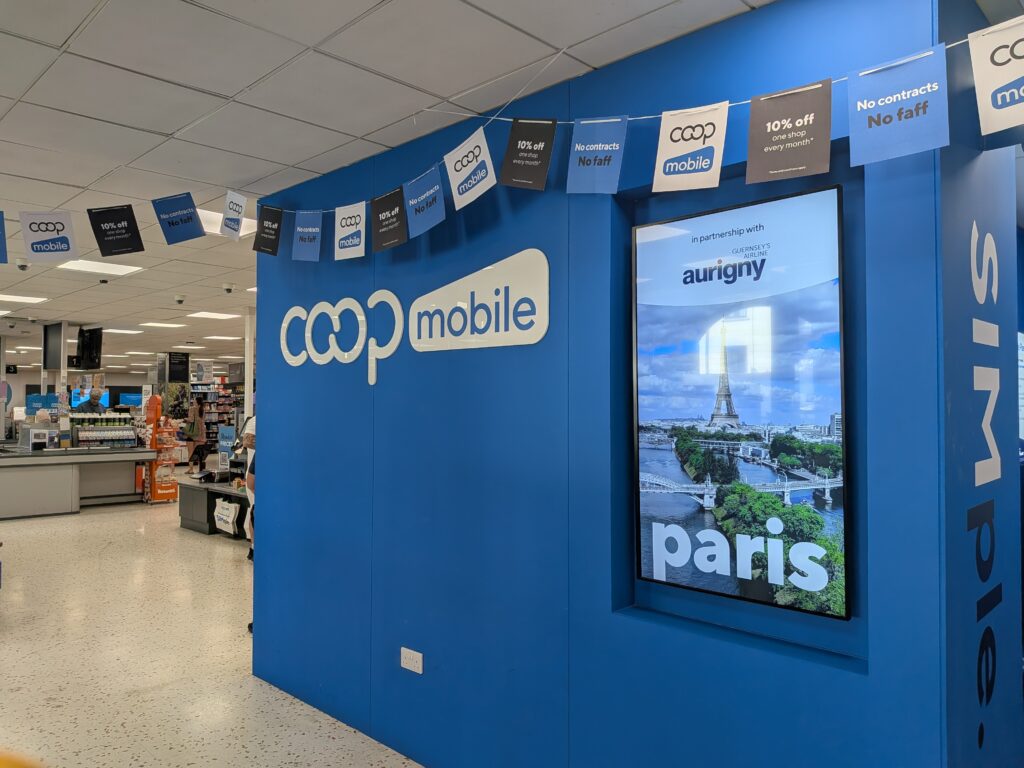
Some of those decisions have been about member needs, particularly around health and lifestyle. Over the last few years, its pharmacy division has focused on an acquisition and modernisation drive to provide responsible care that saw it grow from £10m in 2022 to £31m in 2026. And it launched Coop Mobile in February, offering four SIM-only plans, which give a monthly 10% shopping voucher to members and also address the issue of high roaming charges for islanders who regularly visit France.
“Coop Mobile is a really good example of the sort of low-risk investment that we’ve been able to do, absolutely fixing a problem for people coming off these islands,” said Cox.
The event also heard from Tony van der Hoorn (CFO and CTO) who shared the organisation’s tech and AI roadmap, while chief people office Natalie Clare explained how the society is responding to the changing world of work by “empowering people with deeper communication, using better data and insights, and giving them the skills and tools to succeed”.
Simon Matthews, chief property and sustainability officer, described the complexities of coordinating a property portfolio with different demands according to usage, and Chris Poulton, Partner at GP Studios, described the Channel Islands’ ‘store of the future’ – and how increasingly, theatre, and the quality of presentation and products, alongside Brand and product storytelling, is key to shopper experience.
Sarah Sleep, sustainability and community officer, explained how the society’s Community Fund has shared £428,000 with 420 community projects over the last five years, while its new Coop Community Impact Fund is a charitable initiative that reinvests unclaimed member balances from dormant accounts into projects that create lasting environmental, social, community and heritage benefits the islands.
Two of the recent beneficiaries who shared their stories at the event are the aspiring Jersey Island Geopark, Jersey’s bid for UNESCO Global Geopark status, and GROW Jersey, a Thrive Jersey-led community smallholding in St Helier that tackles social issues and serves as an education and wellbeing hub.
“Other people talk about how lucky we are in the islands because we haven’t got big competition here,” says Cox. “But actually, you create your own luck because we work really hard to make sure that we built the business based on our local understanding.”
“There are 165,000 people between Jersey and Guernsey, and you are never more than two minutes away from a supermarket. There are a lot of food stores here, so it means we have to be very good at what we do. And the biggest part of that is continuing to find ways to engage and listen to members about what they want and need from us.”