For more than 30 years, Fairtrade has been making an impact on the way trade works, through the belief that every farmer and worker should have access to a better way of doing business – and a better way of living.
There are more than 25 Fairtrade organisations, including three producer networks representing 1.9 million farmers and workers across 67 countries in Africa and the Middle East, Asia and the Pacific, and Latin America and the Caribbean.
Underpinning its work are the Fairtrade standards – forming a framework for Fairtrade certification by detailing the requirements for players in supply chains – from farmer co-ops, large farms and factories to companies that buy and sell Fairtrade products.
They incorporate comprehensive social, economic, and environmental criteria – but have been criticised for being too big and complex. In response, Fairtrade International has announced that its standards are evolving, to “make them more effective, while remaining practical to implement and firmly grounded in its core principles and values”.
The revision will cover all of its generic standards: Small-scale Producer Organisations (SPO), Hired Labour Organisations (HLO), and Trader, as well as all the product standards related to agricultural production.
Related: Fairtrade launches €1m sustainable agriculture programme in Indonesia
“We know the world is shifting, we see the pressure farmers and companies are under, and we will be there supporting them with evolved standards that meet their practical needs as well as the requirements for a trade system that is fair and just,” says Marike Runneboom de Peña.
The co-founder and director of the Banelino banana co-op in the Domincan Republic, de Peña was appointed Fairtrade International’s interim CEO in October 2025. This follows her appointment in February 2014 as the chair – the first Fairtrade producer in the role.
For de Peña, any changes to the standards must be rooted in Fairtrade’s core values – and increase Fairtrade’s relevance and market share.
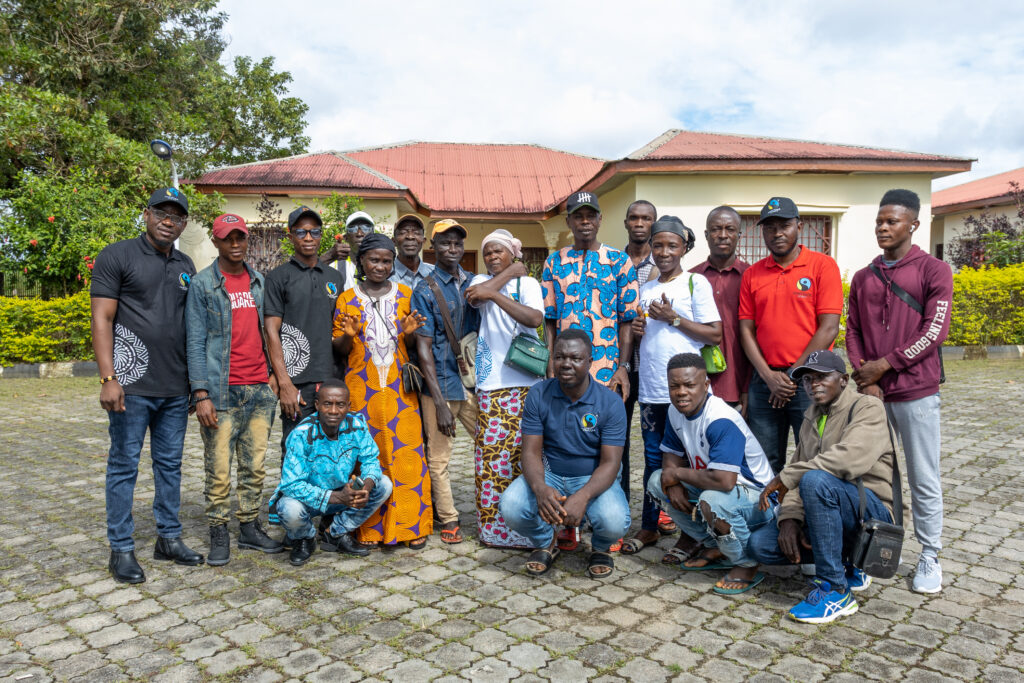
“We’re not a charity,” she says. “We want to improve producers’ livelihoods and build progress through trade. We have grown in relevance, but we are still just a small piece of global trade – and [that] is not good enough, because what we stand for, everybody should stand for. If we really want to reduce poverty, if we really want to strengthen farmer organisations, contribute to food safety and make sure there will be a next generation of farmers, we need to do better.”
De Peña sees updating the standards as vital to this, particularly around their usefulness for focused risk management rather than across-the-board compliance.
“In the current world, building on compliance is no guarantee to enable farmers and workers to manage risk, and this is what we’re trying to do,” she explains. “We are trying to change our standards to make our standard a risk-based approach, rather than another compliance-based approach.”
This, she hopes, will enable farmers and workers to build resilience and impact, by giving them space to prioritise their actions to respond to social, environmental, and economic challenges. “Compliance is important, and we support them with that, [but] we cannot only be compliance-focused. We need to have strong risk management tools to enable compliance.”
Related: Fairtrade International’s annual report shares ‘commitment to co-operation’
De Peña is clearly critical of the regulatory process. “We all have asked for these regulations. We all have fought for them. But the thing is, when they are then done, we were not part of building it. It’s very difficult to sell organic coffee and organic bananas because compliance with the organic regulations is now difficult because the section on smallholders is not good enough, and the EU Deforestation Regulation [designed to stop the import, sale, and export of commodities linked to global deforestation] is the same. We don’t want deforestation. We want to forest again, and we want to get things better, but instead of sanctions, we should really build incentives to create a sustainable world. We strongly believe in regulations – but we also want to have a stronger voice of farmers and workers when building these regulations.”
The idea of changing the standards “was actually proposed by farmers and workers themselves,” says de Peña. “They were saying ‘We cannot handle it. We have the EUDR coming in, new Organic standards coming in, Triple D [the EU’s Corporate Sustainability Due Diligence Directive requiring large companies to tackle human rights and environmental impacts across their value chains] coming in. It’s too much.’”
Work updating Fairtrade’s standards began in 2024 with producer consultations; a public consultation is due this year, with the new standards set for publication in 2027 and implementation beginning in 2028.
The project team includes experts in standards and representatives from the wider market and Fairtrade’s producer networks, including farmers and workers of the three regions (Asia, Latin America and Africa).
“We always have an inclusive consultation process,” says de Peña. “We are not doing it just online, because many of our farmers and workers do not have access to online consultation. So we go to the ground, we present the change and discuss it in person. Then the standards committee reflects on the feedback and takes the needed decision.”
One major change in the new standards will be the recognition of other relevant certifications that producers hold, which will “reduce duplication and effort”.
“For example, 67% of our farmers are organic. There is also a big environmental part in our standards – so for producers, its like a double check. You get the organic auditors and then you get the Fairtrade auditors checking the same thing. And it doesn’t make a lot of sense … We can reduce the burden and recognise that. This recognition is one way to address the loud voice of producers saying this is getting too much – many of them need up to five or six certifications to sell their coffee, their cocoa or their bananas. Too many resources are going into certifications, but these resources can be better spent elsewhere.”
At the launch of the 2025 International Year of Cooperatives (IYC) , the International Cooperative Alliance (ICA) and Fairtrade International signed a joint partnership declaration to drive greater inclusion and sustainability of co-operatives.
The IYC has “been an opportunity to work together with other co-operatives, to build alliances, to have a stronger voice,” says de Peña. “But co-operatives are not just important for a year … If we want to be relevant, we need to build these alliances beyond the IYC, and we need a stronger voice where policies are set.”