Meryem Women’s Cooperative in Adana is Turkey’s first co-operative based on green social and solidarity economy (SSE) principles.
Established in 2020, with support from the International Labour Organization (ILO) and Adana Metropolitan Municipality, the co-op aims to empower women “who have been pushed out of life”, by providing them with employment opportunities and social support.
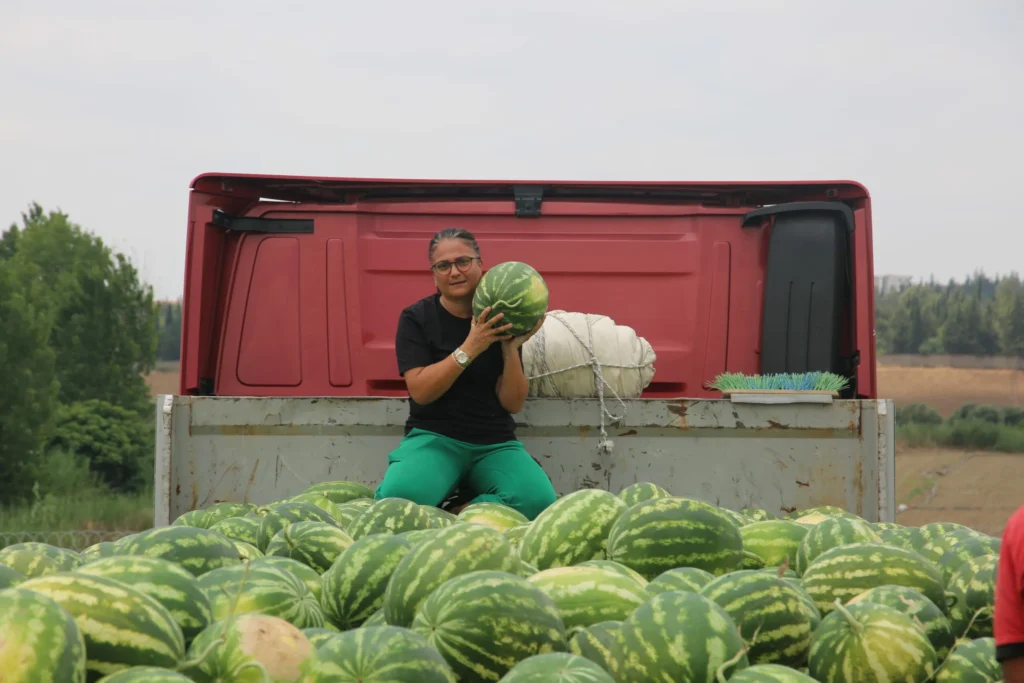
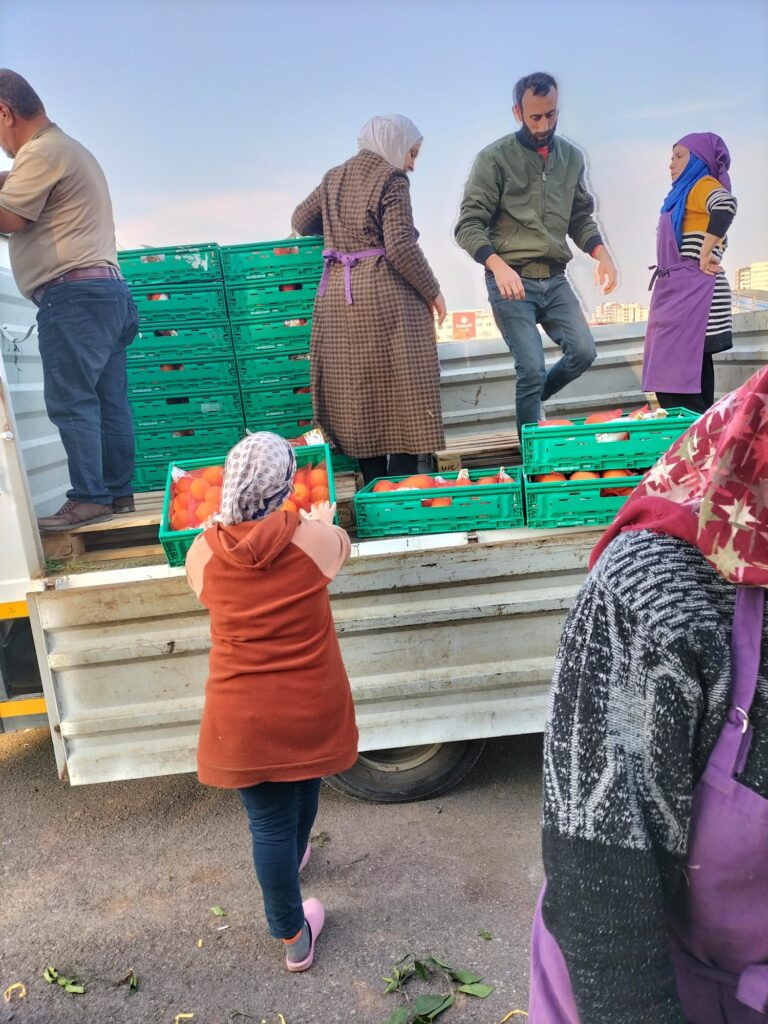
Meryem currently employs 30 women including Turkish nationals and Iranian, Afghan and Syrian refugees, in jobs focusing on the sustainable growing and production of food and flowers.
“As part of the social solidarity economy, Meryem employs people who have lost their desire of finding a job or who cannot get employment because of their gender issues, nationality issues, etc.,” explains Adil Murat Vural, advisor to the co-operative and project expert at Adana Metropolitan Municipality.
“We work with people that are in the worst situations in Adana, because they are forced to do lots of things that are against their humanity. They are forced to work in very bad conditions, or in conditions that they don’t want. So we are like an umbrella for lots of people who are in bad situations, and we are creating profits for them.”
Founding members, Kadem Doğan and Derya Dizi Boduk, have seen Meryem Women’s Cooperative provide its community with secure and enjoyable employment as well as common and social security.
“Family members of women working in the co-op said they have increased in confidence when at home, and our connection with the local government also provides a safe environment. In short, the co-op supports women like a social service institution.
“As a feminist activist in Turkey, being part of such a co-operative makes me happy,” says Doğan.
Doğan explains that refugees face legal barriers to work in Turkey, but that “being in a co-operative provides an easy solution for the paperwork and other issues. The co-op is like a facilitator.”
Decisions about the co-op are made jointly by the board of directors, its 32 members, and expert advisors, explains Doğan and Boduk.
Related: Women co-op leaders from Asia-Pacific look to a more equal future
Membership of the co-operative is optional for workers. “If women aren’t members, they can still work for the co-operative,” says Doğan. “It’s flexible.”
Meryem also continues to support and involve women after they have retired or stopped working for the co-op.
“We have got women that are overaged, but we still continue to support them. So they are not workers of the co-operative, but we keep on working with them because they have experience, and they are in need of support,” explains Vural.
“It’s a cultural thing, the reason we don’t cut ties with the people. Sometimes, if they get married, they leave their job because their husbands don’t allow them to work. We saw that it’s a problem, so we focused on keeping ties with these ladies also – we still keep their membership with the co-operative.”
Another advantage to the co-operative structure is how it relates to other organisations, says Vural.
“In a co-operative you may be independent from any institution, and can get support from all institutions. You’re independent, and also you get partners for the co-operative.”
Originally established as part of the ILO’s ‘Decent work opportunities for refugees and host communities in Turkey’ programme, the co-op received financing, guidance and support from the ILO Türkiye Office, as well as in-kind support from Adana Metropolitan Municipality.
Beyond the initial support Meryem received from partner organisations, Vural says that it has been the co-op’s ability to work with both the public and private sector that has enabled its survival.
“It was like a lifesaver for the co-operative, because in that manner, it became like an American SSE model. In Turkey, we understand that if we are making something with vulnerable people, you always ask for support.
“But by working with the private sector, it is not just a support thing, you don’t beg for anything.”
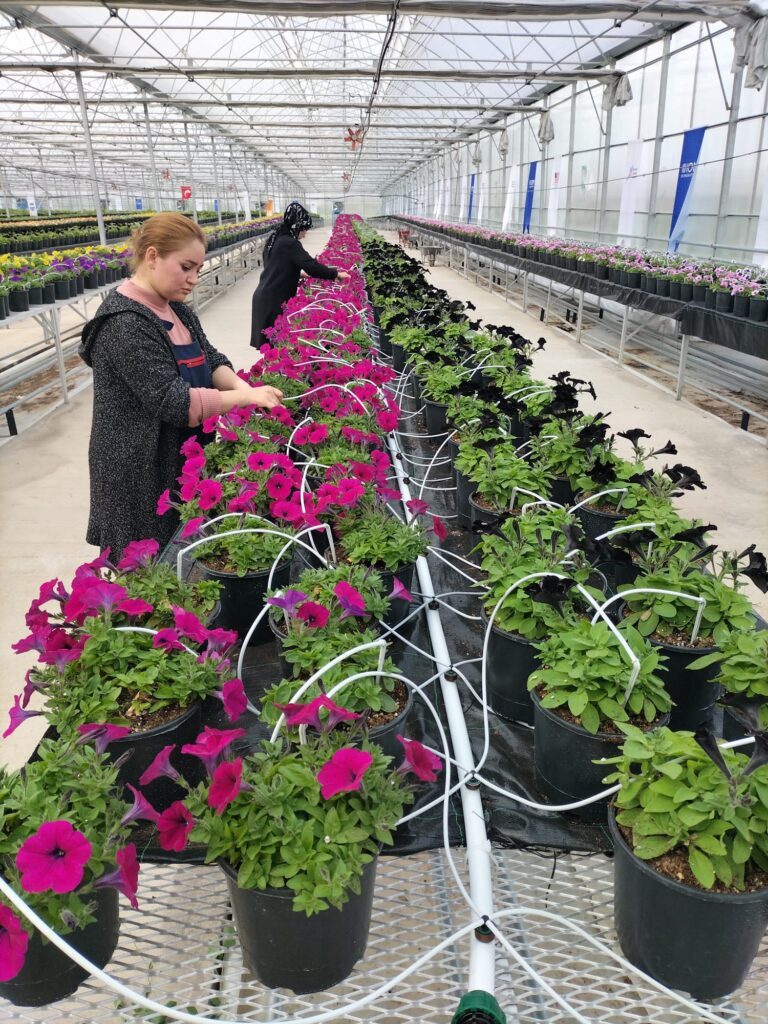
And early supporters of Meryem are now benefiting from its progress. For example, land gifted to the co-op by Adana Metropolitan Municipality has been used to grow flowers, which local businesses and the municipality buy from the co-op at affordable prices.
“The co-op’s relationship with the municipality has changed, it is not just receiving the support of the municipality, but now the co-operative supports the municipality.”
Meyrem is also paving the way for others in its sustainable practices, such as its “smart” greenhouse that is powered by solar energy and houses a 1000sqm underground rainwater harvesting pool, which supports the greenhouse’s cooling and heating systems.
The co-op also produces ancient heirloom seeds, as well as vermicompost, an organic fertiliser, and wood vinegar, which can be used as an organic pesticide. These products are supplied to local smallholders, most of which are women-owned.
Despite its success, Doğan and Boduk explain that the co-op has faced a lot of challenges over the years, including climate change, marketing problems, having to compete with large firms, and staff shortages.
Related: How co-ops are helping displaced people and their host communities
“We especially need staff with skills in digital marketing and accounting,” says Doğan.
“Because we work with vulnerable groups, it can be hard to find staff with the qualifications we need for our co-op.”
Since its inception, Meryem has worked with partners to provide capacity building training, such as in production and marketing, as well as co-operative awareness training.
“To implement the first SSE co-operative was a hard issue to handle,” said Vural.
“To explain why an SSE co-operative is very important in reducing poverty and improving sustainable development was really hard. Even academics in the university who are working on sustainable development did not have much insight about SSE.
“But after everyone saw that even without funds the co-operative was able to survive and continue production, the co-operative began to become a model for everyone in the field.”