Rochdale’s Pioneers Museum is a place of pilgrimage for visitors from all over the UK and world. Located at 31 Toad Lane, it occupies the original site where the Rochdale Equitable Pioneers Society opened their first co-operative store on 21 December 1844.
Recent years have seen considerable investment in the site, a museum since 1931. The latest attraction is a ‘parklet’ complete with seating and planters full of herbs.
The official opening was on 24 October and Toad Lane’s Liz McIvor, manager of the Co-operative Heritage Trust, which oversees the museum and National Co-operative Archive in Manchester, explains the thinking behind it.
“The name of the parklet comes from this being a ‘common place’ and reflects that it’s there for everyone to benefit from. The area was known as the Baum in pre industrial times and rights were given to communally cultivate medicinal herbs and hunt small game to support a small Pennine population (Toad Lane is off Hunters Lane). These rights disappeared in the industrial period, people experienced community fragmentation and could not easily connect with nature.
“We wanted a new urban planting space to reflect this older co-operative past and grow a mixture of sensory plants and herbs as well as providing an attractive space for visitors even when we are not open.”
Historian and author McIvor gained prominence as a TV presenter through the BBC series Canals: The Making of a Nation. She has been manager of the Trust since 2017.
“From the 1920s it was realised there needed to be a more formal approach to heritage. That’s why they created Toad Lane museum, however it was not professionally run. In more recent years there were moves towards professionalising the heritage offer and for it to be independent of the retail business as it would be a commercial asset realisable in the event of mergers.
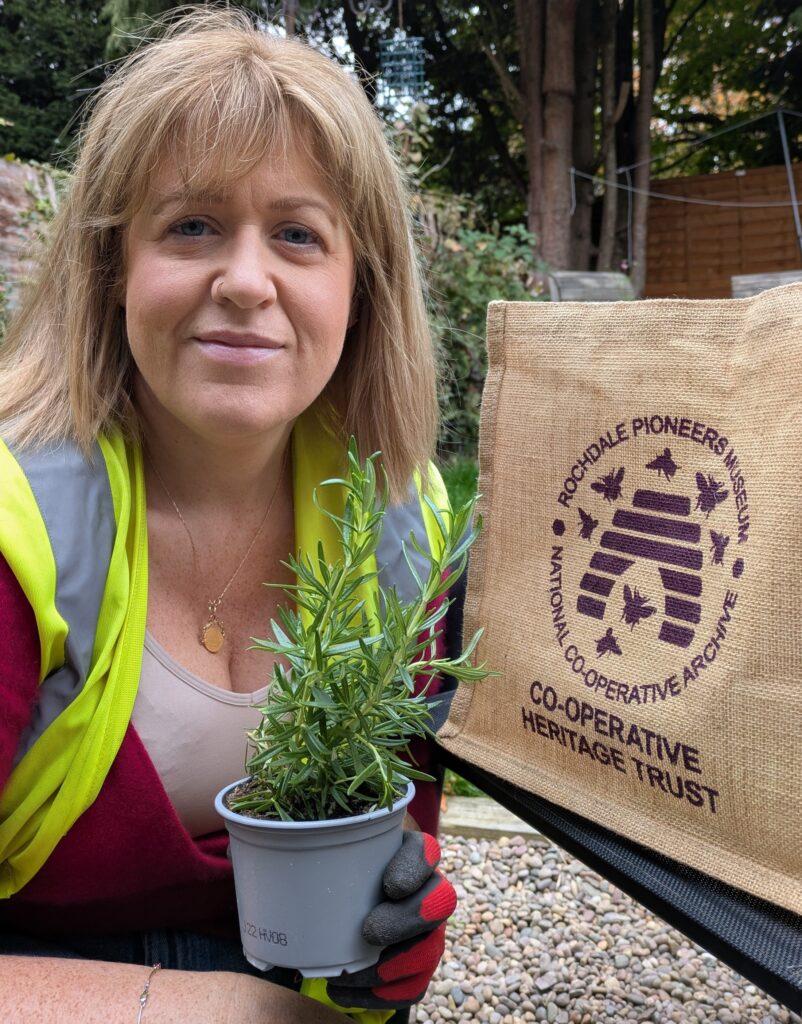
“In order to protect that heritage the independent charity was created in 2007, however we have to fund-raise to keep going and that’s still very difficult. Costs have skyrocketed over the years and we worry about our sustainability. Small projects like this give a message out to the rest of the movement. We have to have that support and partnership to shore it up as the future of Toad Lane is not guaranteed.”
The impact of climate change on the building is another key reason for the initiative.
Related: Heritage Trust bags £130k Lottery grant for College archive
“It is very expensive to maintain and we are experiencing the impact of wetter, longer seasons. One of the issues is the flagged courtyard.. It was originally intended the extension of the building in 2012 would be on that spot but that didn’t happen because of planning issues. The exposed side of the building takes the force of the wetter weather, it’s slippy and there is a problem with the build-up of moss.
“We thought we can’t afford to invest in digging it up but we could try to tackle climate issues. We wanted to increase the drainage, provide carbon capture, reduce the impact of noise, discourage cars being parked there and encourage pollinators to Toad Lane.”
Funding for the project has come from a variety of sources.
“We knew we could not afford to do it ourselves so that meant applying for various funding pots. We unsuccessfully tried and failed a few times because it is a very competitive market. Eventually we went for a government funded scheme offering up to £12,000 if we found 50 per cent match funding.

“We had a £3,500 donation from Central Co-op who are really tuned in to heritage and also a pledge from Climbs Life and General Insurance in the Philippines – an ICA member organisation who visited us in January.”
Another key partner in the project is nearby HMP Prison Buckley Hall, where staff and prisoners are growing the herbs and designed and built the planters. Funding paid for the Timber Co-op in North Wales to provide advice and sustainably grown timber to be delivered to the prison and for prisoners and staff to use what they had learned to design planters and seating and assemble it in the workshops.
“We worked with them on an art engagement project funded through the University of Lancashire to explore the symbology of plants and flowers with a local artist called Tasha Whittle. Tasha made links to the flowers and plants used by the movement in history to express unity and development through education. Prisoners produced mural artworks to display both on site for their visitors, in their workshops and for our parklet.”
Due to the tightening of security under the Home Office in 2025, the prisoners were not able to construct on site as originally planned, so the museum enlisted the help of social enterprise The Growth Company with help from students who worked with staff to build and fill the parklet in September ready for planting
To keep the garden stocked, staff and governors of the prison will use the museum for their meetings, prisoners will continue to grow plants and prisoners’ families will be able to visit and enjoy the space.
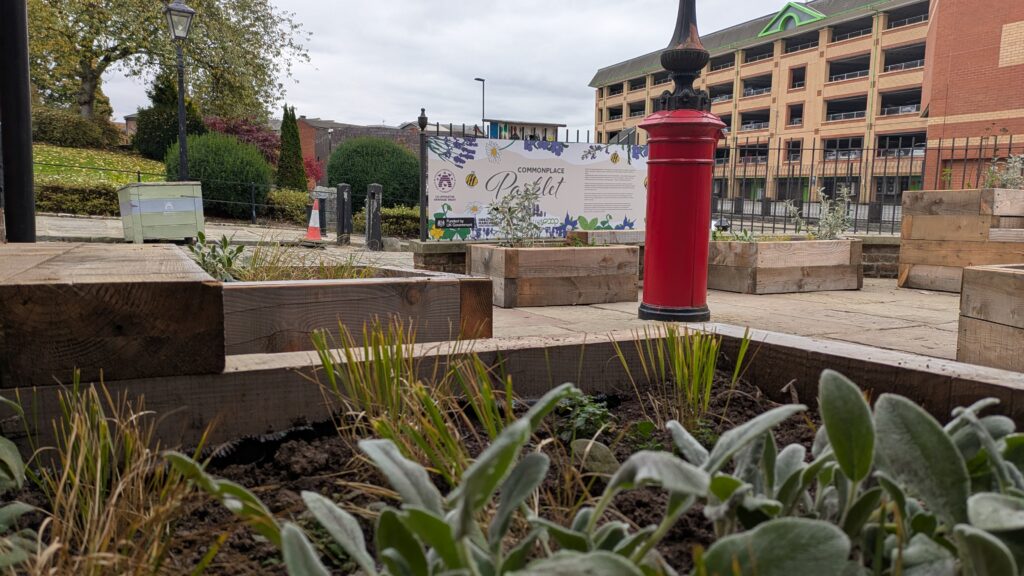
So far the list of herbs on offer includes oregano, thyme, sage, verbena and lemon balm as well as Pennine moor grasses. All other materials have been sourced from local suppliers with the help of neighbouring businesses on Toad Lane to keep carbon footprint low and encourage volunteers to help with maintenance so it is regularly weeded and watered.
“We want to encourage this part of Rochdale to green up and we’d like to see it copied and replicated elsewhere.”
One of the first events to tie in with the official launch was a mushroom growing workshop with Manchester-based Myco co-operative and there are plans to explore old remedies for common ailments using medicinal herbs grown on site with special events and sessions for children.
The Heritage Trust is also involved in a host of other projects locally and internationally, Liz McIvor is part of a global ICA Co-operative Cultural Heritage working group tasked with raising awareness of co-operatives’ role in building sustainable communities and gaining recognition from international organisations like Unesco.
A digital map highlighting 25 undisputed geographical sites significant globally will be launched in Brazil at COP 25 as part of the International Year Of Co-operatives and Toad Lane will be one of the top contenders for a place on the list.
“It’s part of an attempt to harness our historical story and keep it relevant. This matters more than ever now because we are under threat. We will never be the same as our commercial competitors so we need to put that cultural awareness back in and make it more important It helps people understand why they are supposed to be doing things differently. There may be a shorter history in some places but it is still important.
“We are trying to use this to show the power of co-ops, the fact that anyone can do it and you can benefit from being involved in a co-op and it is just as important now as it was 200 years ago, especially in difficult times. We are part of a global movement.”