In 2024, the UK’s worker co-op federation, workers.coop, began producing Punchcard – the first podcast dedicated specifically to worker co-operation. More than a year later, the project has produced a catalogue of episodes capturing experiences, lessons and knowledge from across sectors, industries and countries.
Hosted by Caleb Elliott, a young co-operative developer for Principle Six (which provides co-op development support in the UK), the podcast was created in response to a gap he noticed in co-operative media.
“So few people know what a worker co-operative is — we need to find new ways of shouting about how powerful workplace democracy can be,” he says. “I was looking around for videos and podcasts about worker co-operatives and I couldn’t find anything. When workers.coop started, I thought this is a great opportunity to make one.”
Through interviews and discussions, Punchcard explores topics ranging from governance and co-operative culture to anti-racism, class and migration. Episodes have featured co-operators from a wide range of industries, backgrounds and countries, offering insight into how worker co-ops function in practice rather than theory.
One episode featured Rupay Dahm, a co-operator based in Germany who helped found a cleaning co-operative for migrant workers working in a highly exploitative industry. During the episode Dahm explains how he was able to navigate the power dynamics that come with supporting others to develop a co-op.
Jeffrey Elkner, from the US-based Semillero de Economía Solidaria initiative supporting cleaning co-ops in Virginia, described this episode as being an extremely helpful reference for their own co-op development.
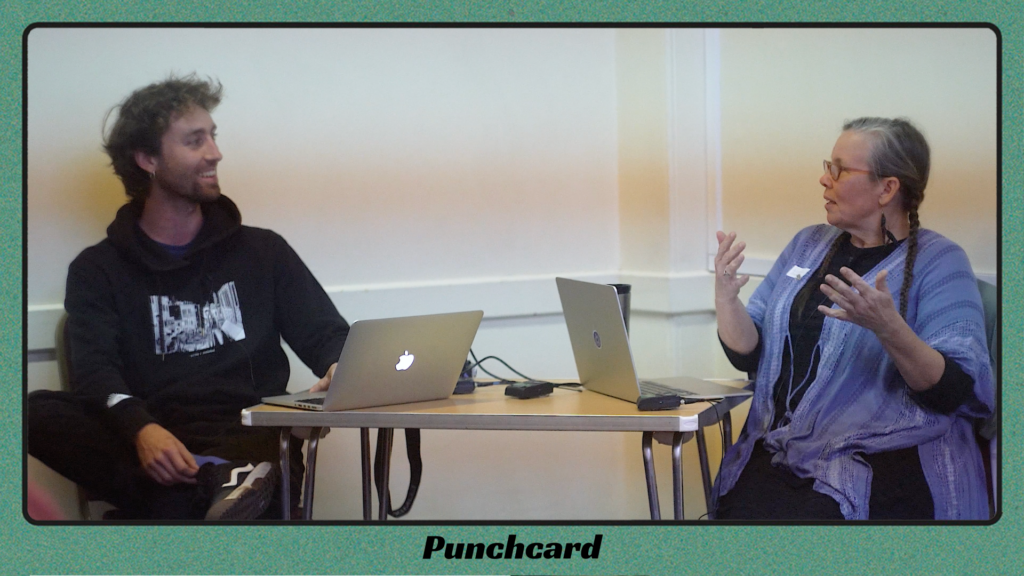
Another episode hears insights from Taylor Le Melle, founding member of queer-led Bipoc worker co-op not/nowhere, which supports artists to navigate the structures and institutions of the UK art world. In the episode, Le Melle challenges co-operators to reconsider approaches to diversity, beyond simply inclusion.
For Elliott, the podcast is not just a matter of communication or promotion. It is doing the vital work of preserving movement knowledge that could otherwise disappear over time.
“A big part of this is archiving knowledge,” he says. “Co-ops generate a huge amount of lived experience and practical wisdom, but too often that knowledge disappears when projects end or people move on. Punchcard is creating a deep reservoir of stories, reflections and lessons that others can learn from in the future.”
Related: Workers.coop launches its first business support programme
The project reflects a broader recognition that storytelling and accessible media are becoming increasingly important forms of movement-building. While workshops, conferences and reports remain central to the co-operative ecosystem, podcasting offers a different kind of engagement: conversational, reflective and accessible during everyday life.
“I appreciate workshops, conferences and reports — don’t get me wrong — but sometimes I just want to listen to something while I’m cycling or cooking and not have to participate,” says Elliott. “Podcasts are great for that. We need more co-op podcasts”
The response to Punchcard suggests the format is resonating across both established and newer parts of the movement. Listeners have described the podcast as “inspiring”, “intellectually stimulating” and “incredibly helpful”, while others highlighted its value in helping make co-operative ideas more relatable through personal stories and lived experience.
Ali Francis of Asterisks Coop said the podcast had helped them “see the cause of worker co-operatives through the lens of the real people within them, and their stories”.
For Elliott, this response demonstrates a wider unmet demand for co-operative media that feels both politically serious and personally engaging. “Consumption of podcasts has gone through the roof, and Punchcard is the only podcast about worker co-operatives in the world, that I’m aware of,” he says. “How crazy is that? We’ve been so slow to catch up.”
The project is moving towards a listener-supported funding model through Open Collective, a collaborative and transparent funding platform. Anyone can currently listen to the podcast, but supporters are able to contribute directly towards future episodes and production costs by making a monthly payment of their choice.
The aim, Elliott says, is to keep the project independent, accessible and rooted within the worker co-op community itself.
“Punchcard will live and die via the support from listeners,” he says. “If people find value in these stories and conversations, supporting the podcast helps make sure they continue.”
As interest in workplace democracy and alternative ownership models continues to grow internationally, Punchcard is helping create a public record of the people experimenting with and sustaining co-operative forms of work today.
In doing so, the podcast is becoming not just a communications project, but part of the movement’s collective memory – documenting the ideas, struggles and innovations shaping worker co-operation in real time.