Decent work for marginalised communities has long been precarious, but a new state of the sector report from US-based Democracy at Work Institute (Dawi) shows worker co-ops in the country are resilient in the face of economic, environmental and political pressures.
Dawi was created by the US Federation of Worker Cooperatives (USFWC) 13 years ago to support worker co-op development in marginalised communities and collect information on the sector. “We’ve been collecting data for 13 years now, so we can compare data for a full decade,” says Dawi’s Karina Pacheco.
The report (available on Dawi’s website in English and Spanish) shows worker co-ops and democratic workplaces have grown 34% since 2020 while more than doubling their workforce. According to the US Chamber of Commerce, traditional small businesses only grew 13% since 2019. During Dawi’s census, the organisation counted 820 firms, which are worker co-operatives and democratic workplaces (including nonprofits that operate under the worker co-op model). However, because worker cooperatives are being started every day outside the nonprofit infrastructure of support, it is estimated that there are closer to 1,300 firms employing 16,000 workers.
The US does not have a single, comprehensive federal law governing co-ops; instead, legal frameworks are primarily determined by individual state laws, resulting in 78 separate state policies – with individual statutes embedded in different laws likely to total over 100. And because of this, no data is collected at the federal level.
It’s a different story in Puerto Rico, where Pacheco is based. Here, a centralised legal framework is used, and it’s easy to set up co-operatives and find figures for different co-op business types.
“We had the first co-op in the Americas,” she says. “Co-ops were brought to Puerto Rico by the Spanish, and the Catholics created one co-op in each of the municipalities. Now, on my way to taking my kids to school, I pass around 20 co-ops. They’re all over the place. Here, you cannot grow up not knowing that there are co-ops.”
The report shows that around 42% of the US worker co-op workforce is white, while 37% is Hispanic or Latine, 13% Black or African American and 5% Asian, with the remaining 3% comprising American Indian or Alaska Native, Middle Eastern or North African, or Native Hawaiian or Pacific Islander workers.
Related: Puerto Rico’s first electric co-op cleared to run its microgrids
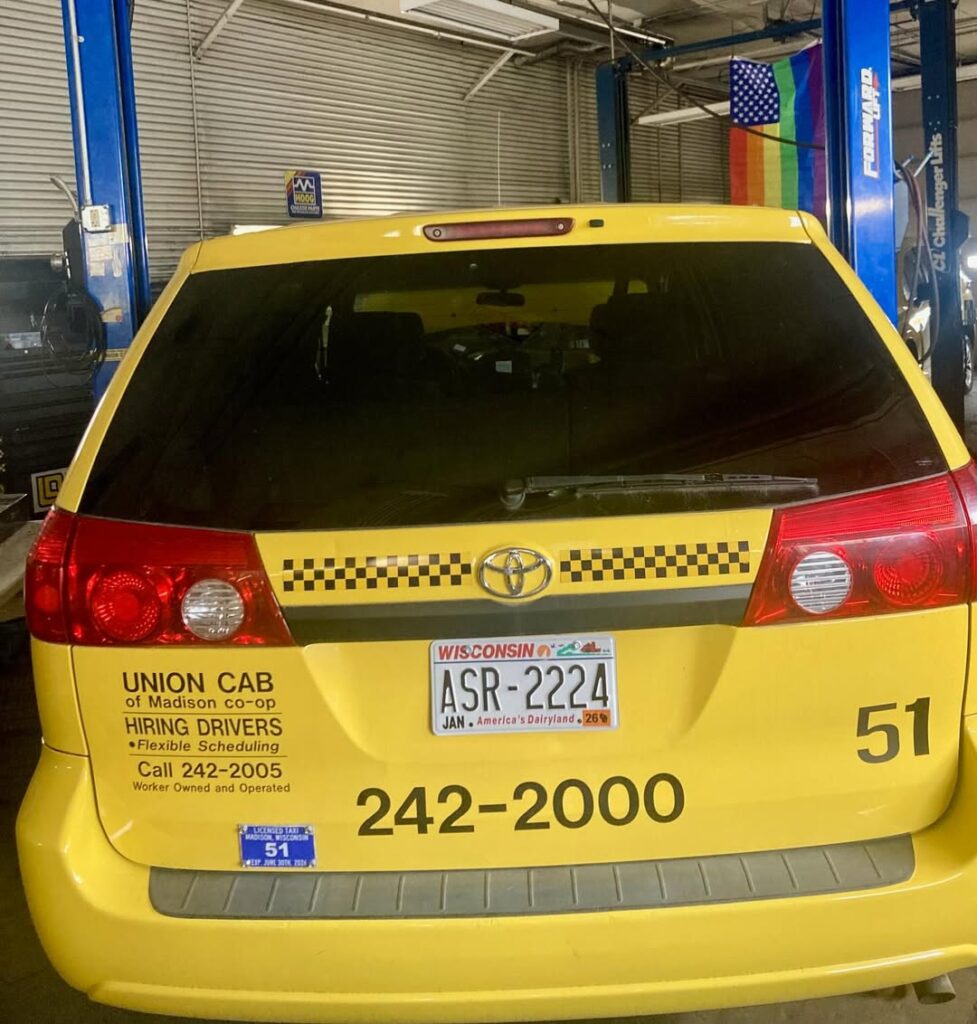
One of the surprising findings in the report was the huge jump in worker co-op employment post-Covid, which, says Pacheco, reflects both recovery from a pandemic-related dip in 2020 and the subsequent creation of a handful of very large worker co-operatives that have between 1 and 3 thousand workers – in particular, driver co-operatives.
“The top 10 sectors were also interesting, because there was a big jump in the number of business consulting co-ops. In our first census, there were only four, and now there’s over 50 – it’s one of the most impacted sectors.”
Dawi makes the anonymised full data sets available on request from university-affiliated researchers and cooperative developers, who are vetted to make sure they won’t use the data to harm worker co-ops – and to maintain data privacy.
Of the firms that responded to the census, more than 40% identified as LGBTQIA+-led, and 22% are Black-led. Over 70% are women-led – and 30% are led by immigrants.
Globally, co-ops have long been a space for excluded workers and those who have historically been denied good jobs. “In what other business model would you see that the majority of owners are women?” Pacheco says.
She adds that there is an intentionality around how support for workers is shared. Dawi partners with organisations in specific communities and sectors, “building relationships and sharing the model in the places we think are going to do the biggest change”.
Dawi and USFWC also amplify initiatives that align with members’ priorities. Following the fatal shooting of Renée Good by Immigration and Customs Enforcement (ICE) agents on 7 January, the USFWC actively supported the ‘Day of Truth and Freedom’ march in Minneapolis, Minnesota, planned for 23 January – the day before Alex Pretti was also killed in the city by ICE agents.
Related: US worker co-ops – celebrating the past and planning the future
Pacheco believes ongoing raids by ICE, which continue to search and arrest people without needing a judicial warrant, will affect workers in all business types, including co-operatives. “Minnesota is a clear example of that. People are scared to go out and work,” she says.
Another example comes from California, where data from UC California, Merced, shows that between May and June 2025 – during an escalation of worksite raids in California – there was a 3.1% drop in workforce participation; the number of noncitizens showing up to work dropped by 7.2%.
Alongside the State of the Sector report, other materials produced by Dawi include its Rapid Response Cooperative Model, a toolkit created to expedite cooperative startups internationally. ”It was easy to replicate, and so once we shared the tools, process and timing, it could be replicated across communities,” adds Pacheco.
The materials now live on the Dawi website.
Dawi also runs ambitious projects in development and education. Its School of Democratic Management provides free online resources for worker co-ops just starting up, or for businesses or nonprofits transitioning to a democratic workplace.
The research found a need for more information in a digital format, “so we did a lot of fundraising to get to this point. The courses are open to everyone, not just those in the US, and are available in multiple languages,” says Pacheco.
Its other big project is the Employee Ownership Cities Program, designed specifically for business transitions at the city level.
“Two years ago, we did a big campaign in New York called Owner to Owners, an Employee Ownership NYC program. It worked with businesses interested in transitioning to a worker co-op or entrepreneurs thinking of starting one. Then we connected them to local partners with the capacity to help them through the next steps.
“It achieves three things. You get worker co-ops being developed. You get recognition for both the partners on the ground who are doing the technical assistance development work, and recognition for the city. And you also get a big public education campaign, which is what worker co-ops need the most.”
Its goal for 2026 is 10 cities, with the first – Raleigh in North Carolina – launching in March.
Co-operation among co-operatives is key to all Dawi does, says Pacheco. “The co-op ecosystem needs each other to thrive – that’s how the world should operate anyway. But in terms of the co-op world, I would take it very seriously. Sometimes, you just have to do it creatively.”