The Co-op Bank and ethical lender Triodos Bank have been named “eco-providers“ by Which?, in a report noting the absence of exposure to fossil fuels in their banking activities.
This comes in contrast to seven banks – Barclays, JP Morgan Chase, Danske Bank, HSBC, Lloyds, NatWest and Santander – said by Which? to contribute to the financing of fossil fuels to varying degrees, with Chase financing more fossil fuels since the Paris Agreement than all the banks assessed put together, and Lloyds having only minor exposure. In its release, Which? also noted efforts at these banks to improve their environmental credentials.
Which? says it analysed banks’ fossil fuel policies, with help from experts at non-profit research and campaigning organisation Reclaim Finance. It also combed through statements on agricultural commodities such as beef, soy, timber and palm oil.
It also considered transparency levels, whether banks had credible targets to reduce exposure to environmentally damaging sectors, and whether they published independently verified data. Other factors include commitments such as the UN-led Net-Zero Banking Alliance (NZBA), the Partnership for Carbon Accounting Financials (PCAF) and Science Based Targets Initiative (SBTi).
Which? noted that the Co-op Bank – now back in the mutual sector after its acquisition by Coventry Building Society – sets high ethical standards for the businesses it offers services and finance to, most of which are small and medium sized.
It excludes firms involved in the exploration, extraction or production of fossil fuels, and the unsustainable harvest of natural resources. It told Which? it includes parent companies within its ethical review of firms, excluding those with unethical policies both in and out of the UK.
A spokesperson for the bank said: “We’re so pleased to have been recognised by Which? as one of only three Eco Providers, a testament to the longstanding commitment we’ve had since 1998 to withhold finance to any business whose activity contributes to fossil fuel extraction or production.
Related: Andrea Melville joins Co-op Bank as first female CEO
“Customers want their banks to operate with transparency. Despite this, we remain the only UK bank with an Ethical Policy, informed by the views of our customers. It sets out the activities we refuse to fund or provide banking services for and states the steps we are taking to have a positive impact on our planet, on people and on our communities.”
Triodos – an ethical lender with a number of links to the co-op movement, lending to the sector and providing a crowdfunding platform for community share offers – refuses to lend or invest in fossil fuel projects, and focuses its lending on renewable energy, said Which?
It also excludes companies that mine coal, build coal plants, produce energy from fossil fuel power plants, or extract and produce oil and gas. It said: “We also go beyond exclusion and actively look for positive impact…delivering positive change for people and planet.’”
Nationwide Building Society did have eco-provider status, said Which?, but lost this after its purchase of Virgin Money – around 1% of whose loans are to field services that serve the oil and gas industry. Nationwide says it expects its emissions to fall as businesses transition to renewables.
Co-op Bank’s nature initiatives
In June, the Co-op Bank updated members on its work over the past two years with Friends of the Earth to green over 1,000 nature-deprived spaces in the UK.
“The UK is now one of the most nature-depleted nations in the world,” said the Bank. “As well as being devastating for ecosystems, this decline in nature has a very real impact on people’s mental and physical health.
“People living in the most nature-deprived communities are also those most affected by urban heating, pollution, flooding and biodiversity loss. Research from Friends of the Earth shows that one in five people in England live in nature-deprived areas, which includes a staggering 1.6 million children under the age of 12.”
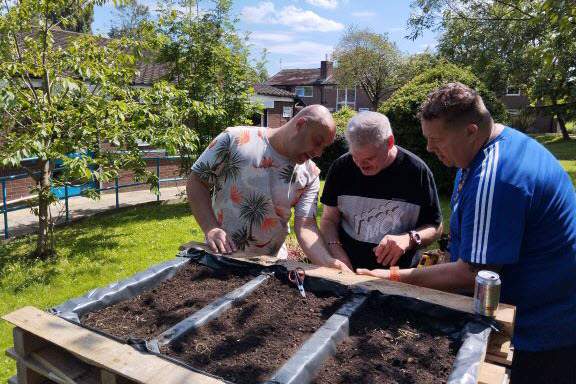
Projects developed under the partnership include sites in Manchester, Liverpool, London, and Birmingham. Most recently, they have launched six projects in Wales, including one that supports a local community directly impacted by the climate crisis.
Below you can read about the impact we’re having with some of our Postcode Gardener projects across England and Wales.
Tyleri, in Blaenau Gwent, is working to transform a local community that felt it had been forgotten about since the closure of quarries in the area. Just as the project was getting under way, Storm Bert struck in November 2024, causing a landslide and run-off from the local coal dump.
The team has worked to recover from this, planting wildflowers and vegetables to bring nature back to forgotten spaces, and developing water gardens and wetland areas to mitigate against future flooding.
Other projects include West Gorton in Manchester, where volunteers are growing herb gardens, planting spring bulbs and wildflowers, and bringing the local community together.
In nearby Wythenshawe, a project is working with families, young people with additional learning needs, and groups supporting local homeless people to create green spaces in the community.
In Liverpool, volunteers are creating a ‘healing garden’ and building interfaith connections by involving the community in a project with local beekeepers to grow pollinator-friendly flowers and vegetables.
Meanwhile, in Notting Dale, west London gardening groups, schools, and housing associations are working together to transform neglected spaces.
The community has planted an orchard with a tree to commemorate every floor of the nearby Grenfell Tower, supporting the healing and restoration of both the community and wildlife. The work includes a bug hotel, a small clay pond, and planting of ferns, grasses, bulbs, and flowering plants.
- This article was amended on 9 October, to take into account the change of status for Nationwide after the purchase of Virgin Money.