Sustainability Solutions Group (SSG) is a Canadian worker co-operative that partners with governments, organisations, and communities to design and implement climate action strategies. Founded more than two decades ago, it has become a leading force in climate planning across North America, known for its co-operative structure, technical expertise, and values-driven approach.
“We were encouraging cities to start thinking about integrating climate action throughout their entire structure before that was a thing,” says Emi Do. “And now that’s become the norm.”
Do is a marketing and communications specialist at SSG, where its 30 members help decision-makers confront the climate crisis by providing services that span greenhouse gas inventories, carbon budgeting, climate mitigation and adaptation planning, scenario modelling and implementation support.
Their work emphasises meaningful community engagement, ensuring that climate strategies are not only technically robust but also socially inclusive and equitable – and centred around principles of justice and collaboration. Do believes such meaningful change has to be modelled from within.
“As society transitions to decarbonisation and centres justice, we really have to think about transforming how we work with one another,” she says. “For us, being a worker co-op is one way we’re practising new ways of interacting and collaborating.”
Related: Co-operators increases climate investment goals to $3bn
SSG has chosen to be non-hierarchical in its working. “A lot of the projects we work on require different stakeholders and agents coming to a decision, and so we have to practice that within our organisation […] we think that worker co-ops are a great mechanism to practice those skills that are so necessary for us to achieve transformation on a societal level.”
The organisation has two managing directors, “but they’re really just a vehicle between where all the work is happening within our ‘clusters’, and our board of directors, which is composed of our worker members. They’re feeding the information back and forth, which enables us to prioritise what is important.”
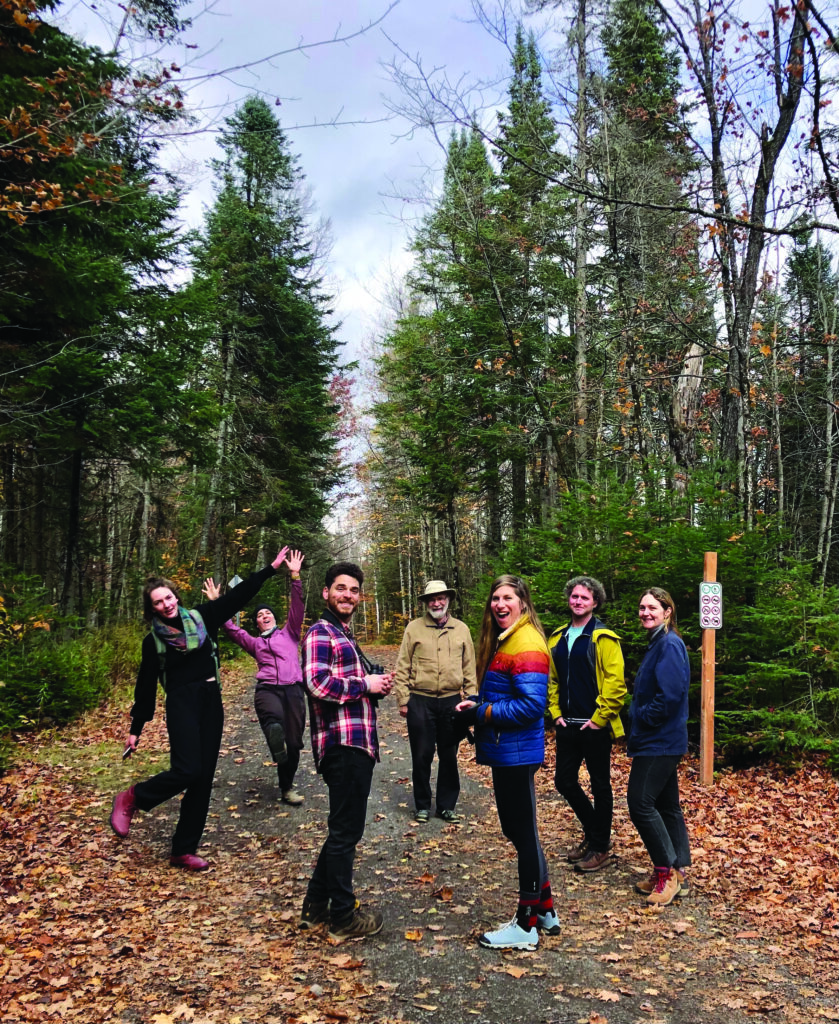
These clusters have decision-making authority within different areas – such as project delivery, business development and communication – allowing specialists in these areas to make and implement expert decisions.
To date, SSG has worked with over 200 municipalities across Canada, helping communities design climate action plans that are both feasible and effective. They are now expanding into climate adaptation, showing how mitigation and adaptation strategies can work together to create resilient, thriving communities.
SSG initiatives like introducing carbon budgets in Edmonton – modelled after Oslo – have inspired other Canadian municipalities to adopt accountability frameworks and embed climate planning throughout their organisations.
One tool it is particularly proud of is its spatial model, which was unveiled at COP21 in Paris (they will be at COP30 in Brazil in November, too).
ScenaCommunity (formerly CityInSight) allows cities to visualise the impacts of different climate scenarios, such as business-as-usual, planned actions, or low-carbon pathways. The model projects emissions, energy use, costs to residents, and operational impacts over decades, helping municipalities plan strategically.
Related: Lincolnshire Co-op’s climate targets given scientific backing
“It also really highlights how the order of operation is critical,” says Do. “For example, you want to first make sure that your municipality is energy efficient, before expanding renewable energy deployment.”
The co-op has subsequently built more accessible tools that clients can use on their own, but the Scena suite remains central to many of their climate action plans, used to look at the potential effects of municipality-wide plans as well as for adaptation work.
“And then we have ScenaEnergy, which is basically for energy planning – and right now we’re trying to push what we’re calling ScenaLocale, which is more of a neighbourhood level planning tool.”
It has been an interesting time for the co-op, which also has projects in the USA.
“One thing that had been really eye-opening for us was the Inflation Reduction Act that Biden passed, which opened up funding for metropolitan areas across the United States, and access to the funding necessary to prioritise climate action planning. Those projects have been pretty unique for us in the political landscape that we’re working in,” says Do.
But now the global shift away from prioritising the advancement of climate action and the “big change in funding priorities south of the border,” has led to work drying up.

“There’s also been a lot more competition in the marketplace. So right now, the business development cluster is taking a lead in pivoting our organisation and looking at how we are going to be shifting our business moving forward. What kind of services do we want to be offering in the future? Which localities and geographies do we want to be working in?”
A map of Canada would show municipalities in most provinces having a Climate Action Plan. “That’s incredible,” says Do, “and yet, we’re falling very short of the 2030 Sustainable Development Goal targets. Why is that? Where are we getting stuck? We’ve created a big map of implementation strategies and are thinking about ways to make that more accessible, especially for municipalities with a really strapped sustainability team.”
Do adds that she, like many in the sector, finds it “unbelievable […] that climate action is being politicised”.
“It feels really strange because it doesn’t seem philosophical, it seems very factual, and is based very much in our lived reality. That people can be working against a world and outcomes that are better for everyone is mind blowing to me, and yet that is our current reality. It’s so challenging to see the clients and municipalities we’re working with struggle to have climate action be prioritised and being blocked from speaking openly about the programmes or policies they want to advance.”
Do sees many of today’s challenges as interconnected, but also sees cooperatives as a model for civic engagement and democratic practice that can help navigate these challenges.
And she highlights a spillover effect of co-ops, where active participation strengthens both governance and community engagement: “So much of democracy and the benefits of democracy are dependent on people being able to exercise good governance, exercise engagement,” she says.
“Co-ops are a great vehicle to get people to feel empowered enough to be able to contribute to and participate actively in democracy.
“Then if you’re able to participate in and have this backstop measure of being able to contribute to the governance of where you shop, where you eat, you know, where you live. How much better of a world would that be?”