Refugees from a world where being LGBTQ+ can mean a prison sentence or even death are telling their story in a powerful new film.
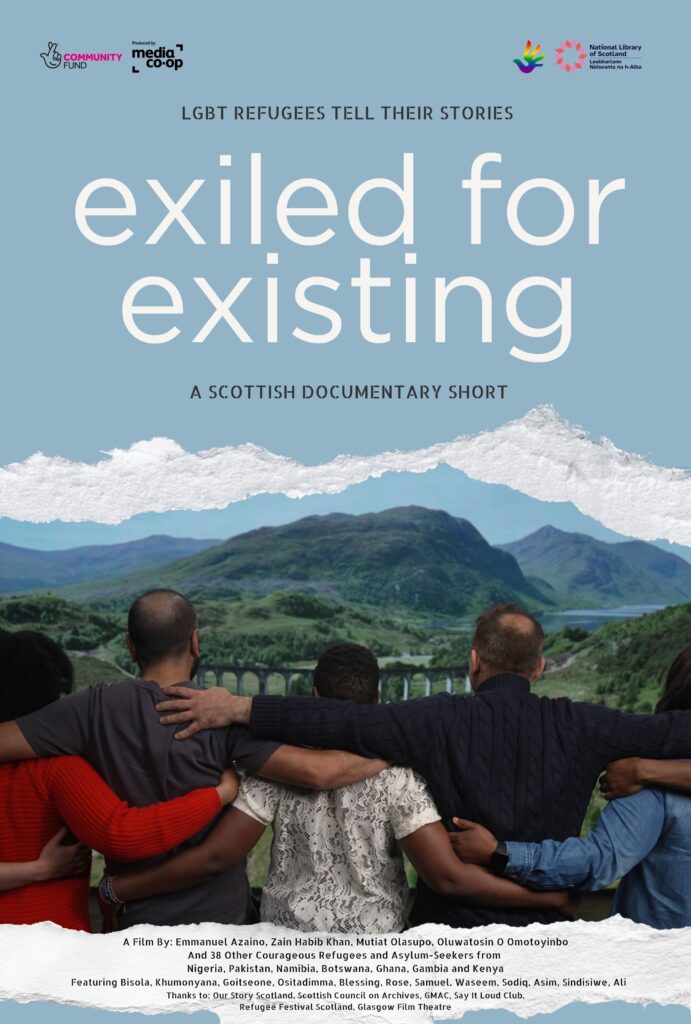
Media Co-op, an award-winning Glasgow-based workers co-operative, has released Exiled for Existing, featuring people forced to flee countries where they are in grave danger from laws prohibiting same-sex relationships – as well as family and community violence.
The official statistics are stark. In 33 of the 54 African states recognised by the UN, homosexuality is banned. In southern Somalia, Somaliland, Mauritania, northern Nigeria and Uganda, it is punishable by death. In Gambia, Sudan, Sierra Leone. Tanzania and Zambia, it can mean life imprisonment. And even in states where homosexuality is legal, there is often little to no discrimination protection.
This horrifying backdrop sets the scene for a seven-minute documentary short, sharing powerful first-person accounts from refugees from Pakistan, Nigeria, Namibia, Botswana, Ghana, Gambia and Kenya. Funded by National Lottery Community Fund, it was produced in partnership with the National Library of Scotland and community charity LGBT Unity, which has supported LGBTQIA+ refugees, asylum seekers and migrants in Scotland since 2004.
The premiere was held at Refugee Festival Scotland during Pride Month 2026.
One of those sharing their story is Zain Khan, 27, a gay man from Pakistan. “You might wonder, why did we come to the UK? Because in our own countries, queer people like me, we have no choice; it’s either jail or death,” he says. “I got involved because I wanted to inspire and encourage the entire LGBT community worldwide and tell them that it’s okay to be themselves and that everyone deserves to live their life with dignity.
“I was brave enough to speak out on behalf of all the asylum seekers and refugees. I took it as an opportunity and a privilege.
“I hope it will encourage everyone not to be silent and to have a voice for themselves and come out of their igloo.”
Khan is still going through the gruelling legal processes demanded by the Home Office to achieve long-term asylum. In September, the former investment analyst will be embarking on a Masters in accountancy and financial management at Edinburgh University thanks to a Sanctuary Scholarship, which offers tuition fees and living cost support.
All the individuals featured in the film are similarly going through the asylum process and seeking a new life and a permanent welcome in Scotland. For all of them, this is a matter of life and death.
Emmanuel Azaino, a young gay footballer from Nigeria, is just beginning the asylum process with help from Glasgow’s LGBT Unity charity. He faces the prospect of never being able to return to his home again because his life is in danger.
“I came to Scotland for a football trial,” he says. “Then I was outed while I was here. People were attacking my home, and there was a threat to my life; they wanted me killed. So I knew that if I went home, I would be killed. I wish I could have stayed at home. I miss my mum so much, but it wasn’t safe for me to go back.”
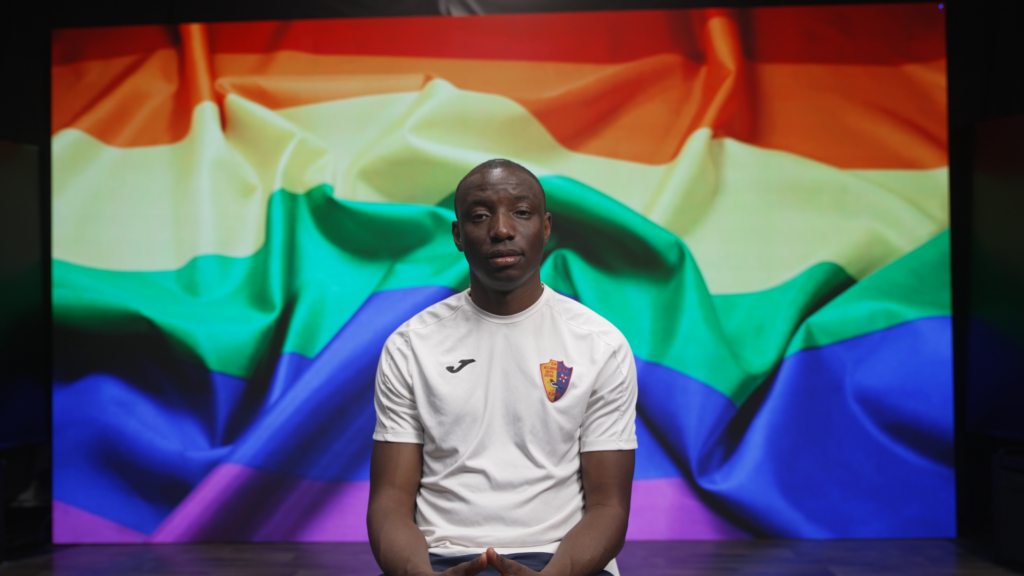
Azaino, who is still awaiting an interview with the Home Office, went through weeks of despair before getting the help he needed, but thanks to LGBT Unity and other organisations he has hope for the future.
“Initially when I became stranded here I didn’t know anything about the asylum process. I have been waiting from December till now, and I have not been interviewed yet by the Home Office. It has been very, very stressful.
“I was depressed, I felt sick, I had no food, and I was away from my parents. But with the help of LGBT organisations I was able to start going out and making new friends.”
A deeply moving testimony to the power of hope and solidarity, the film was co-produced by the asylum-seekers themselves and members of Media Co-op, including Lucinda Broadbent, who has worked for over 20 years as a director and executive producer of UK and international television documentaries.
She has a lifetime’s experience as an activist in feminist, LGBTQ+, anti-racist, peace and solidarity campaigns. Since 2004, Media Co-op has won a raft of awards including Royal Television Society Award for Best Animation, an Amnesty International Media Award, two Bafta Scotland nominations, and been shortlisted as Co-operatives UK Co-operative of the Year.
And, as Broadbent points out, at a time when homophobic activism is growing not just in Scotland but globally, it is more important than ever that people understand the struggles many are facing.
“As a worker co-op, all of us feel very strongly about the hostility and homophobia asylum seekers experience,” she says. “And I am gay, so this felt particularly important to me. Our core values are about education and community, so we thought it was really vital to have these stories told both for newly arrived queer refugees and asylum seekers, not just to help them understand there is a community which can offer help and support but to help the host community understand why they come here.
“There is violence on the streets for people who are refugees and asylum seekers in Glasgow. Their message goes across the UK and beyond. There are also people who are scared of refugees and asylum seekers. However, once they can hear and understand it helps to shift opinion, so they welcome people the way they would like to be welcomed. That is my belief. We are very proud we are able to be a co-operative and produce such quality work. And, because I am a lesbian, it is also very close to my heart.”
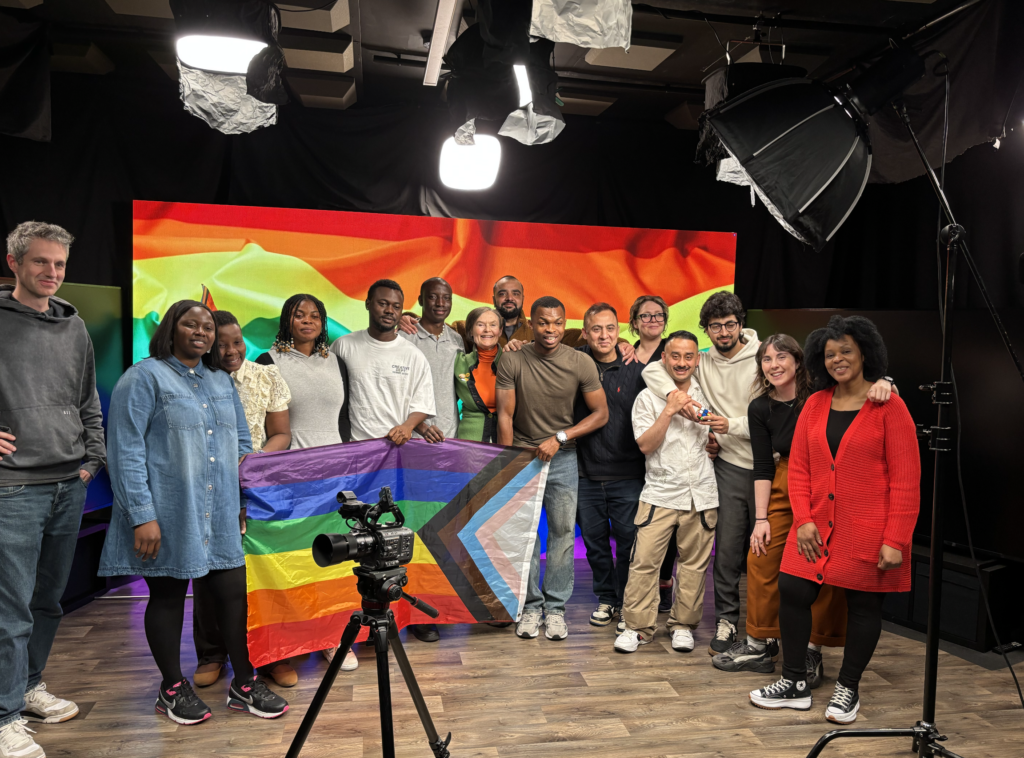
For Oluwatosin O Omotoyinbo, a lesbian asylum seeker from Nigeria, seeking refuge was a life-saving experience after being forced into marriage.
“Every day in Nigeria as a lesbian is being in danger,” she says. “Some people don’t survive it. I was told I was a disgrace to the family. I was beaten. I was forced into marriage. I’ve been mentally derailed since then.”
Though now safe in Scotland, as she explains, the asylum process can be “overwhelming”, and the mental scars remain.
“They make you tell the story which you are trying to forget, and they question everything. They make me return, again and again, to what I try to bury. It is traumatising.
“However, to be able to encourage others and sustain them through this rigorous time is a great thing. We have a platform to give strength to others and help them know that they are not alone out there and can make it through, moving forward in Scotland.
“Scotland has brought about an avenue whereby you can be yourself and be accepted as who you are. And imagine just growing up and you’re just living a lie, and now you’re somewhere where you’re accepted, [and the] community are willing to help. They are willing to give you an avenue to just spread and just meet people, have fun, live this one life.“.
Funded by the National Lottery Community Fund Scotland, Exiled for Existing is currently being streamed on YouTube and other social media and will leave a permanent legacy for years to come.
Media Co-op’s Vilte Vaitkuke, who helped create the film, says: “Media Co-op started this film project to give LGBTQ Refugees and asylum-seekers the chance to tell their own untold stories. It’s been an eye-opener for us to work with talented New Scots. We are proud it will be archived in Scotland’s National Library for future generations.”