Indonesia is vulnerable to earthquakes and eruptions; it straddles the Pacific Ring of Fire, where multiple tectonic plates collide, and the seismic Alpide belt, making it one of the most seismically active countries on Earth. It averages 6,000 quakes a year – and, while most are minor and unfelt, some are devastating.
In 2004, a magnitude 9.1 quake in Aceh triggered a tsunami that killed more than 170,000 people; a 2018 magnitude 7.5 quake and tsunami in Palu, Sulawesi, killed more than 2,200 people; and a 2021 magnitude 6.2 quake in Sulawesi killed over 100 and left thousands homeless.
This year brought another disaster. At 4.58am on 15 August, a magnitude 7.7 quake struck the Flores region of East Nusa Tenggara (NTT) in Indonesia. According to the country’s Meteorology, Climatology and Geophysics Agency (BMKG), the quake originated from shallow thrust-fault activity along the Flores Back-Arc Thrust, roughly 30 km northeast of Nagekeo at a depth of 15 km. A tsunami warning was issued and later lifted, but the danger did not end there.
“Five days on, the ground beneath Flores had not stopped moving,” said Alfi Syahrin, executive director of Micra Indonesia, “and the human toll has continued to rise alongside the aftershocks. It has also caused damage to homes and public facilities, landslides, disruption to roads and communications, and the displacement of thousands of residents.”
Micra was originally established by IFC and Mercy Corps after the Aceh tsunami, to build capacity in the microfinance and co-op sectors, and continues that work today. It also acts as a non-profit foundation partner of Asia Affinity, a holding group that operates within and supports the mutual aid and co-operative sectors.
Related: WCFU report highlights efforts of credit unions in disaster relief
In the days following the initial quake, BMKG’s aftershock count climbed steadily: 995 aftershocks by 16 August, 1,624 by 17 August, 2,119 by 18 August, and 3,002 by 19 August. Two weeks after the initial event, there have been 164 confirmed deaths with more than 1,600 injured and over 156,000 people remaining displaced.
“Many residents are sleeping in self-built emergency tents in fields, hillsides, and church or school yards rather than in their homes, precisely because the aftershocks have made indoor shelter feel unsafe,” said Syahrin, adding that the situation is also affecting local economic and social activities.
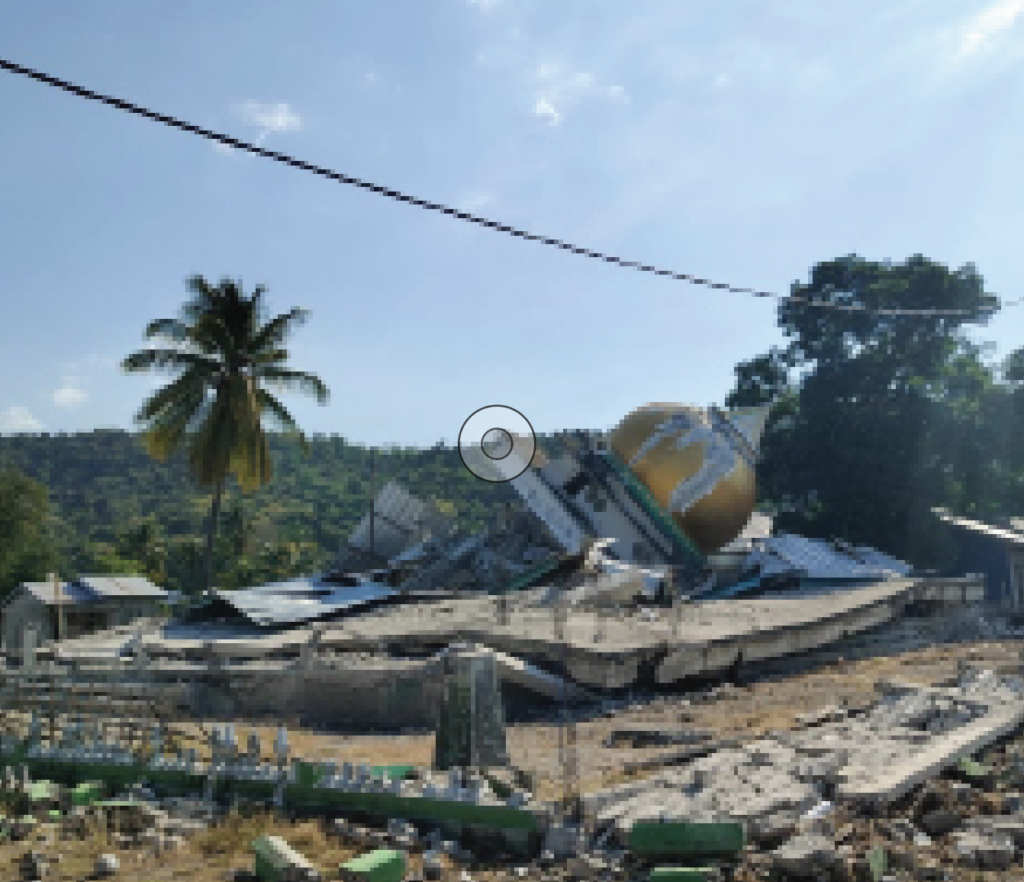
“Although some businesses and public services have gradually resumed, the continuing aftershocks, damaged infrastructure, and difficult terrain continue to complicate recovery and the delivery of assistance. Reports indicate that many affected residents continue to require basic necessities, including temporary shelter, food, clean water, medical support, and other emergency supplies.”
The disaster has also directly affected Micra partners, such as KSP Kopdit Pintu Air and Komida, two savings and loans co-operatives serving farmers and fishermen, and low-income women, respectively.
As of 19 August 2026, Komida reported that among its nine branches and 90 staff members in NTT, 22 colleagues were still unable to return to work due to the continuing disaster situation, particularly the frequent aftershocks. The situation has made it difficult for staff to resume normal operations and to safely reach the communities they serve.
Meanwhile, KSP Kopdit Pintu Air’s Flores branches stayed open and continued to provide services, including savings, loans, and other member services. However, as a precautionary measure following the earthquake, services are temporarily being conducted from emergency service locations in the courtyards of each branch office, rather than inside the main office buildings. This arrangement allows staff to continue serving members while prioritising safety amid the continuing aftershocks.
“For organisations such as Komida and KSP Kopdit Pintu Air, the priority at this stage is not only to restore operational activities, but also to ensure the safety of staff and members while gathering reliable information on the economic impact of the disaster,” said Syahrin.
Related: Korean credit unions raise disaster funds for rainstorm victims
“Micra Indonesia will continue to coordinate with our partners and monitor the situation in NTT, particularly the condition of our partners and members, emerging needs in affected communities, and the implications of the continuing earthquakes for local livelihoods and financial services.”
The situation in Flores – and in parallel examples around the world – demonstrates the critical role of co-operatives during post-disaster scenarios. In the case of savings and loans co-operatives, they provide fast financial relief, keep local money safe, and help communities rebuild. They are able to process emergency loans faster than big banks, reopen quicker and often set up local relief funds. They also have staying power and trust; people trust local staff, which stems panic and keeps community
money secure.
As the climate crisis and political and socio-economic challenges continue to impact communities around the world, co-operative responses are increasingly being presented as solutions – not only to mitigate the effects of these challenges, but also contribute to post-event rebuild and reconstruction.
The global co-operative movement is no stranger to offering support when disaster strikes. One recent example is the £22,000 raised in four weeks by Scotmid Co-operative members and customers through its digital micro-donation charity, for the Disasters Emergency Committee (DEC) Venezuela Earthquake Appeal.
And as we went to press, co-operatives were already liaising about immediate responses to the news emerging from Nepal and Tibet, about flash floods that have killed an estimated 350 people, with over 1,000 still missing.
But conversations are developing this thinking, further linking co-operative capacity (capital, expertise, resources) to co-operative support and reconstruction, working with co-operatives in regions who know their communities best.
For example, the Fund for International Cooperative Development (FICD) was founded on the idea that “international co-operation and mutual aid are the cornerstones of a resilient and just global community”, and aims to “support new or existing co-operatives so they can grow and play a major part in economic reconstruction and peace-building, fairly, sustainably and inclusively”. The Fund will be sharing important announcements in Panama during the International Cooperative Alliance’s Global Conference.
And at the ICA’s CM50 Leader’s Summit in July, one of the concrete commitments agreed by delegates focused on crisis reconstruction, and the deployment of the movement’s capacity to help communities and countries rebuild.
These ideas, which coalesce around the co-op principles of co-operation among co-operatives and concern for communities, will be on the table at the ICA Global Conference in Panama in September, which takes the theme Building Bridges: Cooperative Contributions for a Peaceful World. Because long after the aftershocks fade from the headlines, it will be the co-operatives that stay, proof that when the ground stops shaking, it is solidarity that rebuilds what was lost.