A report from New Philanthropy Capital (NPC) into the ‘impact economy’ has drawn flak for excluding co-ops, building societies and employee-owned businesses.
The report from the think tank, Impact UK: The size and story of our impact economy, defines the impact economy as an “ecosystem of individuals, organisations, and capital intending to prioritise public benefit over private gain. It’s also an ecosystem which is continuously evolving and so there is not one uniform definition.”
Making the case for impact-led business, the report estimates the UK’s impact economy at £428Bn, representing 15% of the UK’s GDP.
In his introduction, think tank CEO Jonathan Simmons said: “As a community we must commit to having a genuine impact, being independently analysed, and continuously striving to improve.
“But being part of the impact economy is a starting point, not the finish line, and we must be careful of excluding organisations from ‘our club’ before they have even begun.
“I believe the impact economy is the most exciting ecosystem to work within. There is real momentum in this space, catalysed by government, funders, practitioners, organisations like NPC, and clear shifts in policy, funding, and practice.”
Related:A record-breaking year for UK co-operatives and mutuals
The report splits the impact economy into two related parts – firstly, “the regulated impact economy, consisting of organisations that are legally required, and structured in a way to, provide benefit to society or the environment, including registered charities (both trading and non-trading), universities, trade unions, political parties, community benefit societies, housing associations, leisure trusts and community interest companies (CICs).”
Secondly, it identified “the self-regulated impact economy … organisations that are impact-led and may be appraised externally or internally but it is not a legal requirement, including impact-led businesses (excluding CICs and trading charities) friendly societies and mutual insurers.”
But while this list includes some parts of the mutual economy, the report says the definition does not include building societies, employee-owned businesses or co-operatives.
Contacted by Co-op News, NPC clarified that co-operatives were not excluded as a whole – but were included “if they fell in the regulated and self-regulated part of the impact economy, based on our definition”.
It also said it would revisit the report “so it’s clear that we have indeed included many co-operatives”.
This follows protests from Co-operatives UK which, while welcoming attention to the purpose-led business sector, posted on LinkedIn: “We do back the impact economy agenda – and welcome NPC’s work to estimate its contribution to UK GDP. However, our view is that NPC’s generalisation that co-operatives, building societies and employee-owned business are not part of the impact economy, is incorrect and does not hold up under scrutiny.
“It is telling that most of us in the co-operative and mutual world only found out about this report after it had been published. Based on the methodology and analysis used, we question whether the authors and those they consulted, knew enough about co-operatives and mutuals to make informed pronouncements on whether they were ‘in’ or ‘out’ of the impact economy. If this is the case, it would have been better to state this clearly, rather than making sweeping pronouncements that could result in poor policy.”
Co-operatives UK noted the report’s acknowledgment that is “imperfect and a starting point”, and invited NPC “to engage more with co-operatives and mutuals, so together we can arrive at a better-informed assessment of their place in the impact economy”.
Arguing for co-ops and mutuals as sharing, by design, “value, wealth, power, and opportunity through day-to-day activity”, the apex warned: “To succeed, government’s impact economy agenda must harness their unique ability to combine a strong economic contribution, with reduced inequalities and a high propensity to pursue and deliver other social and environmental impact.
“If it does not, it will be yet another damp squib that our country can ill-afford.”
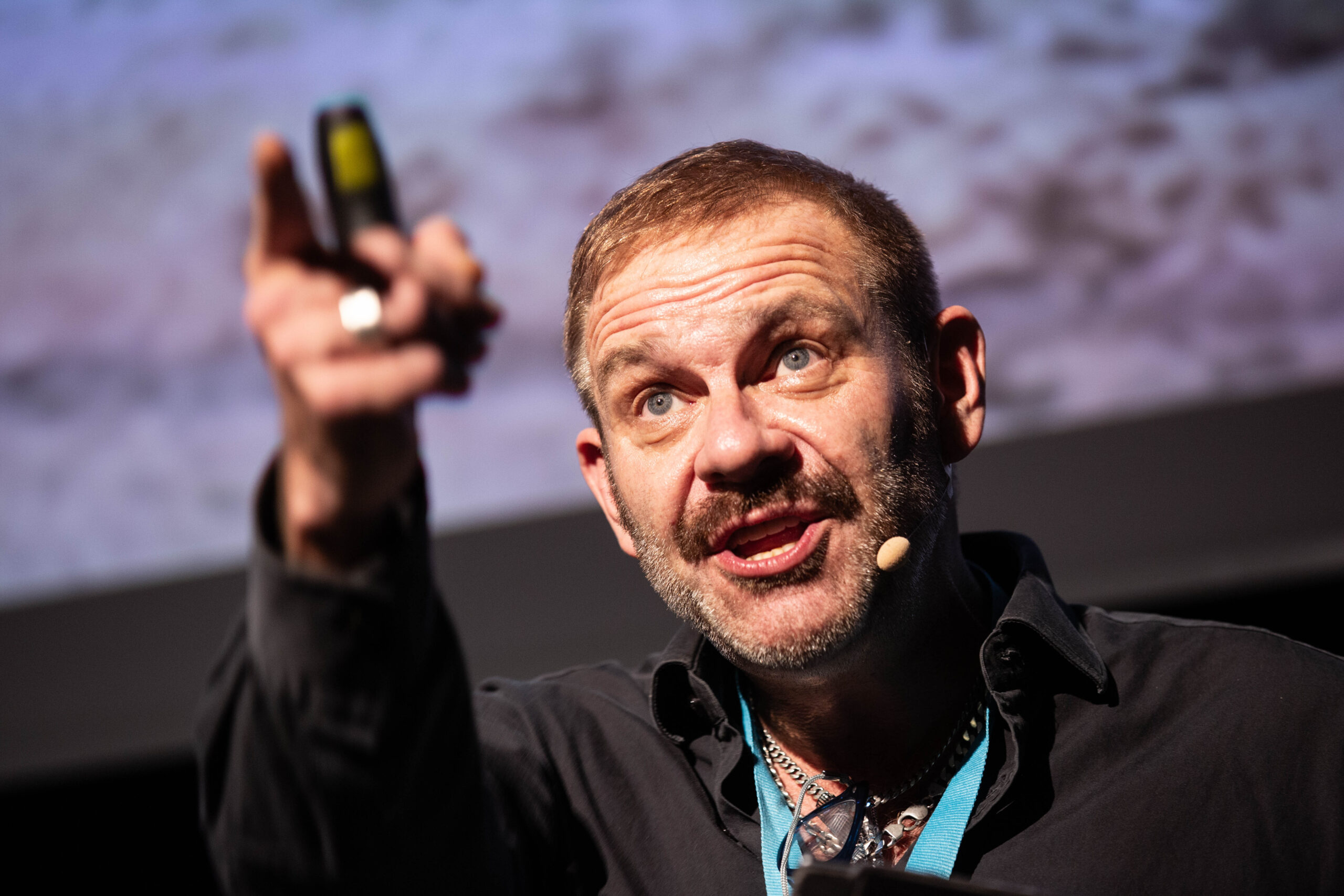
Peter Holbrook, from Social Enterprise UK, congratulated NPC on a successful launch for the report but added: “Its boundary‑drawing should trouble anyone who cares about the future of public services, inequality, and democratic ownership”.
He also criticised the current exclusion of co‑ops and employee‑owned businesses “while fully including privately owned, ‘purpose‑led’ firms, mostly B-corps, whose primary legal obligations still run to shareholders.”
Holbrook warned: “This is not a neutral decision – it risks hard‑coding investor‑compatible models as the default language of impact.
“This matters because the UK has already lived through decades of growing outsourcing and marketisation. Independent analysis shows private outsourcing plays a major role in public services, and research has linked forms of for‑profit outsourcing, in health to worse outcomes.
“At the same time, the government’s new Office for the Impact Economy creates a central ‘front door’ for investors and philanthropists to shape public‑facing activity. Without safeguards, we risk normalising the view that social problems are investment markets.”
Insisting that “purpose alone is not protection”, Holbrook argued that “UK law still places shareholder primacy at the centre of company governance, reaffirmed by the Supreme Court. Certifications like B Corp help inspire better behaviours, but cannot change the underlying duty owed to shareholders.
“Contrast that with social enterprise models … that embed mission in ownership. SEUK’s latest State of Social Enterprise research shows social enterprises contribute around £78bn in turnover and 2.3 million jobs, reinvesting in people and places.
“These are proven, resilient structures that reduce inequality by design, not aspiration.
“Ownership is the missing lever in today’s impact debate. Who owns, who decides, and who benefits determines whether the impact economy closes or widens inequality and is capable of building a Britain where prosperity is shared fairly and transparently.”
The Employee Ownership Association said: “The omission of EO … reflects a limitation in the report’s underlying understanding of mutual and employee owned business models.
“As a result, key evidence – such as the sector’s strong performance data or the role of EO in succession, resilience, and inclusive growth – appears not to have been meaningfully considered.
“We welcome NPC’s acknowledgement that the report is a starting point rather than a definitive statement.
“To ensure future work reflects the full breadth of the UK’s impact economy, we’re inviting NPC – alongside our partners in the mutuals and co-operatives space – to engage more deeply with employee ownership and the wider mutuals sector.
“Including EO within the impact economy is essential for recognition and for ensuring government policy fully captures and supports one of the UK’s most effective, evidence-based models for delivering economic and social impact.”
Contacted by Co-op News, Erwin Hieltjes-Rigamonti from NPC said: “We really value the role co-operatives play in the UK’s economy and society. We have also included many of them in our estimates of the impact economy, even if this is not as clear at first glance.
“This work is an early step in a longer journey to understand and map the impact economy, and that conversation is ongoing. We’re in contact with both Social Enterprise UK and Co-operatives UK and will continue to improve and update the content and clarity of the report over time as the concept of the impact economy evolves.”
On the specific questions raised on by Holbrook and Co-operatives UK on LinkedIn, Hieltjes-Rigamonti said: “We have also taken into account employee-ownership within impact-led businesses as part of our assessment framework. This is scored under ‘Business model’ question 4, regarding the distribution of profits.
“We have not excluded co-operatives as a group. Co-operatives were included – similarly to other mutual businesses – if they fell in the regulated and self-regulated part of the impact economy, based on our definition. The inclusion criteria and lens we took was based on being ‘impact-led’, rather than organisational structure.
“Co-operatives (as social enterprises) can take many legal forms. Data sources therefore often overlap, and when sizing the impact economy, we had to untangle different types of entities and data sources to ensure we don’t double count. As a result, co-operatives (or social enterprises) are not easily recognisable as one category, but rather sit across multiple categories.
“We break down the impact economy in a ‘regulated impact economy’ and ‘self-regulated impact economy’. We define the regulated impact economy are organisations that are legally required, and structured in a way to, provide benefit to society of the environment. We define the self-regulated impact economy as organisations that are impact-led and may be appraised externally or internally, but it is not a legal requirement.
“Depending on their legal form, co‑operatives can fall into either the regulated or self‑regulated impact economy, as they may be structured as for example co‑operative societies, community benefit societies, community interest companies, charities, or other impact‑led businesses.
“Thanks to the helpful feedback received so far, we’re looking to improve and update the content and clarity of the report, so it’s clear that we have indeed included many co-operatives. This will also include adding in co-operative societies explicitly.
“An area of discussion is when a co-operative mainly serves its member’s private benefits, rather than a wider community benefit. For these cases, we’ve aimed to include organisations that seek to reduce unwarranted inequality in society, even if their benefits are primarily for their members. We appreciate others may reasonably make different decisions, and welcome discussions on where to draw boundaries for measurement purposes going forward.”