Food security, says the UN’s World Food Programme (WFP), means physical, social and economic access to safe, nutritious and sufficient food that meets dietary needs for an active and healthy life.
The WFP’s 2026 State of Food Security and Nutrition in the World (SOFI) Report showed global hunger declined for a third consecutive year in 2025– but acute food insecurity is still rife. Around 266 million people across food- crisis countries face acute hunger, mostly driven by conflict, economic shocks and climate risks. Another 2.1 billion people (25.8% of the global population) are experiencing moderate or severe food insecurity, and 2.69 billion (32.7% of the global population) can’t afford a healthy diet.
Food security featured in a number of conversations at the International Cooperative Alliance’s recent global co-operative conference in Panama, with speakers discussing a vicious circle of conflict and food insecurity.
This was noted at the conference by Shobha Shetty, executive head, Global Agriculture and Food Security Program (GAFSP), at the World Bank. “Instability and hunger often feed each other,” she said. “When food prices spike, or harvests fail, unrest often follows. Conflict, in turn, is now the biggest driver of acute hunger.”
Speaking with Co-op News, Shetty highlighted how events like the ICA conference are “important at a time when conflict, climate shocks and debt are pushing more countries towards food crisis” in part because they turn the usual conversation around. “Development finance spends a lot of time talking about farmers’ organisations and much less time listening to them. In Panama, the people who run co-operatives every day were in the room alongside ministers, regional bodies and financiers.”
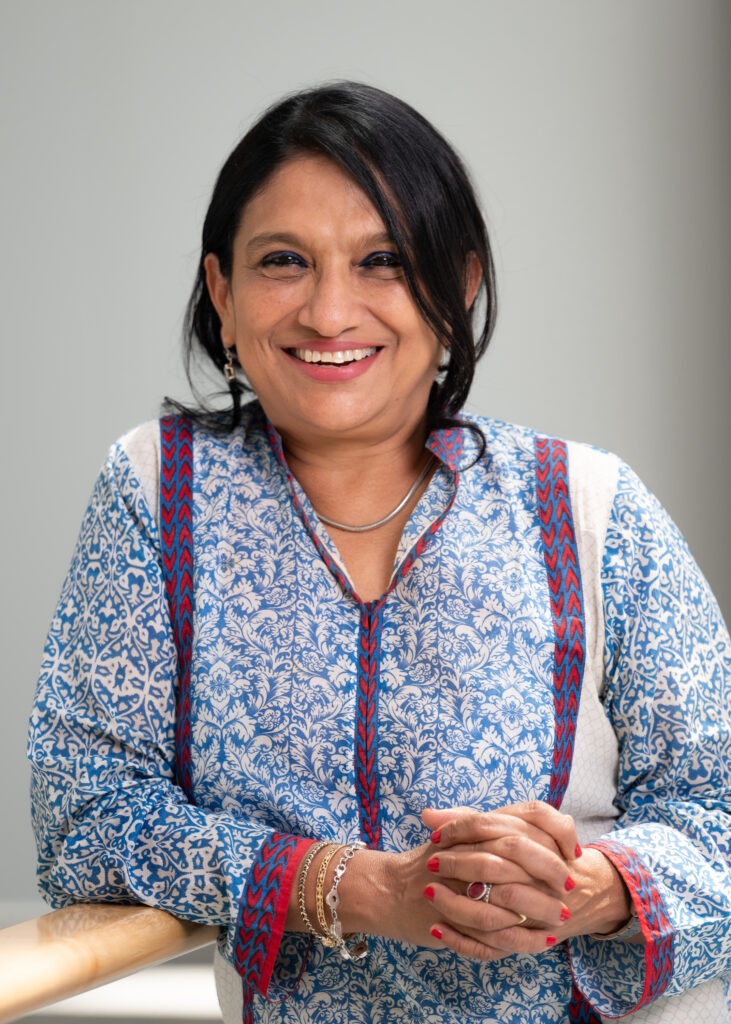
Shetty took part in a panel on The Cooperative Path to Peaceful Multilateralism, which brought together governments, regional bodies and leaders of the co-operative movement.
“My main takeaway was that co-operatives can’t just be the hands that deliver other people’s programmes,” she says. “They are institutions in their own right, and our job as funders is to strengthen them, recognise their role, and support them to continue thriving after we leave.”
GAFSP channels donor money into projects dedicated to improving food and nutrition security in the world’s poorest countries. It was launched by the G20 after the 2007-08 food price crises to increase investment in agriculture and food security. Since 2010, it has mobilised more than US$2.44bn in donor contributions, supporting projects in 55 low-income countries.
These projects include farmer-led co- operatives, unions and producer networks, which aggregate production, deliver support services and represent farmers in value chains and policy dialogue.
“Co-operatives are already building bridges in places many institutions struggle to reach, and what they most need from funders is trust, with real resources and real decisions,” says Shetty. “Our goal at GAFSP is to back them at scale so they can continue to deliver – and we challenge our development finance institution partners to join us.”
She sees the co-op model as a vital part of a sustainable global food system.
“[Co-ops] allow farmers to pool risk and resources. For example, shared storage, savings and equipment mean one bad season doesn’t wipe a family or community out. They open doors that individuals can’t force open.
“Lenders, buyers and governments can also deal with a co-operative in a way they can’t with thousands of scattered farms, which means better access to credit, better prices and a voice in policy.
“Meanwhile, a farmer on two hectares has almost no leverage. She buys inputs at retail prices, sells at whatever the trader offers, and has nothing to fall back on when the rains fail. Put a thousand farmers together, and the picture changes dramatically.”
GAFSP has a dedicated funding track that finances producer organisations directly, who design and manage their own projects.
“We’ve seen it work in Burundi, with the co- operatives of the CAPAD federation,” Shetty explains, highlighting how at one co-operative, bean yields rose from 30 kilos to 200 kilos an acre, and prices rose from 80 cents to 3 dollars a kilo once farmers sold collectively and met quality standards.
“Most importantly, seven of the nine co- operatives we supported became fully formalised and then secured financing from other World Bank and IFAD programmes, without GAFSP money. When farmers organise, and funders trust them with real money and real decisions, they can build something that lasts beyond the project.”
She highlights that different functions of a co- operative, such as bulk buying, shared storage and pooled credit, also help farmers tackle different kinds of challenges.
“Bulk buying absorbs price shocks, as when earlier this year fertiliser prices spiked in the wake of the closure of the Strait of Hormuz. Co- operatives buying in volume could still secure supply when individual farmers were priced out,” she says.
“Shared storage among groups of farmers helps to absorb market shocks, meaning farmers don’t have to sell at the bottom of the market just to cover school fees.
“Pooled credit and savings tend to be more effective at absorbing household shocks like droughts or illnesses, because if there is a fund to draw on, these types of setbacks don’t become a debt trap.
Finally, collective bargaining protects income over time: a contract for a set period of time with a buyer is worth more than any one-off price in the face of market turbulence.”
Shetty believes the element most often missing from a co-op is working capital. “This is because many lenders perceive them as too risky, too small or informal; or they don’t keep the requisite financial records, or retain the governance structures lenders insist on. This illustrates the need for governance and financial management capacity at the base. Too often training reaches the federation at the top but not the local groups that must survive the shock.
“This is where GAFSP comes in. Our grants pay for exactly what lenders want to see: governance, bookkeeping and business plans. In Bangladesh, for example, producer organisations we support now run their own revolving funds, and some started lending from their own savings before our money arrived. Through our newer blended- finance track, we are also helping development banks set up credit and risk-sharing facilities for farmer organisations and agribusinesses.”
As of December 2025, GAFSP had provided more than US$714m in grant funding – 36% of its portfolio – to about 9 million people across 29 fragility, conflict and violence-affected countries. “Farmer organisations work on the conditions that drive that hunger-instability cycle,” adds Shetty.
“They provide rural people, especially young people, a livelihood and a stake in their community. They build trust between neighbours and with local institutions and they create spaces where disputes over land and water can be settled before they escalate.
“We have strong evidence from specific places, such as Haiti, DRC, and Timor Leste in different geographies. Our reviews in fragile settings show that farmer organisations keep operating when outside agencies have to withdraw, because their staff live in the communities. What we haven’t yet done is track whether that resilience lasts after funding ends, and that’s a gap we need to close.
She has seen co-operatives bring together previously divided communities, including the Mol Tushum farmers’ co-operative in Batken, Kyrgyzstan’s poorest province, on the borders with Tajikistan and Uzbekistan.
“In 2021 and 2022, violent clashes over scarce water and land killed more than 100 people and forced around 200,000 from their homes, almost 40% of the province. But through all the conflict, Mol Tushum kept going. Its 2,000 members include Kyrgyz, Uzbek and Tajik farmers, including families who lost homes in the violence.
“For 20 years it has bought seed and fertiliser in bulk, shared machinery and storage, and let members pay half after harvest. What makes the co-operative possible is a shared stake. Everyone needs water, inputs and fair prices, and the co-operative runs on transparent rules, elected boards and open accounts, so members trust it even when trust elsewhere has broken down.”
With GAFSP support, Mol Tushum is now seeking to solve the root cause of the conflict, helping farmers use less water through drip irrigation and new water sources, and it is doubling its membership with a focus on women.
“We’ve seen something similar in eastern DRC,” Shetty adds.
“In one community, Bantu and Batwa families had stopped speaking to each other before the project began. Shared community gardens and local dialogue groups helped rebuild trust, and an independent review found that this reconciliation was a prerequisite for the agricultural work. For me, the lesson is that in fragile settings, social cohesion can be a precondition for productive investment, not just a by-product of it.”
With El Niño disturbing climate patterns and continued fertiliser disruption from the Hormuz conflict, Shetty sees getting ahead of the season as an immediate priority for agricultural co-operatives.
“Fertiliser prices have been volatile for several months, so co-operatives that pool orders and buy before planting can lock in supply that individual farmers will struggle to find,” she says.
“This is also the moment to switch seeds and practices. Drought-tolerant varieties, legumes that fix their own nitrogen and organic compost, for example all reduce exposure to both shocks at once. Co-operatives can also protect what members already have, through storage that spares them distress sales and savings funds they can draw on before selling livestock or skipping meals.”
Meanwhile, funders “should act on the forecast, rather than respond to a famine”, ensuring working capital gets to farmer organisations in time to buy inputs for the coming season.
“Every dollar spent before a drought goes further than one spent after it,” she adds. “Co-operatives are also the channel that gets risk tools to the last mile, because they aggregate farmers and can distribute inputs, information and payouts. Funders should get money to them in ways that fit their cash flow, with advances rather than reimbursements.
“At GAFSP, most of what we finance builds resilience over years rather than weeks: irrigation, storage, savings groups and local seed systems. That is what lets farmers absorb a shock like this one when it comes. Insurance is not yet part of our producer-led projects, and it is an area we would like to test.”
Shetty encourages other co-operative businesses to support and back farmer co-operatives by buying from them – and committing to doing so long term.
“A guaranteed buyer can be worth more than a grant because it gives a farmer co-operative the confidence to invest in better seed, storage and processing; it makes it easier to borrow, because lenders can see future income; and it gives members a reason to stay, because the co- operative is delivering a reliable market and not just occasional support.
“Consumer co-operatives, retailers, wholesalers and processors together represent enormous purchasing power. If even a fraction of that were channelled into long-term sourcing agreements with farmer co-operatives, it would supercharge the economics of smallholder farming.”
She highlights an example from Burundi, where a processing co-operative, Socopa, buys bananas from farmers under supply contracts and turns them into juice.
“Farmers with contracts receive double the usual price, and it is guaranteed. Co-operatives can also invest in the base: co-operative banks, federations and larger co-operatives can help smaller farmer co-operatives with what is hardest to finance, such as bookkeeping, governance and the first loan.”