Europe’s agricultural co-ops are facing significant challenges, most notably the scarcity and rising cost of fertiliser triggered by the war in Iran. As the sowing season approaches with farmers under increasing pressure, the agri-co-op umbrella group Cogeca is sounding the alarm.
Cogeca, the General Confederation of Agricultural Cooperatives, was founded in 1959 with six members. Cocega merged with Copa, the Committee of Professional Agricultural Organisations, in 1962. Together, Copa Cogeca acts as the most influential interest group for European agri-food, forestry, and fishery co-operatives to EU institutions and other socio-economic organisations contributing to European decision making.
Cogeca now has 35 full members, four affiliate members from the EU and 36 partner members, and works to promote the general and specific interests of the EU’s 22,000 farmers’ co-operatives, which employ 660,000 people across Europe and represent a global annual turnover of more than 300 billion euros.
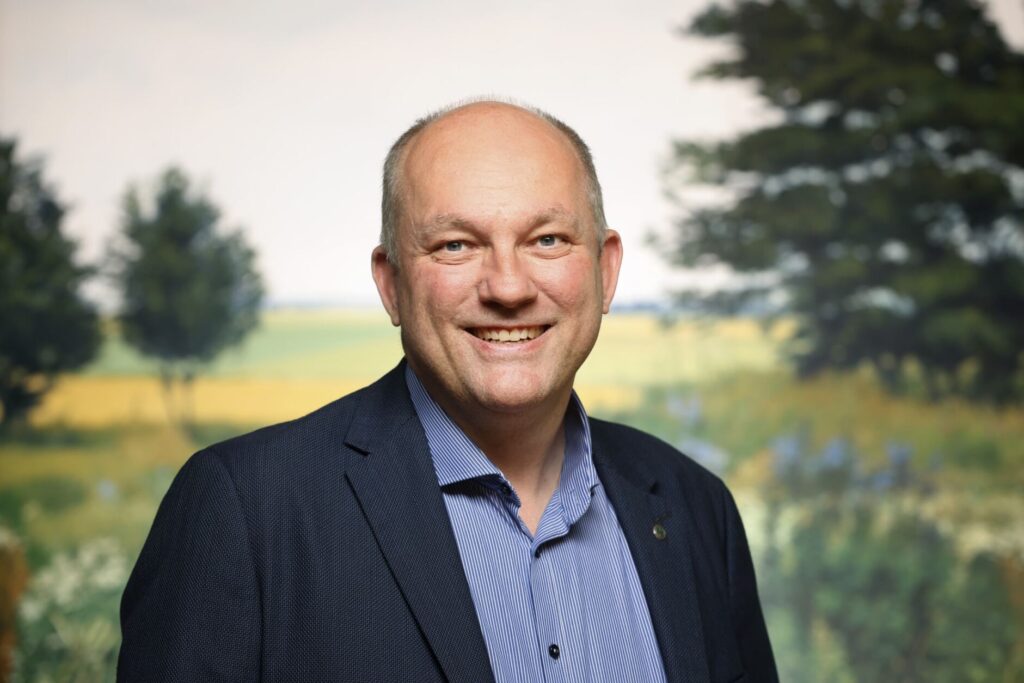
Cogeca’s president, Lennart Nilsson, runs a mixed farm in Sweden, with arable crops and cattle breeding, and belongs to the Swedish farmers’ co-op Lantmännen. Nilsson describes the situation facing farmers today as “maybe one of the toughest crises that the farming sector has met”.
“When we had the Ukrainian crisis, we heard a lot that the prices were even higher on fertilisers at that time. But at that time, the grain market responded very quickly with the prices skyrocketing. And for the moment, we don’t see that at all in the cereal sector. So that is maybe what’s most challenging for our co-operatives, because as traders, you need to squeeze the gap. And that’s a big challenge today.”
Main image: Fertiliser supplies under threat
The crisis, says Nilsson, is forcing farmers to make difficult decisions, such as choosing to farm with lower intensity, or farming half of their acreage as usual and setting the rest aside.
“Then you will lose volumes. And those volumes in these times, where especially the arable sector had had three years which have been quite challenging, means that production in the co-op will go down so much that they will lose in productivity and effectiveness. So it’s very worrisome for many of our members.”
Last month, the European Commission presented a plan for the security of Europe’s fertiliser and food supply, which the Commission’s president Ursula von der Leyen said was “investing in a stronger European fertiliser industry, supporting European farmers and accelerating innovation in sustainable, home-grown solutions”.
Related: World’s co-ops respond to food crisis as Middle East war cuts off shipping
In the plan, the EU promised to distribute the remaining €200m of its agriculture crisis reserve to farmers in need, and proposed adding a further €200m to the fund by summer.
However, Cocega responded to the plan with disappointment, stating that the Commission’s choice not to alter the existing EU regulatory framework rendered all of the plan’s proposals simply “potential long-term intentions” rather than much needed immediate action.
As well as intervening on the liquidity of farmers, Cocega has called for the Commission and member states to suspend Most-Favoured Nation tariffs on all fertilisers (excluding Russia and Belarus), to allow member states to derogate from Nitrates Directive thresholds for the next cropping season, and to suspend the Carbon Border Adjustment Mechanism (CBAM) levy.
CBAM, a tax on EU imports of carbon-intensive products including fertiliser, has been a major lobbying point for Cogeca, which has calculated that the levy could cost farmers €39bn over a seven-year period.
“In this context, the Iran crisis also acts as a revealing stress test of a structural scissors effect facing European farmers: fertiliser costs are increasingly exposed to additional policy-driven charges, while agricultural output prices remain set on global markets,” said a Cogeca statement on CBAM, released ahead of the Commission’s fertiliser plan.
“Copa and Cogeca therefore call, in the context of the fertiliser plan expected on 19 May, at a minimum for the suspension of the mechanism and long-term measures to offset CBAM-related costs for farmers. In addition, full clarity should be given on how the CBAM revenues will be redistributed within the EU.”
But the most important issue, says Nilsson, is out of Cogeca’s hands.
“The conflict in the Middle East must end quickly, because for each week that there is a problem, we lose a month. And it’s not only the fertiliser that is manufactured in that area, it’s also the natural gas and the energy that we import to our factories.”
Nilsson advises Cogeca members who may be struggling right now to be proactive and seek alternative fertiliser suppliers where they can.
“It’s very important that the co-operatives are active. They cannot trust that there will be fertiliser on the shelf … the knowledge about the market, and about members’ demand is so important at this moment.”
He also highlighted the importance of engaging with members, particularly when it comes to the bulk buying of fertiliser.
“They need to really listen to their members to see how they are all facing this, if they want to know how they think, and whether they will be able to buy fertiliser through the co-op … dialogue with members is more important than ever.”
Co-operatives can play a crucial role in times of crisis, says Nilsson, drawing on his own experience in 2018, when Sweden experienced its most severe drought since records began.
“Lantmännen co-op used dividends to pay back more to the farmers. They have also done this other times to be strong on the market. If there are interruptions in production, it’s always a strength if you are more able to share the burden. The tougher times are the most important, I think. We have seen that several times here in Sweden.”
Co-ops also enable farmers to challenge the market more, adds Nilsson.
“If one farmer goes out on the market to buy fertiliser, that’s impossible. The co-operative can really show its strength here to be an active business partner to the fertiliser manufacturers and also try to negotiate with more fertiliser suppliers. So I think they have a very, very important role in this.”