Vancity, Co-operators and Desjardins have been recognised in this year’s Corporate Knights Best 50 Corporate Citizens ranking of sustainability leaders.
The annual ranking evaluates more than 350 large Canadian organisations on sustainable investment, revenue, and growth. The sustainability rating emphasises the impact of a company’s core products and services, with a focus this year on the momentum of sustainable revenue – a quantitative analysis of three equally weighted performance indicators: share of sustainable revenues, percentage of sustainable investments and the sustainable-revenue momentum score, which tracks growth in sustainable revenues from 2022 to 2024.
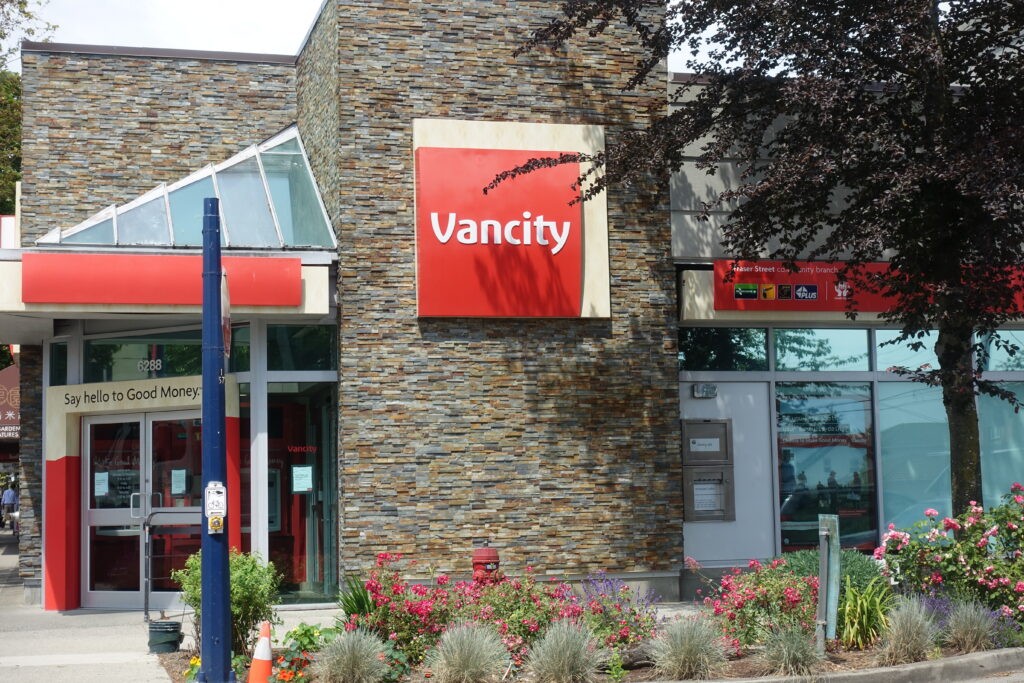
Credit union Vancity, based in Vancouver, ranked ninth overall in the list and first among Canadian financial institutions. The result places Vancity first in both banking and the broader financial sector in Canada, and second globally among financial institutions.
The recognition marks a significant rise for Vancity, up from 41st in 2025 and 13th in 2024, which the credit union says reflects its continued progress in integrating sustainability into its core business.
“At Vancity, we believe finance should work for people, communities and the planet,” said Wellington Holbrook, president and CEO. “From financing thousands of affordable homes to growing billions in impact-focused assets, this recognition shows that values-based banking can deliver both strong performance and meaningful impact.”
Corporate Knights’ methodology assesses the share of investments and revenues tied to sustainable activities and their growth over time. Vancity’s results reflect a strategy focused on addressing key challenges facing Canadians, including climate change, housing affordability, and financial inclusion.
In 2025, Vancity grew its triple bottom line assets – loans and investments generating positive social and environmental outcomes – to CA$13.2bn, representing 34% of total assets. The credit union also financed 3,915 units of affordable housing and distributed $21m to members and communities through its Shared Success program.
Vancity’s impact is supported by strong financial performance. In 2025, it reported $69.9m in net income, with core revenue reaching $675.4m, demonstrating the strength and resilience of its values-based model.
“As expectations of financial institutions evolve, Canadians are increasingly looking for organisations that are transparent, responsible, and contribute to long-term economic resilience,” said the credit union. “Vancity’s performance underscores that integrating sustainability into core business strategy can drive both trust and growth.”
Meanwhile, insurer Co-operators is celebrating its 17th consecutive year on the list. It earned the highest ranking among insurers globally and was placed 11th overall in Canada.
“This continued recognition reflects the important work our teams are doing to embed sustainability across our business and create long-term value for our members, clients, and communities,” said Chad Park, VP, sustainability and citizenship.
“By integrating sustainability principles into our core business decisions – from how we invest to the products we offer – we can better support our clients over the long-term to prevent losses, build resilience, and advance the financial security of Canadians and our communities in a changing world.”
Co-operators’ 2026 recognition and continued high standing on the list is credited in part to its advanced impact investing framework and resilience-enabling insurance products.
Co-operators highlights:
- 27.5% of Co-operators total revenue was defined as sustainable under the Corporate Knights Sustainable Economy Taxonomy
- The pioneering and successful implementation of resiliency focused products, such as Comprehensive Water, Canada’s first and only product providing access to flood insurance for all flood risk levels, including storm surge, now covering over 745,000 Canadian households, farms and businesses
- 60.2% of the organisation’s total investment portfolio is directed to impact and climate transition investments – equivalent to $8.75bn
- Executive compensation linked to sustainability targets
Co-operators added: “The business case for sustainability is clear. It is central to how the organisation operates and advances its vision to be a catalyst for a resilient and sustainable society. Looking beyond short- and near-term profitability, the company has integrated sustainability into its strategy, decision-making and governance, focusing on long-term, mutually beneficial outcomes that build financial security for Canadians.”
Other highlights include:
- $15.3m contributed to community organisations building environmental resilience, enriching social wellness, and creating a more inclusive economy and championing a co-operative society.
- Advancing resilience for clients with the highest risk: through TomorrowStrong, eligible policyholders can receive additional funds following a covered loss to support upgrades such as wind, hail, and fire-resistant solutions.
- A commitment to achieve net-zero emissions in operations by 2040 and a net-zero aligned investment portfolio by 2050.
More details in Co-operators Integrated Annual Report and Climate Report.

Also featured in the list is credit union federation Desjardins, ranked 44th. Regularly included in the list, Desjardins was praised by judges for its work on climate adaptation, with initiatives including affordable flood insurance for high-risk Canadian areas and cash incentives for hail-resistant residential siding. The finance co-op was also selected for its efforts to reach net zero by 2040.
In terms of wider social impact, judges recognised Desjardins for its continued support of affordable housing, employee health programmes, and home ownership initiatives for First Nations communities.
Its sustainable products also performed well, with the Desjardins Sustainable Canadian Equity Fund A earning a 92.5% final score in the 2026 Responsible Funds ranking