Brazilian co-operatives were actively engaged in the UN climate summit (Cop30) in Belém, Brazil, where they called for consistent public policies, adequate funding and legal provisions to enable a transition to regenerative models.
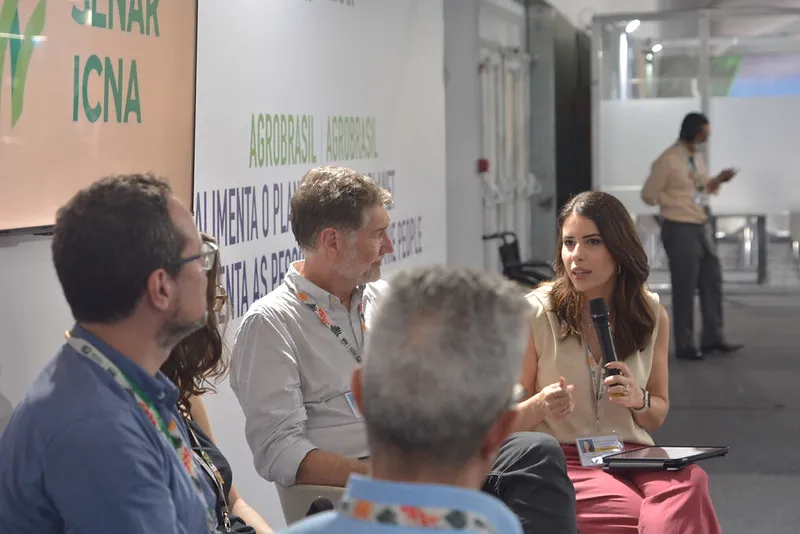
Co-ops hosted a range of sessions at the event, where they had their own Coop pavilion, and participated in sessions on green finance, low-carbon agriculture, renewable energy, bioeconomy, sustainable logistics, food security, and climate adaptation.
The sector’s main message was that co-operatives are already contributing to the climate agenda, in Brazil and around the world, but need more support to implement more climate-friendly initiatives.
“Brazilian co-operatives are already protagonists in the climate agenda,” said Márcio Lopes de Freitas, president of the Organisation of Brazilian Co-operatives (OCB), during one of the sessions. “They represent the link between the real economy and major global commitments, bringing innovation, sustainability, and inclusion to those at the production base.”

“We are leaving much better than when we entered,” the superintendent of the OCB and president of the Instituto Pensar Agropecuária (IPA), Tania Zanella, said in a statement after the event. “We brought information, combated misinformation, and showed, with numbers and evidence, everything that agribusiness co-operatives already do for the climate and for people.
“Now we move on to the stage of alignment and the construction of policies that will allow us to expand this impact.”
Fabíola Nader Motta, general manager of OCB, said co-operatives can play a strategic role in the transition to a low-carbon economy and in disseminating best practices in the field.
“Co-operatives are an essential ally in getting new technologies to producers faster,” she told a fringe session. “Co-operatives have reach, decentralise climate finance, and ensure that resources and innovations reach where they truly make a difference.”
One of the examples showcased during the side sessions was a tropical science project developed by Brazilian Agricultural Research Corporation (Embrapa) and disseminated in partnership with co-operatives.
“The technology is ready. The challenge is to create conditions for it to reach the producer. Nobody makes this revolution alone: we need integration between research, co-operatives, government, and the market,” said Daniel Trento, head of the Presidential Advisory Offi ce at Embrapa.
His organisation is working with credit co-operatives represented by Sicoob CCS to train technicians and producers for low-carbon livestock farming.
Fernando Luiz Vidigal, agribusiness consultant at Sicoob CCS, said this has increased productivity, promoted animal welfare, and contributed to carbon capture.
“The union between Sicoob and Embrapa brings real solutions to producers that increase effi ciency and guarantee sustainability to the meat production system in Brazil,” he added.
Big announcements at COP30 included the launch of the Coopera+ Amazônia programme, which will invest R$107m in 50 extractivist co-operatives operating in the babassu, açaí, Brazil nut, and cupuaçu value chains.
Through the project, 3,350 families will access technical assistance, management, governance, machinery and equipment.
“The Coopera+ Amazônia programme marks a new cycle of development in the Amazon. It strengthens those who live off the forest, increases income, and brings innovation to the co-operatives,” said Geraldo Alckmin, vice-president of the republic and minister of development, industry, trade and services. “In this way, we are building a development model that protects, includes, and generates prosperity.”
Décio Lima, president of the Brazilian Micro and Small Business Support Service (Sebrae), said the programme would incorporate technologies that strengthen the Amazon bioeconomy. “This is a unique bioeconomy,” he added, “born of this extraordinary forest, which sustains livelihoods without cutting down trees or polluting rivers – it is sustainable. This is the reflection we must make, particularly within the co-operative model.”