From 2018 to 2023, Bruno Roelants served as the 16th director general of the International Cooperative Alliance. He brought decades of experience in the co-op movement, following secretary general roles at Cicopa (the sectoral organisation of the International Cooperative Alliance for industrial, artisanal, and service co-operatives) and Cecop (the European confederation of industrial and service co-ops).
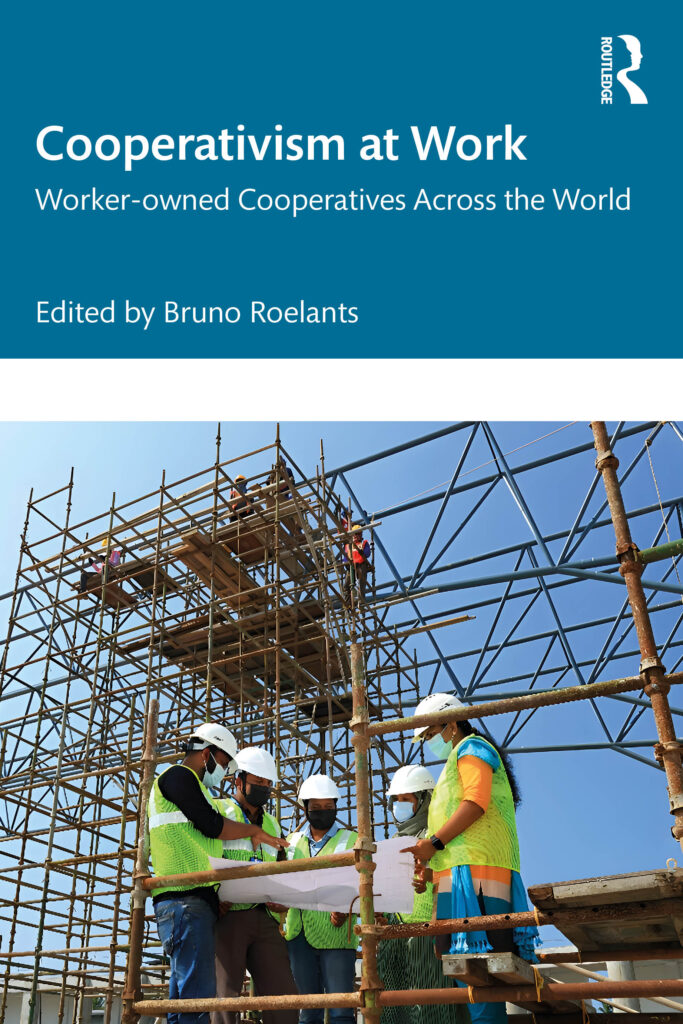
Since his retirement, Roelants has been working on a book – Cooperativism at Work: Worker-owned Cooperatives Across the World, to be published later this month.
“The idea of having these kinds of books with case studies is not new,” he says. “But this opportunity came when the Uralungal Labour Contract Cooperative Society (ULCCS) – a big worker co-operative in India – approached me with the idea of writing a book on worker co-ops across the world, on the occasion of their 100th anniversary – and of the second International Year of Cooperatives (IYC).”

The IYC meant co-ops were being viewed on a global scale once again, he adds, and led to an emphasis on entrepreneurial strength.
“The 26 examples from 15 countries are of cases in which the workers have majority power in the co-operative – but we made sure it’s not a book that is wishy washy about co-ops being nice little enterprises. We show the entrepreneurial strength.
“Another thing that was clear from the beginning was that there should be a big array of different scenarios. So there are case studies on co-ops of different ages, from different sectors, with different kinds of architecture.”
The selection process involved “making sure that we had examples from all continents,” says Roelants, and not too many from the same country – with the exception of Italy, Spain and France, because “they have a much bigger density of worker-owned co-ops, and because they have been the makers of the model, with people from many countries studying them”.
Related: ICA looks at questions around national co-op law
There was also a need to ensure the authors were sufficiently knowledgeable, but “there is a big mix of different types of authors. Some are academics. Some are active in their co-operative itself. Some are active in federations where these co-ops are affiliated. What they have in common is that they know the model very well.”
There are 31 contributors in total, including Siôn Whellens (UK), Jessica Gordon-Nembhard (US), Hyungsik Eum (South Korea), Saji Gopinath (India) and Giuseppe Guerini (Italy). A full list can be found here. A central theme they address is the co-operativisation of labour.
“Every co-op co-operativises something,” says Roelants, “consumption, or credit or housing. In this case, it co-operativises labour, which itself is a central aspect of life, society, and the economy. So, when thinking about the future of work, it is important to see how this co-operativisation of labour can function in different environments.”
Another thread is the issue of public policy and legislation. “Worker co-ops can thrive and multiply in countries where they have favourable public policy and legislation, so the growth of worker co-ops isn’t only about the workers, the co-ops or their federations; it’s a question about to what extent governments want or don’t want to develop the worker co-op model.”
Roelants’ main ask to governments would be to have mandatory indivisible reserves for worker co-ops, to lock value into the organisation, which protects them from predatory attitudes. “We see, even within one country, like Canada, that provinces where you have indivisible reserves have far more worker co-ops than the provinces where you don’t have indivisible reserves.”
He would also like to see the development of a series of financial instruments, like those found in Italy, where the co-op movement created Cooperazione Finanza Impresa to implement the Marcora Law to support worker buyouts. From the law’s implementation in 1985 to 2024, Italy has seen 320 buyouts, preserving 10,688 jobs.
Despite his wealth of experience, Roelants still found a few surprises when editing the volume.
“One of the things that surprised me most is the capacity of co-operative members to not only organise one co-operative, which is already difficult enough, but to organise a whole sustainable architecture, where the workers understand the need to invest time and money in complicated procedures and democratic systems, in order to let it develop a really democratic co-operative system.
“It surprised me because we’re all human beings – and the more human beings you have in the co-operative architecture, the more human passions and defects can also appear.”
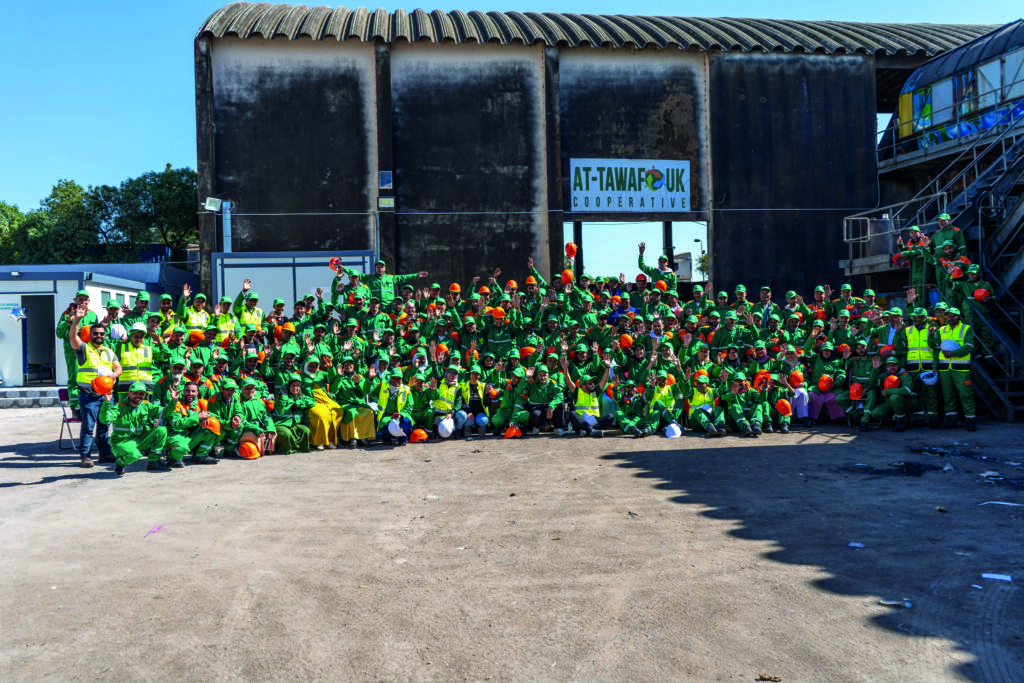
A case study that moved him was At-Tawafouk Cooperative, a worker-owned waste-recycling enterprise in Morocco; through training and governance, 27 women became full worker-members with equal voting rights and access to stable wages, social security, maternity leave, and safer working environments, gaining professional recognition, skills, and dignity, “which is just incredible”.
The book shares stories of worker democracy in action, such as Creators 440Hz (Tokyo), which grew out of the democratic education movement at Tekisen Democratic University and brings together young people who experienced school refusal (futōkō); and stories of worker buyouts, as in the case of Uniforja in Brazil, where workers took control of bankrupt metalworking companies in the early 2000s.
Related: Opinion – co-operation, global politics and dangerous times
And, of course, there is ULCCS, whose centenary inspired this book. Founded in 1925 by 14 labourers in Kerala, India, it has evolved into a global model of worker ownership, by pioneering collective entrepreneurship, capital formation by members, and direct project development. Today, it employs nearly 20,000 workers and diversified into IT, education, agriculture, housing, and crafts, and maintains strong welfare schemes.
Roelants hopes that people from the worker and social co-operative movements use the examples in the book practically, as a tool to discuss and inform public policies.
“I would also like to see people from the co-op movement, who are not from worker co-ops, be inspired and understand the interest in co-operative labour, and – whether they are in consumer co-ops or co-op banks – think about the benefits of providing some tangible share of power to the workers.”
He also hopes to influence “policymakers within governments who are in charge of developing and promoting co-ops, to help them understand the potential of what this model can do.”
He believes the next decade could be “a very important one for co-operatives in general, and for the co-operativisation of labour in particular [because] the very models of labour are being put in doubt … We are faced with a globalised, brutal situation, the like of which we’ve never had before.”
This is an unprecedented challenge but also a big opportunity, he hopes, “because when you have a situation in which you have so much globalisation of finance and financialisation of the economy, this is also a time when you can have a boomerang effect.
“And co-ops can be part of a boomerang effect if they are sufficiently well organised, and they continue to maintain the model no matter.
“We need to consider how and to what extent the co-op model can be adapted across different countries and sectors. Cicopa has developed complementary standards for worker and social co-operatives, aligned with the Statement on Cooperative Identity. Just as a country needs a constitution, co-ops need these standards; without them, they don’t exist.
“In times of uncertainty, it is crucial to preserve this minimum common denominator – like the rules of football. While football can be played in many ways, the rules must remain. Similarly, the co-operative model must be kept intact to ensure its global existence.”
Cooperativism at Work is published by Routledge at the end of February, with pre-order available from 3 February