This year UK fashion brand Lucy & Yak became employee owned, through an Employee Ownership Trust (EOT) model.
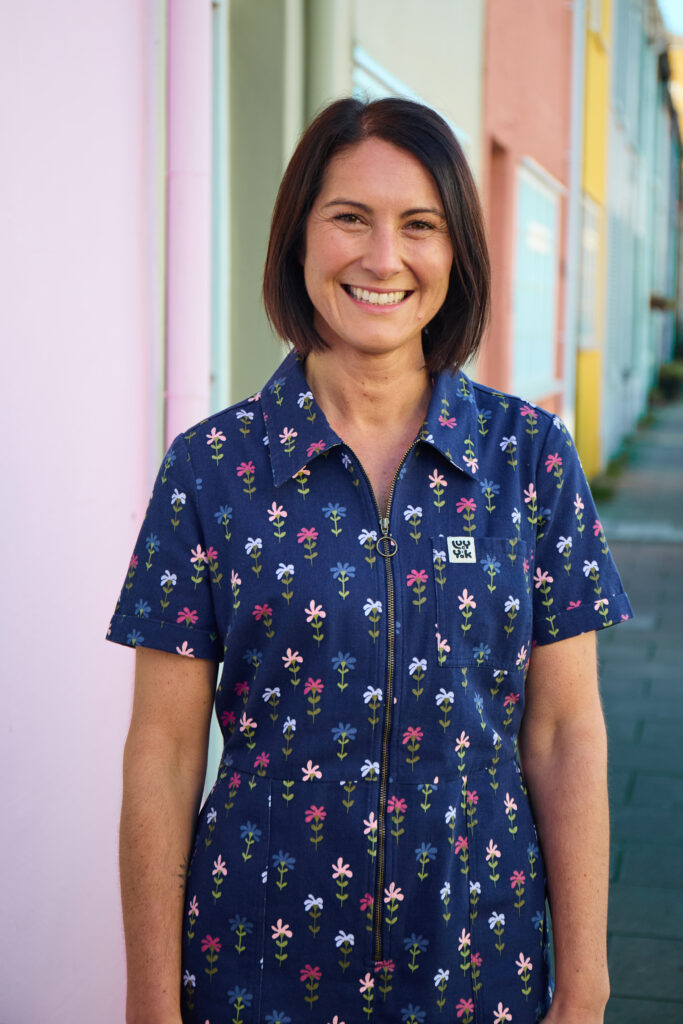
Managing director Lydia Coley says the transition, announced last year and completed in March, was met with “a lot of happiness and excitement,” with many colleagues describing it as a positive step for the business.
“There was also some sadness from the team to see Lucy and Chris move away from the business, the founders who have brought the exciting ideas and energy that have grown the brand to what it is today,” Coley adds.
Lucy Greenwood and Chris Renwick, both from the north of England, developed the Lucy & Yak brand, which they describe as “a happy accident”, in 2017 during a trip to India. After meeting a tailor in Rajasthan, the three created Lucy & Yak’s signature dungarees, of which the first batch quickly sold out.
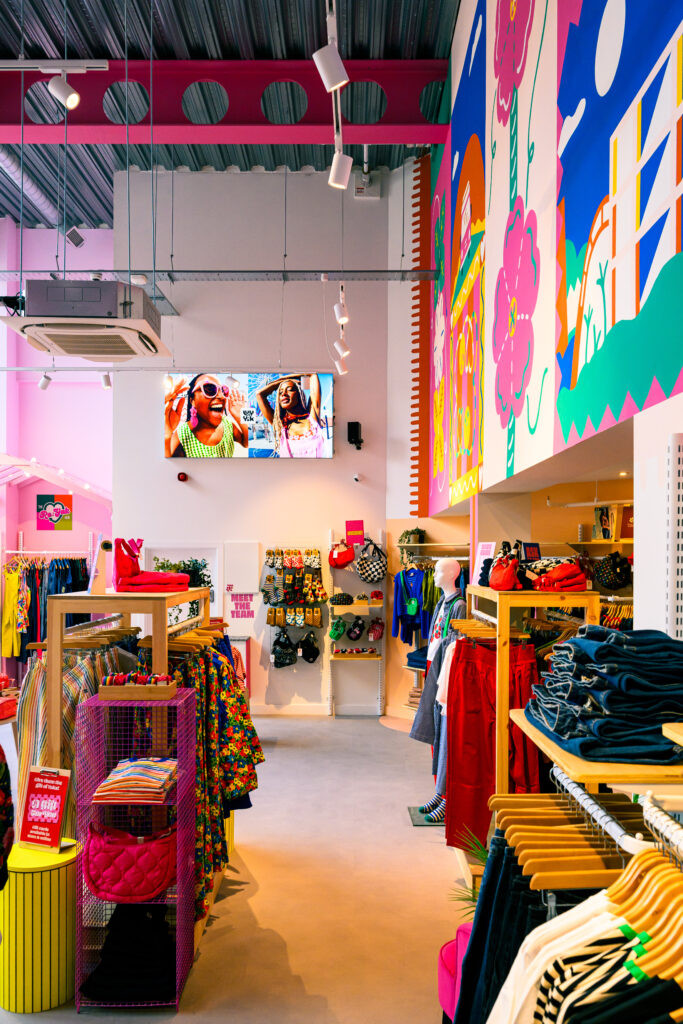
Today the business has 15 stores around the country and employs more than 200 staff.
Lucy & Yak’s move to employee ownership was inspired by home entertainment retailer Richer Sounds, whose founder Julian Richer sold 60% of the company to his employees in 2019.
“[Richer Sounds moving to an employee ownership model] led us to explore other brands that had done the same,” explains Coley – of which there are a growing number.
According to data published by the Employee Ownership Association and the White Rose Employee Ownership Centre last year, UK employee ownership has grown by 1640% since 2014, when the current EO legislation was implemented.
As of 2025, the sector is made up of around 2,470 employee-owned businesses, collectively employing more than 350,000 individuals.
Lucy & Yak received support from independent specialist EOT advisors and a legal team “that has worked with us from the beginning, that understands our brand and what’s important to us,” says Coley.
With a mission statement “to prove that it’s possible to make great products that bring people joy, are kinder to the planet, to treat workers fairly and have a happy team who love what they do”, Lucy & Yak built a reputation early on as an ethical choice for clothes shoppers. Though this has not been without challenges, as the business has faced criticism from customers in recent months over product quality, sizing and marketing practices.
In a statement published in February addressing some of these issues, as well as the move to employee ownership, Coley states: “I am committed to investing the time to listen carefully and understand how we can improve.”
“We have learnt many lessons since the brand was born over eight years ago, particularly over the past couple of years. The most important one is that we must never take our eye off our core customer and the reasons why they support us.
“The EOT allows us to maintain all of the things that are important to us, including preserving our independence, ensuring our brand core values are always at the heart of what we do, protecting jobs and our company culture and sharing success with the people who contribute to it every day. We are committed to maintaining our ethical standards and responsible practices with no compromises.”
As part of the transition, Lucy & Yak has established an EOT board, though day-to-day strategic decisions and running of the business will continue to sit with the Lucy & Yak board, which includes Coley and the company’s finance and operations director, supported by a team of department heads.
Colleagues can vote for a representative to sit on the EOT Board, who gathers feedback and questions to be discussed at meetings. Lucy & Yak has also introduced a new monthly ‘Colleague Collaboration Council’ with representatives from different areas of the business to share improvement ideas for day to day running of the business.
“The EOT board has been set up to give the company long term stability, preserving its independence, protecting jobs and our company culture,” says Coley. “The transition means that Lucy & Yak remains independent and rewards the people who make its success possible.”
One of the main challenges the business faced during this transition, says Coley, came as the founders started to step away and the rest of the team began to take the lead.
“Lucy & Yak is only eight years old and was built on strong core principles by two founders who were closely involved in shaping the vision alongside the management team.
“The team has had to build a new level of confidence to say, ‘I know what to do here.’”
A new training and development manager has recently joined the team to support this process, and information on the EOT is now part of Lucy & Yak’s induction process.
“Lucy and Chris knew that one day they would be ready to move on to new stages of their lives. Rather than taking the traditional route of selling to investors who scale businesses primarily for financial return, they wanted to leave the business in the hands of the people who know it best, its employees. They trust the team knows the business, the customers, and the values of the brand best to carry it forward.”