The Federation of Southern Cooperatives/Land Assistance Fund has hailed “a historic milestone” as the Matagorda Bay Fishermen’s Cooperative (MBFC) opened its seafood processing facility.
The facility, opened during MBFC’s third annual membership meeting, held 27-28 February . The co-op is on its first year as an owner and operator of critical seafood processing infrastructure, an objective members identified early on as essential to their business model.
The Federation says that across the US there are few, if any, seafood co-ops with the capacity to buy, process, and sell at scale that are controlled by communities of colour. This makes MBFC’s move “powerful and historically significant”, it adds, “reflecting the determination and focus members demonstrated over years of sustained co-operative development. The Federation is honored to have assisted in achieving this milestone.”
Related: New Mississippi land retention specialist for Federation of Southern Co-ops
To support the acquisition, the Federation served as a bridging organisation and used its Revolving Loan Fund, a financial tool that provides bridge loans to protect vulnerable land holdings and support co-operative operations.
Through this mechanism, the Federation says it structured support for transactions between the co-operative and the Matagorda Bay Mitigation Trust (MBMT), helping make co-operative ownership of major infrastructure possible.
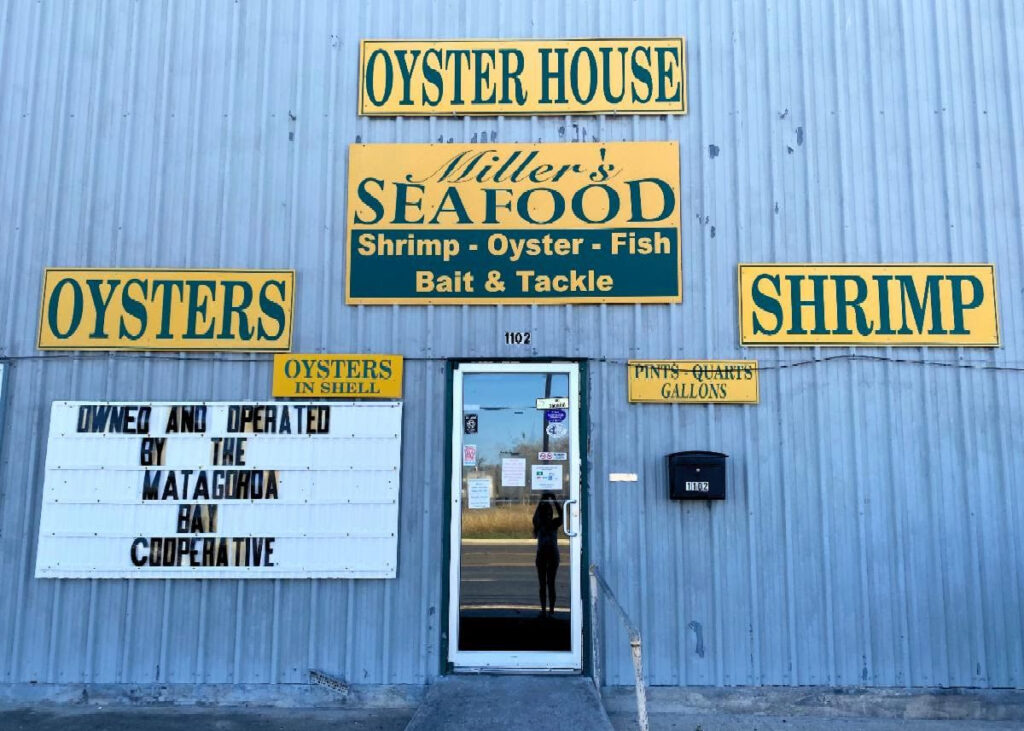
The facility purchase culminates nearly five years of co-operative development. During this time, the Federation worked alongside fishermen in Port Lavaca, Texas, through co-operative development workshops, planning meetings, feasibility studies, and business planning led by Federation staff and advisors.
“Through this phase,” it says, “foundational co-operative concepts and ideas were discussed, then woven into the collective process.
“Co-operative development is rarely linear, as there are often great challenges to overcome. When proposed oyster bay closures by the Texas Parks and Wildlife Department threatened the local livelihoods of this community dependent on wild-caught oysters, the Federation helped co-operative members mobilise nearly 200 fishermen, build alliances with elected officials and regional seafood businesses, and successfully advocated for the decision to be rescinded, demonstrating the collective power of co-operation.”
Terence Courtney, director of co-operative economic development at the Federation, added:“This experience showed the fishermen that co-op power can be wielded in the sphere of economics, and when necessary, in the advocacy sphere as well.”
The purchase of the facility followed feasibility studies and completion of the business plan, much of which rested on the ability to process seafood products.
The MBMT was established through an environmental justice settlement following a lawsuit led by local activist Diane Wilson and Antonio Bay Estuarine Waterkeeper against Formosa Plastics for long-term plastic pollution in Matagorda Bay. Co-operative development was identified as part of the community’s pathway toward economic recovery.
Related: Northern Ireland eel co-op at risk from Lough pollution
Nearly six months after completing the purchase, MBFC reports growing markets, increasing stability, and strong member engagement. Building on this progress, members are partnering with the Texas Parks and Wildlife Department, Texas Sea Grant, and other organisations to pursue waterfront leases for an emerging oyster farm, an effort that could mark another historic first in co-operative ownership.