Rising land values and speculative development are turning US neighbourhoods into financial assets, pricing out long-term residents. But in cities like Boston, where the median house price is now $900,000 (£655,000), community land trusts (CLTs) are creating another kind of wealth.
Community land trusts are democratic organisations which own land co-operatively among residents, giving local people affordable access to housing and collective control of land.
In the US, the modern CLT model emerged from the civil rights movement, with the first formal CLT established by Black farmers in Albany, Georgia, in 1968.
“Community land trusts in the United States come out of a very particular experience – the Black African American experience,” says John Smith, co-author of the report Community Land Trusts as a Tool for Community Wealth Building and Closing Racial Wealth Gaps. “It was about agriculture, and folks coming out of the civil rights movement and thinking, we need someplace to establish and call our home. Collectively owning the land, and then being able to grow and build, that was a way to establish agency and to establish community.”
The report references a long history of land taken from communities of colour, including during and after slavery, and says gentrification is the contemporary face of this dynamic.
Today, CLTs can be seen as a way for communities to reclaim land and close the racial wealth gap which negatively impacts community infrastructure, the movement of people and access to housing.
By removing land from the speculative real estate market and placing it under community control, the report argues, CLTs offer a form of social housing that can counteract negative impacts of a long history of racialised planning, land use and real estate development policies.
An enduring example of this in action can be found in the 42-year old Dudley Street Neighbourhood Initiative (DSNI), on the edge of downtown Boston. Aiming to secure “development without displacement”, residents organised to purchase vacant land and created a CLT to steward it.
Today, in what is now known as the Dudley Triangle, affordable homes, playgrounds, gardens, community facilities and new businesses sit on lots that were once filled with rubbish. DSNI holds 97 home ownership units in the Dudley Triangle, including rental units.
“When this whole thing started, that part of the city was basically a dumping ground,” says Smith, who is also executive director at DSNI. “I think the fascinating thing about this story is that DSNI was essentially a community organising process that was built from the bottom up by the residents there, who were primarily Black and Brown at the time.
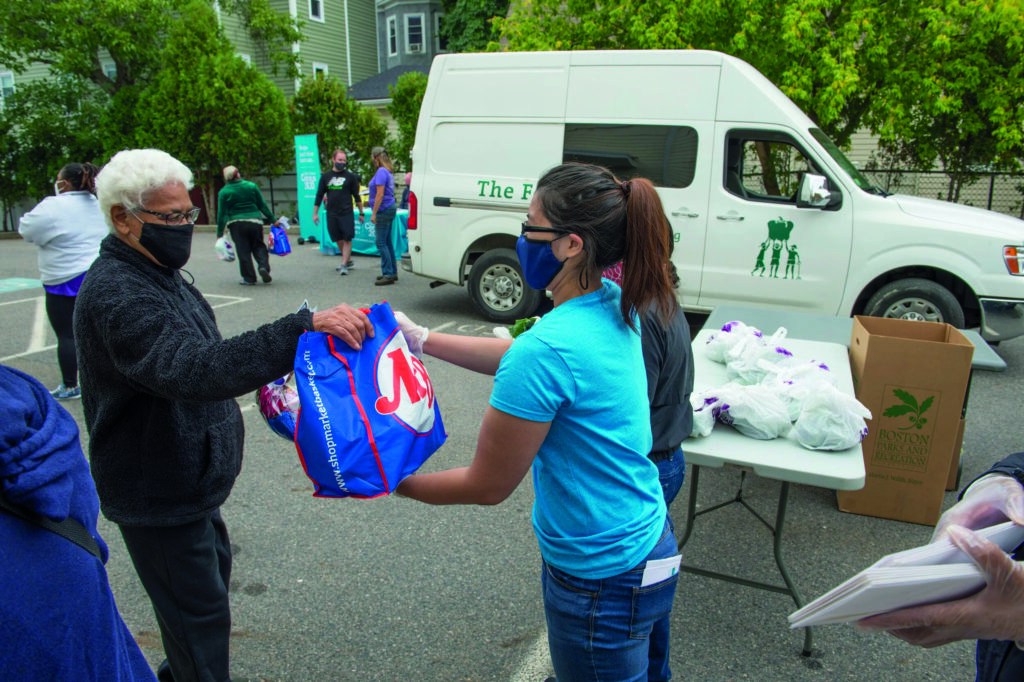
“It was the neighbours who decided to organise, to clean it up, to make sure they had stable housing for the people that live there – to claim their own neighbourhood.”
DSNI was described by academics as an “island of stability” during the 2008 financial crisis, when a wave of foreclosures disproportionately affected Black and Latine communities across the country. DSNI’s land trust has experienced just four foreclosures, all before 2008.
This stability exists in other CLTs across the country. From the 1970s to the mid-1990s, half of first-time lower-income and minority homeowners lost their homes in the first five years, while in CLTs, 94% of owners made it past the five-year mark.
If the CLT did not exist, the Dudley Triangle “would be a monument to displacement,” says Smith. “People who’d lived there for years would probably live outside and have to commute. It would look like any urban area that had expensive condos and townhouses.”
Instead, the CLT has built community wealth, he argues. “People are able to build up equity and save in different ways – they’re not spending all of their money on mortgages.”
Beyond the accumulation of resources, CLTs have been found to contribute to local economies by enabling the support of local and small businesses, and enhancing public health. But for Smith, the key is democratic control.
Related: Co-ops returning ownership and control to the housing system
“Normally, [a developer] sees a piece of land, sees something they want to develop, goes away, develops it, sells it off, or rents it for really high prices. It eliminates certain people living in our neighbourhood, changes the whole colour, tenor, rhythm of that neighbourhood, and it becomes something else. So you displace and marginalise people who have lived there for a long time.
“You cannot do that in our neighbourhood, because the community controls it. So therefore the land is not controlled by rich developers, it is controlled by the community. Community wealth is not just the idea of just money. It’s the idea of stability and community control.”
The US CLT movement has seen marked growth in recent decades, but faces numerous challenges. With rising land prices and high upfront costs, CLTs often struggle to secure financing for land acquisition, development, and operations, while funders’ prioritisation of new projects over operational support leaves CLTs with insufficient resources to maintain day-to-day activities.
Climate change is another issue facing CLTs, Smith warns. “We have to be better prepared, so I want us to really think about climate resilience hubs and different types of energy, as we get ready for the impacts of climate.”
Unsupportive policies, such as restrictions on long-term leases beyond 15 years, also present problems for CLTs, and there remains limited awareness of CLTs among both policymakers and the public.
As well as increased partnership working with the public, private and philanthropic sectors, Smith calls for deeper education around CLTs, tied to sharper definitions of community wealth building, to overcome these challenges and grow the movement.
“There is a sense that people are still learning about community land trusts,” says Smith.“Sometimes I’m surprised that people don’t know more. I think maybe it has a lot to do with us and how we talk about it – not only DSNI, but other land trusts around the country.”
A change of narrative could be needed when it comes to communicating the power of CLTs, he thinks. “Sometimes what we miss [when talking about] community land trusts is the community. There’s this whole, ‘Let’s get houses off the speculative market, let’s make sure the predatory folks don’t come in and take this’, which is admirable and important, but I think the key to all of this is what kind of community we’re building.”
Smith calls on the movement to “continue raising awareness around the benefits of CLTs, and talking about the historical struggles of establishing some of these CLTs, where they come from, why they were important at the time – rooted in this experience of Black oppression, but also a willingness to take a chance and involve folks from the community, and build something that showed that they had the will and the agency to do it.”