Nationwide Building Society, a leading light of the UK mutual movement, is facing fierce controversy over plans to to award CEO Debbie Crosbie a 43% raise, which could bring her pay package to £6.9m – without a binding vote by members.
A non-binding vote on the pay rise goes before members at the society’s annual meeting tomorrow (Friday), with a number of members vocal in their opposition.
The total package – dependent on Crosbie hitting all her targets – compares to salaries at smaller mutuals of around £1.6m for Susan Allen, CEO at Yorkshire Building Society, or £1.2m for Coventry boss Steve Hughes.
In its annual report, Nationwide said the end of the banker bonuses cap had “materially increased the gap between Nationwide and the firms with which we compete for senior talent”.
To help with talent retention, the mutual wants to offer Crosbie an annual bonus worth up to 150% of her £1.1m salary, up from 100%, and said it would consider hiking other elements – which could include long-term bonuses.
“While our proposed changes for 2025-26 will go some way to addressing the competitive gap,” it added, “we remain materially behind some of our UK banking peers, and the committee recognises that future policy changes among other firms may further increase the existing gap.”
This is not the first row in recent years over member representation at the mutual, which last year faced calls led by money expert Martin Lewis to put the purchase of Virgin Money to the vote.
And the storm comes as Nationwide takes on a more prominent role in the wider co-op and mutuals movement, with chair Kevin Parry sitting on the UK’s new Mutuals and Co-operatives Business Council, announced by chancellor Rachel Reeves last November. Crosbie herself spoke at this year’s Co-operative Banking Forum, held during the UK Building Societies Association conference in May.
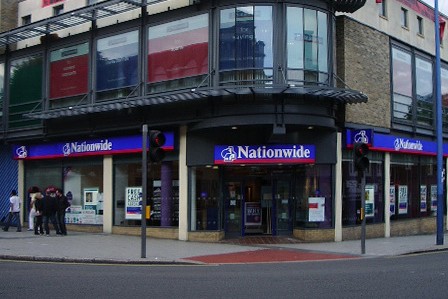
Nationwide member James Sherwin-Smith, who has tried to join the board to act as a voice for members, told the Telegraph: “It’s like Nationwide is saying we’ve made the society far bigger by buying a bank [Virgin Money], and now because it’s bigger, we have to pay our people even more … The society is being led towards becoming a bank in everything it does.”
Another critic, Edwin Fisher of the Building Societies Members Association, told the Guardian that Nationwide is the “most controversial [building society], and has, in our opinion, the lowest standards of corporate governance,” adding: “They regularly churn out the line that members are the owners, but we all know that members have no say in anything.”
But from the mutual movement, Nationwide has its defenders. Peter Hunt, CEO of mutuals consultancy Mutuo, told the Guardian that Crosbie is “the Lionel Messi of British building societies … she could play for any of the banks, so this is how they keep her in the Nationwide shirt.”
On the question of a member vote, he said: “If I was a member of Nationwide, how would I be equipped to know what any executive should get paid? How would I know?“
Robin Fieth, CEO of the Building Societies Association, agreed, noting that “when you’ve got a balance sheet that’s £300bn, most people can’t compute that at all.”
He said members should ask questions but keep long-term performance in mind.
A Nationwide spokesperson said: “Nationwide voluntarily puts its remuneration policy to a vote at every AGM and has always received overwhelming member support. Our members question and challenge the board on several matters at our AGM, including remuneration and we always consider their views. At the last AGM over 94% of votes were in favour of the proposed remuneration policy.
“Nationwide has become the second largest provider of mortgages and retail deposits, delivered record member value last year, remains first for customer satisfaction amongst high street banks, and more people switched their current accounts to Nationwide than to any other brand. We have managed this because we can attract, retain and motivate talented leaders. Even after the changes that are being proposed at the AGM, Nationwide’s CEO will still be paid substantially less than the other large banks.”
The mutual added that the maximum remuneration opportunity will only be paid where there has been outstanding performance, including over a three-year period for LTPP awards, but has reported “outstanding” full year results in terms of profit, member value and customer satisfaction.
“Nationwide would be one of the largest companies in the FTSE 100,” it said, “yet our CEO’s total remuneration received in 2024/25 would be in the bottom quarter.”
Crosbie manages a retail balance sheet far larger than several of the mutual’s UK banking peers, the spokesperson added, and even after the proposed changes to her pay, her total remuneration opportunity is “significantly below” NatWest, Lloyds, Barclays and HSBC.
“As a systemically important financial institution, we are required to have a board and senior management team with appropriate skills, experience, knowledge, and independence to support our strategy, meet regulatory expectations, hold management to account, and uphold the highest standards of governance.
“Nationwide has a diverse board with experience from across a range of customer facing sectors, including financial services, and it is believed to be the right size for the responsibilities it has.
“All our board directors are also members of the society.”
Correction: This story was amended on 25 July, to state that Kevin Parry sits on the Co-operatives and Mutuals Council, not Debbie Crosbie.