The future of co-operation is reliant on a strong co-operative youth movement, and in an increasingly connected world, young co-operators are finding more ways to come together and support each other across borders.
The Young European Cooperators Network (YECN) is an informal network of co-operators under the age 40 from across Europe. It exists to provide a platform for young co-operators, increase youth participation in Europe’s co-op movement, and offer members new opportunities for learning and connection.
The YECN started as an informal network in 2015, with a group of leaders working to move it towards something more structured.
“This is the normal life of a network – it starts as informal, and then you try to establish it more formally,” says Mathilde Delabie, Cooperatives Europe advocacy officer and YECN coordinator.
But this process stalled with Covid-19, which prevented in-person meetings.
“When I joined Cooperatives Europe in 2021, we had the idea of trying to relaunch the YECN,” explains Delabie.
Cooperatives Europe used its 2022 general assembly in Cardiff, the theme of which was youth, to encourage members to bring together young co-operators who were interested in relaunching the YECN.
Related: Young co-operators hack out a brighter future at Global Conference
“We had a full day. It was very fun, and nice to see all these young people being in the room and trying to rethink the YECN. And this is how we relaunched it in 2022.
“Now I’m very excited to say that the YECN is taking a new turn, because we’re trying to structure it into a more formal committee of Cooperatives Europe. We’re taking the lessons learned from the previous YECN, and trying to make the network grow.”
The YECN currently reaches around 200 young co-operators across Europe, using WhatsApp, social media and newsletters to update, consult and engage the network, as well as hosting regular community calls for members to come together online.
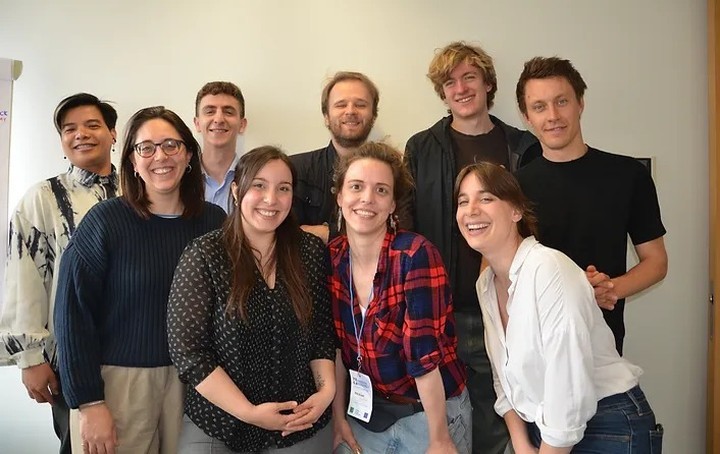
“We give the spotlight to an initiative, a project, or anything that one of the members would like to put forward, and these calls are open to everyone,” explains Delabie.
The network is also engaged in a number of projects, including an Erasmus programme that will launch at the Global Forum on Social Economy (GSEF) forum in Bordeaux in October.
“The whole point [of this project] is to connect young people and to build a global advocacy for better inclusion of young people in the social economy. We’re very happy to be part of this,” says Delabie.
The YECN is also involved in the European Economy and Social Committee (EESC)’s ‘youth test’ – an opportunity for young people to input on the opinions produced by the EESC on different topics.
“Every month, the EESC produces a list of draft opinions which are flagged as important for the youth. We’re part of that group receiving the opinions, and we can then flag them within the network and ask if members are interested in working on them. Then they’re integrated into the EESC’s drafting process where they can provide input.
“Here we can include members on topics that we are not necessarily experts on, for example if there’s something on, say, agriculture or housing, we know exactly who to ask in the YECN because they’re working on that.”
The YECN is organised by working groups; the main one is currently focused on developing the network’s formal structure in a democratic way, while another is exploring options for a website with a .coop domain. They have also discussed a future working group to organise YECN specific events, for which they will need funding, says Paola Rosatelli, operations and research officer at Cooperatives Europe and YECN coordinator.
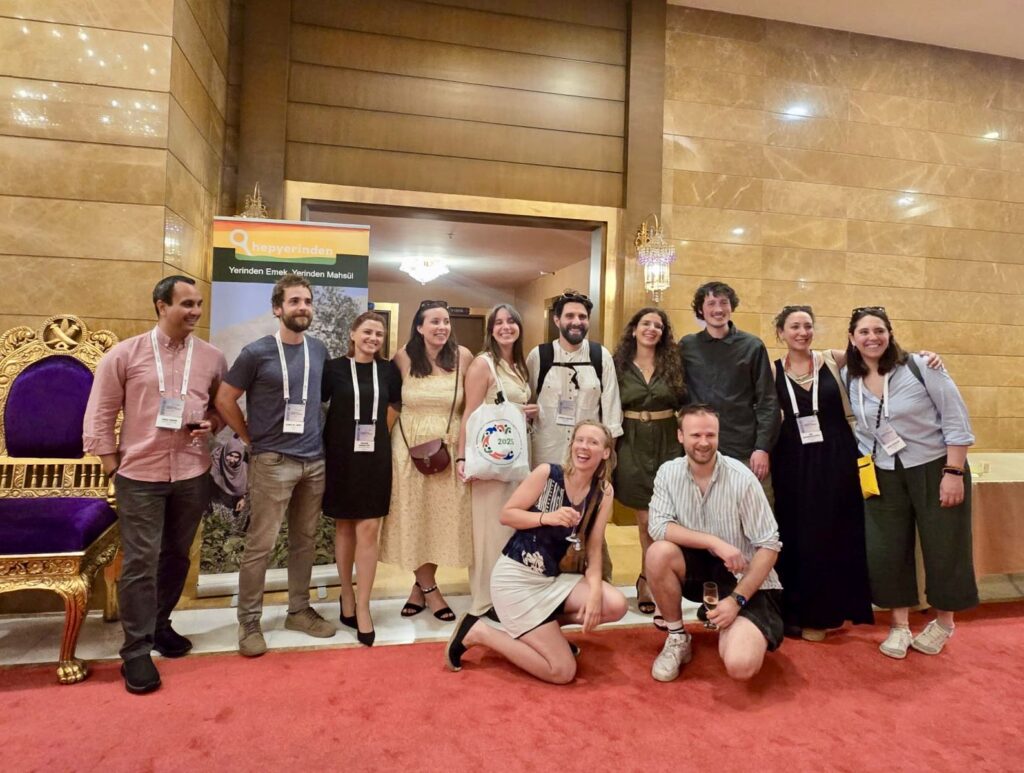
“That’s always kind of the elephant in the room. As of now, as an informal network, we rely on the willingness of members, and board members of Cooperatives Europe to support some activities, to sponsor their young members to participate in larger events. But in the future, what we hope to achieve is that, through projects, through external funding, and maybe fundraising, we can have an events line of work; that’s where the working group will come in.”
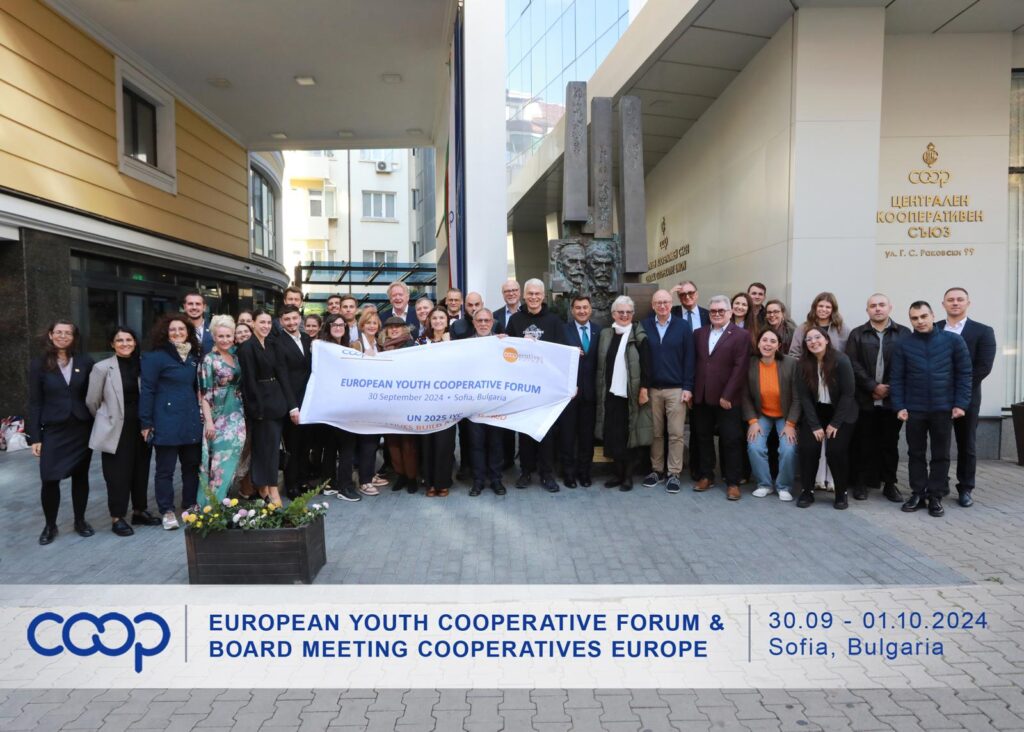
Support from Cooperatives Europe has so far enabled Rosatelli and Delabie to contribute time to the administration of the network as part of their paid roles, and has also enabled the network to gather at events such as the European Youth Cooperative Forum in Sofia last year.
“If we formalise our relationship with Cooperatives Europe a bit more, we could explore asking our members who are particularly willing to support us for a fixed, even symbolic sum. This is what happens at the level of the International Cooperative Alliance, for example, with the youth committee – the budget is limited, but it’s there, so even a symbolic contribution, I think would give us a bit of legitimacy.”
As the YECN has developed, there has been some key learning along the way, says Delabie.
“One of the biggest lessons was, don’t make it too complicated. The previous YECN did a fantastic job at trying to formalise, and they did a lot of work on things that are very unsexy, statutes and rules and how it works. But I think they, from what we were told, got lost a little bit in the details – and that’s where you lose members who cannot all be involved in that.
“The conclusion was, you need to get a structure, you need to formalise in a way, but you need to find a balance between not making it too complicated and making it functional.”
The second learning was that meeting in person is “absolutely essential”.
“It’s about identity and coming together as a group,” says Rosatelli.
“We’ve seen it in Sofia, I have personally felt much closer to the people who were there. Since then we’ve been working better because we know each other better.”
Another issue they are still grappling with is how best to integrate the different types of network members.
“The YECN is sort of like two hearts and two souls,” says Rosatelli. “It has members from these structured apexes – big, sometimes national organisations and networks – and then it also brings together and connects young co-operators that are just now founding their own co-operatives, who might not even be aware of or connected at all to the other levels of the international movement.”
This issue brings both challenges and benefits, says Delabie. “It’s definitely a balance to find out how to involve both of these types of members. It’s exciting because you want to have people who are from very different backgrounds – but it does require a bit of organisation.”
The YECN conducted a survey to find out more about the network’s members and their experiences. One member reported feeling that the network, as well as the co-op movement in general, was an “island of sanity”, where values are shared.
Another described their vision for the future of the co-op movement and the YECN’s role in it: “In ten years, I envision the co-operative movement in my country as a vibrant and integral part of the economy, with widespread adoption across various sectors, from agriculture to technology, and marked by a strong network of thriving, member-driven enterprises that prioritise sustainability and social impact.
“The Young European Cooperators Network can play a crucial role in achieving this vision by fostering innovation, providing education and resources to emerging co-op leaders, and facilitating collaboration among young co-operators to share best practices and drive the movement forward.”