What could credit union members want from their credit unions in the future? This was one of the main questions explored at Swoboda Research Centre‘s November conference in Manchester, which gathered over 100 credit union leaders and practitioners.
In the morning session, participants heard from Prof Karen Elliott from the University of Birmingham, who had some tips for credit unions set on embracing technological innovations. She encouraged credit unions to “stretch beyond automating what we are already doing”, conduct risk assessments as part of their digital transformation journeys and build from scratch working with more agile tech companies. Credit unions should also take into account that members and staff will have different technological readiness levels, she warned.
In another presentation, Dr Leda Glyptis, an Incuto advisor, discussed the technical challenges credit unions face, including the fact that the technology many of them use was not built or designed for them or their needs.
Any cloud-native service provider is cheaper because API-first, cloud-native architecture is cheaper to run, she said. While banks use legacy technology, some of which dates back to the ‘70s, credit unions do not have to do this.
“Legacy technology is expensive,” she said, telling credit unions to ask if their vendors are using best-in-class technology. She also advised them to leverage their collective bargaining power, as a movement, and check if they are paying for more than they are using.
“Each of you, individually, may not be the biggest buyer of these vendors, even the biggest ones,” she added. “But collectively, you represent a huge part of the financial services. That collective bargaining, all of a sudden, makes you a much more powerful buyer.”
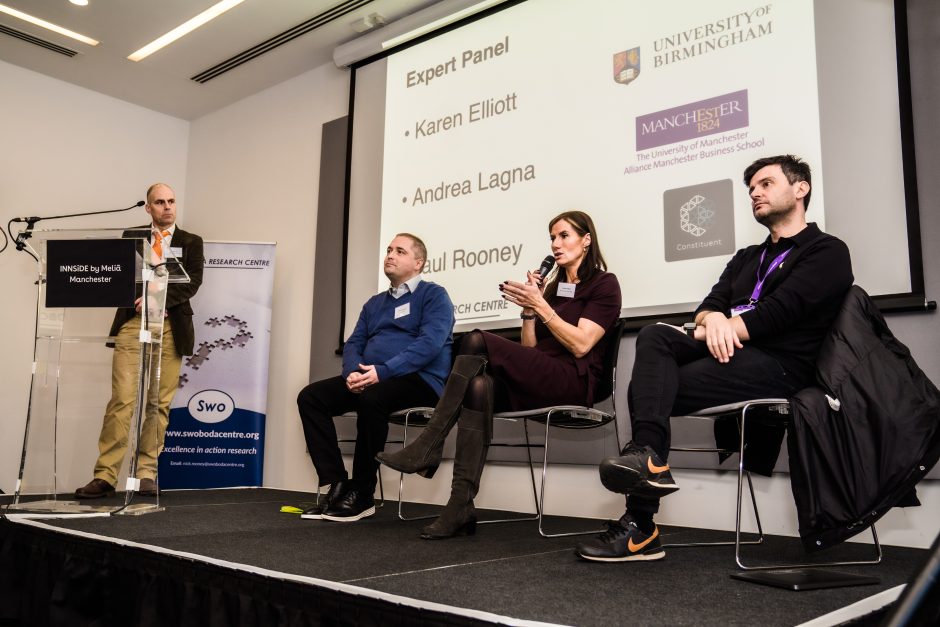
Elliott also sat on a panel of technology experts, who shared their views on how credit unions could get ahead of other financial providers while continuing to serve their members.
Assistant Professor Andrea Lagna encouraged credit unions to maintain their community focus and mission as they evolve on their powerful digital transformation, making sure they do not drift away from that mission of serving members and communities.
Consultant Paul Rooney told credit unions to learn from the mistakes of the past. “Tech will only take you so far”, he warned, adding that sometimes credit unions can get too carried away with technology and forget about the business. “Technology is only an enabler, the bigger picture is the business change,” he said.
In another panel, four credit union CEOs sought to apply the discussion to live business strategy.
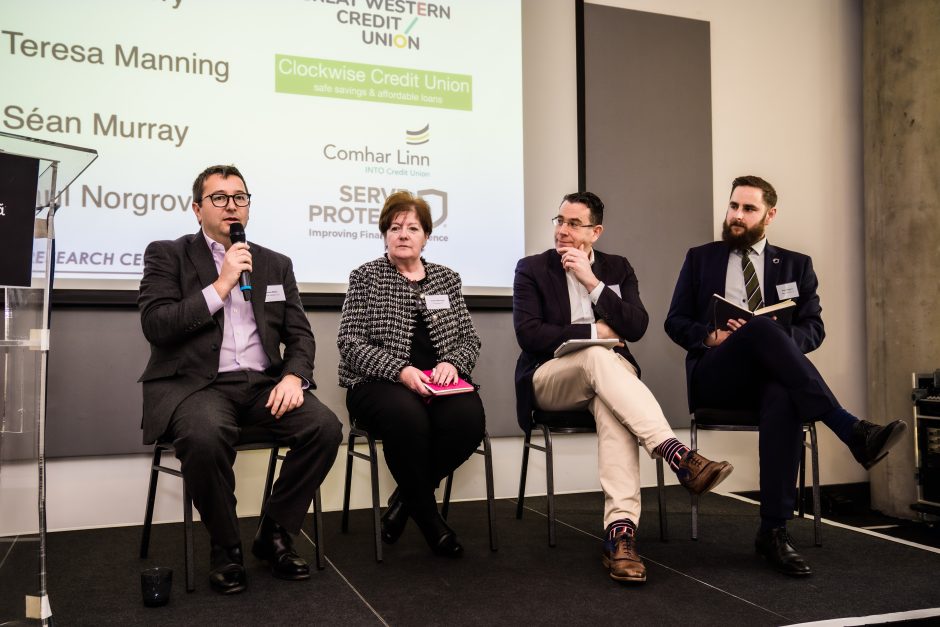
James Berry from Great Western CU shared his credit union’s digital transformation experience, adding that the key to this was building a culture focused on how to continue innovating.
Teresa Manning MBE from Clockwise CU described her credit union’s decision to focus on digital transformation, on the back of the failure of the National Credit Union Expansion Programme. As part of this, they built a cloud-based platform which includes everything they would want.
Séan Murray from Comhar Linn INTO CU in Ireland emphasised the need for credit unions to invest in digital services to be able to compete with fin techs such as Revolut.
Paul Norgrove from Serve & Protect CU in the UK warned that digital transformation is part of the strategy but should not be an end in itself. Credit unions need to be careful about being commercially sensitive and demanding of suppliers rather than regard them as an extended family, he added.
In the day’s final keynote presentation, strategist George Hofheimer provided international insights and observations. A former head of research and development at the Filene Research Institute, Hofheimer described the USA’s credit union system, which, he argued is the largest in the world, with an average US credit union having US$300-350m in assets. As a sector, credit unions have a total of US$1.6trn in loans. If taken as one entity, they would be third nationally, behind only GP Morgan and the Bank of America.
Hofheimer left Filene in 2020 after deciding to go off on his own. He now works as a consultant, advising credit unions of various sizes.
He described the various stages credit unions go through, starting with the survival phase. This is followed by the growth phase when they take some risks, the thriving phase when they start thinking a lot like bankers and the differentiation phase, when they start asking questions about their purpose and take risks to differentiate themselves from competitors. He argued that the co-operative element can illustrate the difference credit unions make if done effectively.
Some of these issues are explored in Hofheimer’s 2023 book Banking on a human scale. His ideas for acheiveing human-scale banking include starting with the consumer in mind, researching using qualitative methods, keeping innovation boring (investing 70% of resources and human capital in the core business, 20% in the new developments and 10% in new ideas that might seem crazy at first), and focusing on people’s needs inside and outside the credit union.
In terms of setting out a successful strategy, Hofheimer told credit unions to ask themselves what problem they are trying to solve; what policies they have in place to solve the problem, and what coherent actions they can conduct to enforce these policies.
Wrapping up the conference, Swoboda’s director of research, Dr Paul Jones, had some key messages for credit unions to take away. He said that while digitisation is the way further and many credit unions are taking steps when dealing with vendors, they need to ask the right questions and demand the right services and not just accept what they are given at a great cost. Other takeaways from the conference were the need for collaboration with vendors, credit union service organisations or other credit unions; the importance of including staff and members in digital transformation journeys and the need to have the right strategy in place.
“Banking on a human scale is what credit unions are about,” said Jones.
Swoboda’s director of development, Nick Money, revealed that collaboration would be the theme of the organisation’s next conference, which will be held in May next year in Ireland.