Co-ops give women a ‘leadership advantage’ absent in shareholder-owned firms, says the CEO of one of the UK’s largest farmer-owned businesses.
The latest data from the Co-operative and Mutual Economy 2025 report reveals that 24% of the UK’s top 100 co-operatives are led by women chief executives, compared with just 9% of FTSE 100 companies.
AF Group CEO, Helen Whittle (pictured), believes the common set of values and principles that are built into co-operatives is the key differential.
“Leading the AF Group has reinforced to me how powerful co-operatives can be in enabling women, and others who bring diversity, to thrive,” she said. “I feel very strongly that co-operatives offer a real leadership advantage for women because our business culture and values encourage people to bring their authentic selves into the room. This enables me to lead with confidence and integrity.
AF Group is the UK’s largest farmers’ buying co-operative, supporting more than 3,000 member farms by procuring inputs and services – such as crop inputs, fuels, machinery and utilities – to save its farmer members money and time.
“My journey into leadership was shaped by both challenges and opportunities presented by the men and women who led me,” said Whittle. “Earlier in my career, in car manufacture and global pharmaceuticals, women leaders were few and far between. I quickly learned that resilience and building strong networks were key to progressing.
Related: Co-ops as gender equality leaders
“Co-operatives are built on collaboration, shared values, and accountability, which naturally creates space for diversity at the table. To me, this inclusive approach makes it easier for women to step into senior roles and be heard.
“Leading a co-operative, you are constantly balancing commercial performance with the needs of your members. One of the most rewarding aspects of my role is showing that leadership doesn’t have to mean conforming to traditional corporate formats.
“I’m not surprised – and perhaps a little proud – that co-ops have a higher proportion of women in leadership roles. This is not the only parameter in which co-ops are ahead compared to other businesses, and it’s one we encourage everyone to catch up with. I hope my journey encourages other women to see the co-operative sector as a place to thrive.”
The leadership advantage offered by co-operatives is reinforced further down the workforce. While women, on average, are paid 12% less than men across the UK, the difference drops to 7.5% within co-operatives. At senior levels, women make up 56% of top-quartile earners in co-operatives, compared with 41.8% across the wider economy.
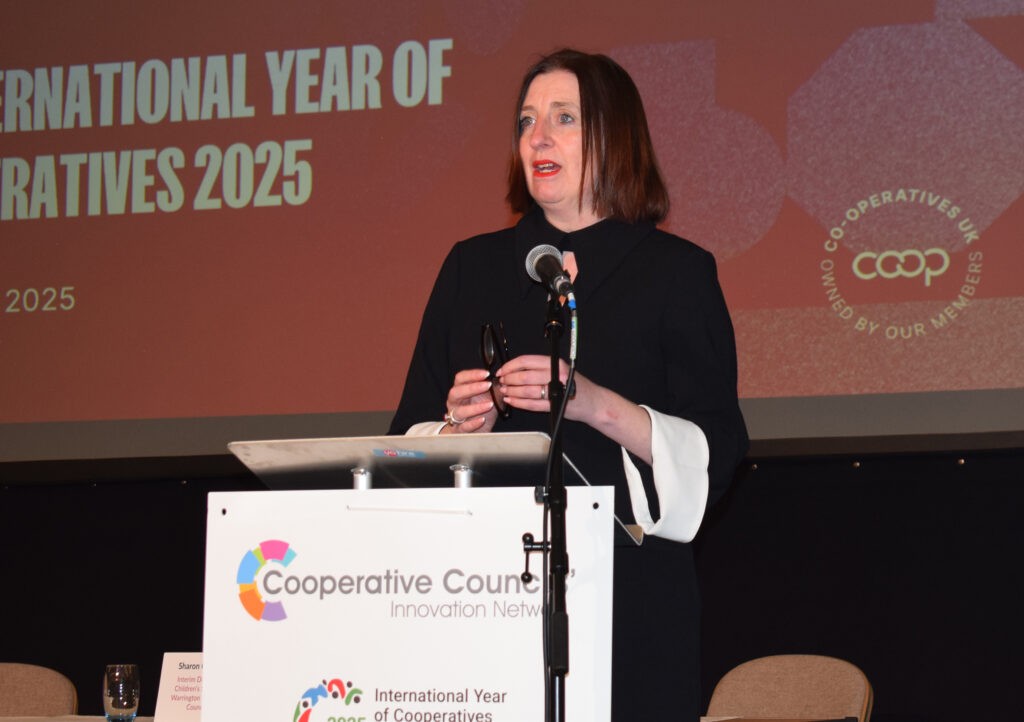
Rose Marley, CEO of Co-operatives UK, said: “As a female leader myself, I know first-hand the challenges women can face in stepping into senior roles. That’s why I am especially proud to lead a movement where co-operatives are showing that business can be done differently. When ownership and purpose are shared, women don’t just find space to participate – they are able to lead and thrive.
“These new figures show that our movement is ahead of the curve: not only narrowing the gender pay gap but also opening up leadership in ways that the wider economy, including the FTSE 100, has yet to achieve. It is lived experience and values-driven leadership that makes the co-operative movement such a powerful driver of a fairer, more resilient economy.”
Larke Adger, is CEO of West Granton Housing Co-operative, a social housing provider in Edinburgh. She believes the positive impact co-operatives have on people is a key draw for women.

“For me, co-operatives allow the perfect hybrid of the dynamism and challenges of operating in a business environment,” said Adger, “alongside the ability to foster the collective wellbeing of local communities.
“I do think that a women’s leadership style can lean towards a more transformational approach to being more motivated to make a difference to individual lives, rather than solely focussing on control or profits.
“This is probably why there tends to be more women CEOs in co-operatives with their flatter structures, values and principles, as opposed to the traditional, hierarchical, blue-chip companies.
“The ‘glass ceiling’ still exists – I come across it every now and again in my working life. It reminds me we still have some way to go in terms of attitudes and misconceptions.
“Co-operatives are about people and with that progression comes hand in hand, so for me, don’t accept the status quo – stay curious, question everything, effect change and make positive differences where you can.”
Read the full 2025 Co-operative and Mutual Economy Report here.