The UK’s co-operative movement gathered in Birmingham last weekend for the annual Co-op Congress, with a focus on ways to grow the movement as an antidote to the multiple crises facing the country.
Sessions took in subjects such as social care, energy, community revival and the raft of government policies based around Labour’s pledge to double the UK’s co-operative and mutual economy.
The event, organised by Co-operatives UK, was sponsored by the Co-op Bank, whose CEO Andrea Melville told delegates at the opening: “There is a real quiet confidence within this sector … deeply rooted and incredibly powerful”.
She said the bank, now back under mutual ownership with Coventry Building Society, sees its history as “deeply intertwined” with the movement, which “has always inspired us to think how we do banking”. Currently, this feeds into the bank’s thinking on how to support organisations – for instance through its Charity and Community account and its Customer Donation Fund.
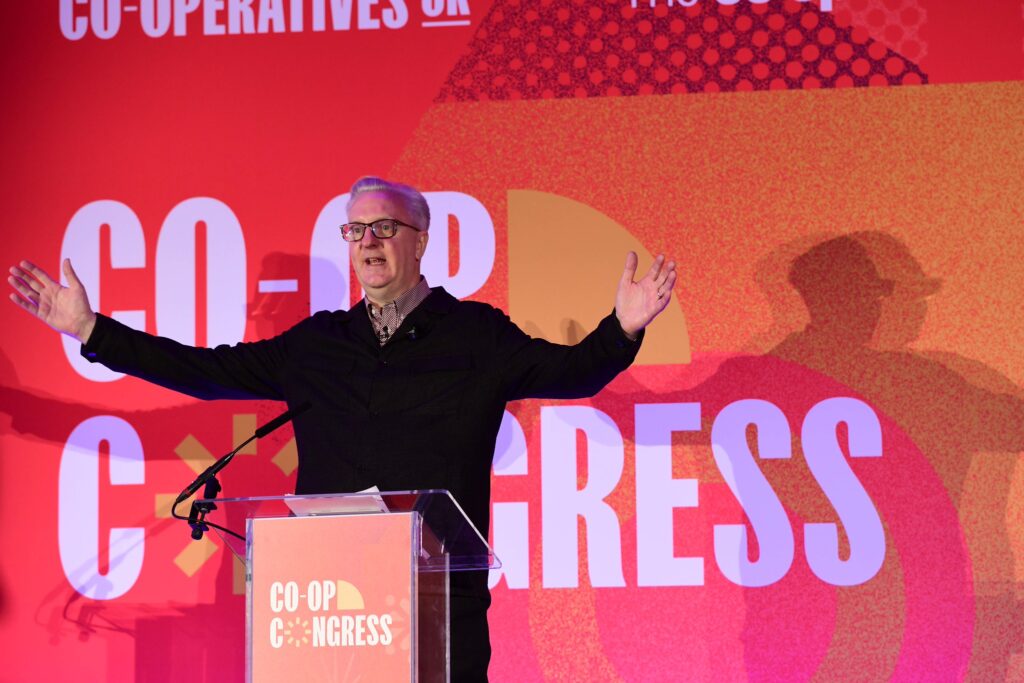
The opening sessions also featured poet Tony Walsh, who delivered his celebration of the co-op movement This Beautiful Idea, before joining actor Julie Hesmondhalgh, Oldham Coliseum Theatre CEO Martina Murphy and Lisa Trickett from Kings Heath Community Centre for a panel on people power
Walsh and Hesmondhalgh both stressed the value of storytelling in bringing about change – with reference to the ITV drama about the postmaster scandal, which featured Hesmondhalgh in the cast.
Hesmondhalgh also led the campaign to save Oldham Coliseum, an iconic local theatre whose threatened closure in 2023 sparked a huge backlash. Locals, backed by artists from all over the country, fought to save the Coliseum not just as a theatre but as a production house, “by and for the people of Oldham”.
This was “a real moment of collective action that came from civic pride,” said Murphy. And after winning their battle, the team now has to decide how to make it a true “people’s theatre”, with back-of-house functions like wardrobe being give a prominent place.
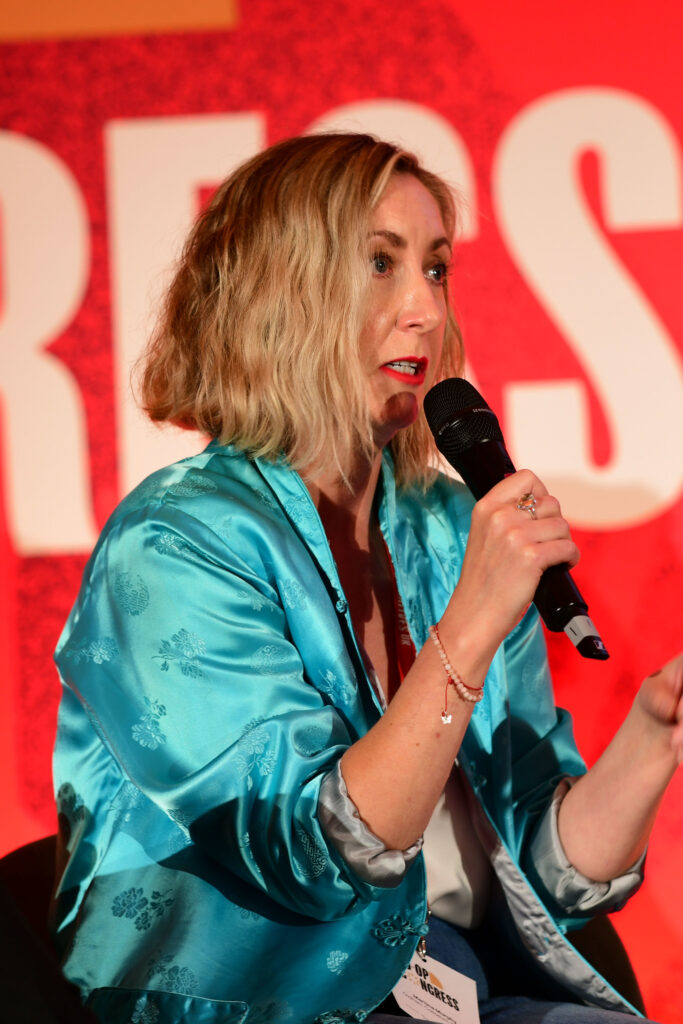
“Oldham doesn’t have a talent problem, it has a retention problem,” she added. “The heart is the producing house, around it is going to be the co-operative. How do we make it a true people’s theatre?”
In Birmingham, King’s Heath Community Centre has been taken into community ownership after falling into disuse and being put out to tender by the council.
Trickett, a councillor for the area, joined the battle to bring the centre under community control, organising a festival to celebrate the potential of the site and enlisting the support of Co-operatives UK, Co-operative Futures and comedian – and local resident – Joe Lycett.
The team challenged the council over the centre’s future and, having consulted local people, launched their share offer. They have already raised £190,000 from 625 investors, hitting their target, and have told council they are ready to take it over.
“It’s not my centre,” said Trickett, “It belongs to all of us. Everything has to go through lens of, in whose interest are we doing this?”
That means being strict on governance and transparency, she said. It is also time to push the benefits of the co-op model through such ventures.
“The extractive economic model is responsible for climate emergency,” she added. “It’s failing but those who benefit from it are determined to hold on to it.”
But many people – especially those who have lost agency and amenities through austerity – are keen for a change, she said, and there is a need to reconnect with them. Ventures like the King’s Heath centre are one way to do this, by bringing a diverse community together.
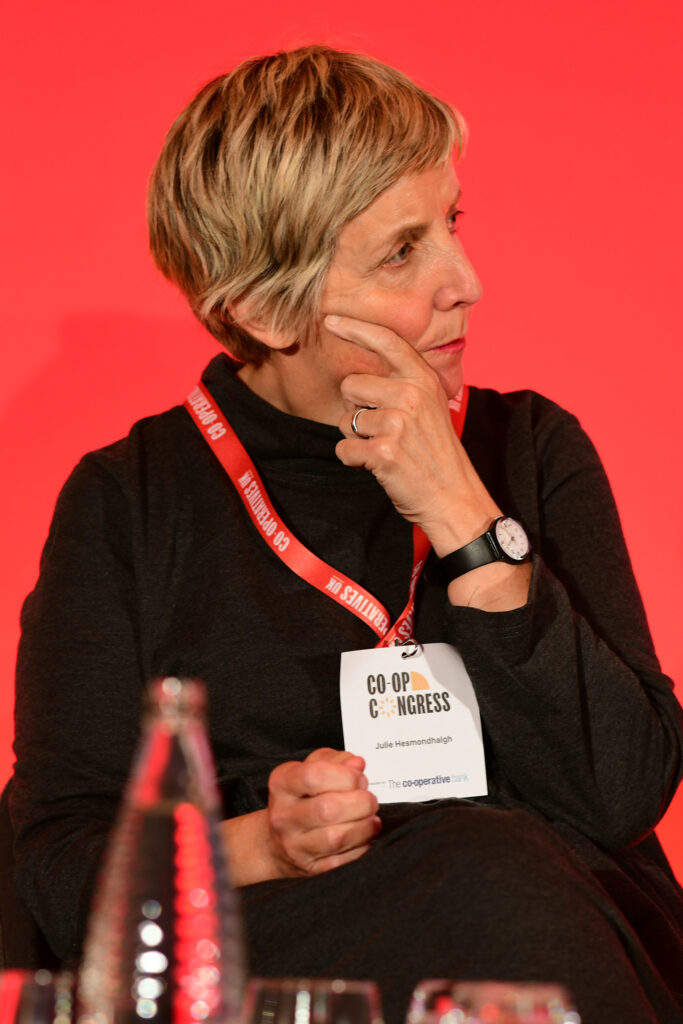
Hesmondhalgh agreed. “We’ve been told there’s no other way of living,” she said, “We always having to go cap in hand to philanthropists, businesses, the Arts Council, politicians – it’s disempowering.”
Community-led rescues like the Oldham Coliseum and King’s Heath are a way to put the power back into the hands of the people she added. “It gives hope and inspiration.”
Walsh suggested doughnut economics as an alternative model. “There’s some stuff capitalism does well, some things the state and charities do well, but also the commons can do some things better than anyone else,” he added.