The issue of youth involvement in co-operatives isn’t new – and the problem has never been that young people aren’t interested in co-operatives; it’s that co-operatives aren’t built for them to participate meaningfully.
The co-operative movement prides itself on democratic ownership and inclusivity, but for many young people, the door remains closed. This article will cover three key flaws I have personally experienced and observed as someone entering the movement. I believe the issue is not a lack of interest from young people, but a set of structural barriers that limit who can engage, how they engage, and whether their voices genuinely shape outcomes.
The first and largest barrier to youth participation in the movement is visibility. Dr Jonathan Deacon, professor of marketing at the University of South Wales, observes that business is increasingly “being driven by Generation Z of consumers who are looking to consume more ethically and consciously.”
This is something that co-operatives excel in. However, many young people are unaware of this due to a lack of targeted marketing, with many co-operatives relying on legacy success and brand consciousness of long-term consumers. Retail co-operatives in particular appear to underinvest in youth-targeted national campaigns and digital channels where the marketing clearly puts young members and their movement participation at the forefront.
Related: Young European Cooperators Network formalises at its General Assembly
Many co-operative youth groups or committees have independent social media presences and little crossover with the parent society’s main social media platforms or the wider co-operative movement. This has resulted in many co-operatives feeling invisible or irrelevant to young people, as they do not see their demographic being represented. Awareness is not neutral; it shapes who even gets the chance to participate.
Participation is not just an issue for young people looking to get involved in the movement; engaged young members also face bottlenecks. Youth boards, panels, and delegate roles are few and far between. Delegation fees often force societies to focus on a few key individuals to attend events, again leaving young people on the sidelines.
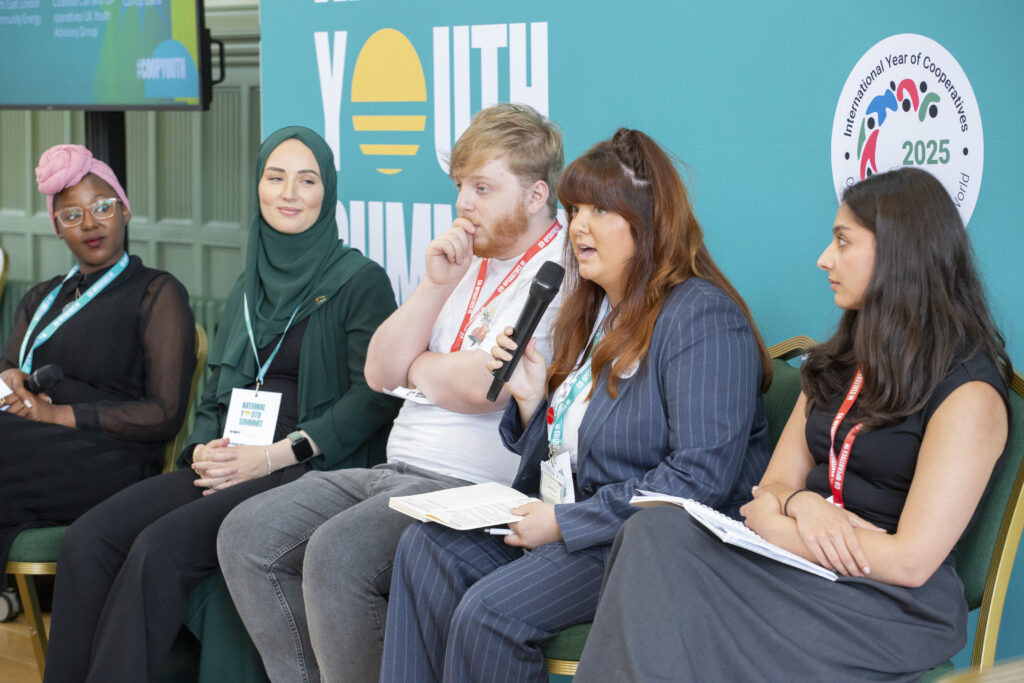
Main image: Heather McKay at the 2026 Co-op Retail Conference (Image: Co-operatives UK / Robin Mitchell Photography)
Young people, despite dedication or interest in the movement, have limited social capital due to inexperience, often leaving young members overlooked and blocked from elected roles. In my opinion, where possible, any co-operative attending an event – whether that’s Co-op Congress, the Worker Co-op Weekend, the Co-op Party conference or any other organised gathering – should prioritise having at least one young delegate, as this brings in new voices, perspectives, and a more balanced conversation.
It also helps young people looking to embed themselves in the movement build up experience and social capital. As a result of these issues, the co-operative movement becomes unintentionally exclusive, creating a closed pipeline in which access is limited, and participation cannot be meaningfully democratic.
The final key barrier observed is the perceived gap by young members between performative and meaningful participation. A common issue across multiple retail societies, for example, is the framing of youth roles as ‘engagement’, a term which often implies a lack of real decision-making power, accountability mechanisms, and clear, measurable impact. \
There is a known difference between consultation, co-production, and governance, but for many youth roles, this line is blurred, leaning towards consultation rather than democratic ownership, leaving young people unsatisfied.
Democratic member control should apply to youth, too. The conversation on youth engagement is ongoing within the movement and is an agreed-upon issue that requires solutions; however, without changes beyond a youth group, perceived performative inclusion will continue to undermine the movement’s credibility. Young people do not want to feel excluded from the main table, but have their voice heard and genuinely counted.
So what can be done? I believe there are goals that can be collaboratively and co-operatively moved towards to help break down some of these barriers and reduce the gap between the current movement and young members.
Related: UK’s co-op youth gather for national summit
Firstly, the movement needs to invest in visibility. Promoting the co-operative model where young people frequent and marketing to them in a relatable way with youth-focused campaigns will not only educate but also demonstrate explicit examples of the impact young people have in the movement.
Secondly, there needs to be an increase in the number and diversity of roles. We need to open doors for young members and support their development throughout their co-operative journey, rather than focusing on those who already have experience in the movement or in business and governance as a whole.
Finally, we need to embed meaningful power in everything we do as a movement, with a defined and visible influence for young people by young people, and help build progression pathways into governance at a higher level.
In my view, the problem is not youth disengagement; it is structural exclusion in terms of visibility, access, and power. The co-operative movement cannot claim to be future-facing if young people are excluded from shaping it.
Young people can be future co-op leaders if we enable them today.
Heather is currently studying International Business at Edge Hill University and sits on OurCoop’s membership and community council