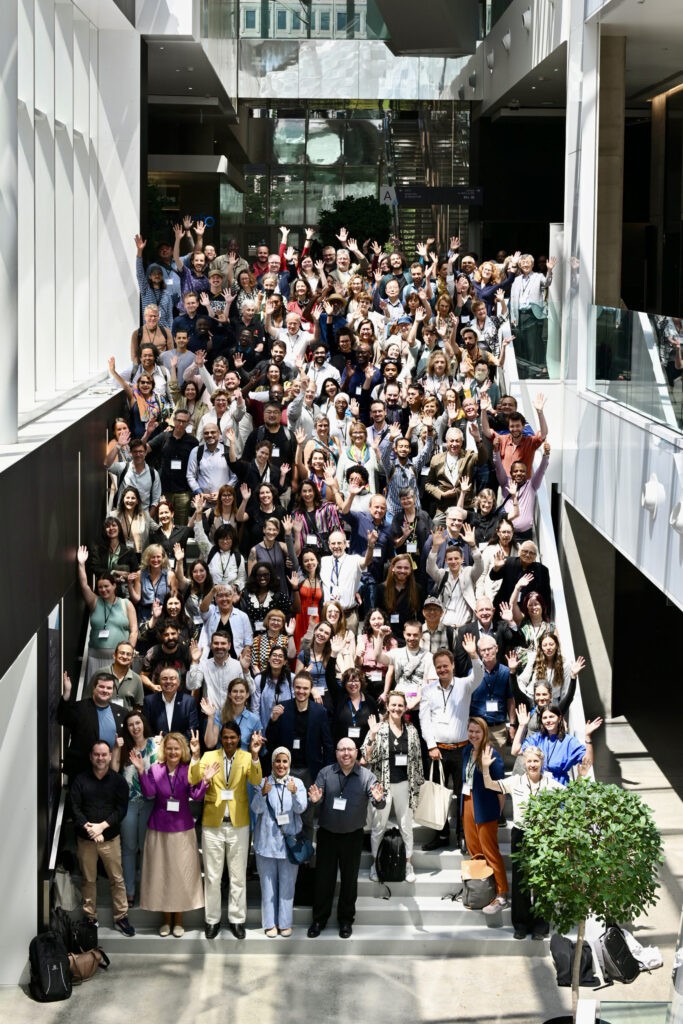
Nearly 350 people gathered in Montreal from 7-11 July for the ICA CCR Global Research Conference – Intercooperation for our common futures.
This fifth global research conference, held during the UN International Year of Cooperatives, was hosted by the Alphonse and Dorimène Desjardins International Institute of Cooperatives (IICADD), which is celebrating its 50th anniversary this year.
The latest co-operative research
Participating in the World Research Conference on Cooperatives means stepping into the latest and most advanced research on co-operation. It features researchers from Africa, Asia, Europe, and the Americas, and approaches as diverse as the number of co-operatives and their members. It is through the diversity and uniqueness of the issues encountered that co-operation and the research surrounding it emerge.
Seventeen research areas were selected for the conference, including agriculture, the circular economy, co-operative governance, ethics; innovation through inter co-operation, renewable energy communities and co-operatives, and reporting on co-operative sustainability.
For each two-hour session, participants could choose one of seven or eight presentations, a difficult selection given the variety and depth of the topics.
Several co-operative visits also provided an opportunity to discover the Centrale Agricole, CultivAction, Coop Caus, and the Maison de la coopération du Montréal métropolitain.
All images: IICADD and Voltaic
A place for the next generation of researchers
The prelude to the conference was dedicated to young researchers. “We want people who do research on co-operatives to be able to have a career in academia. That’s important,” said Rafael Ziegler, director of IICADD and organiser of the event.
The young scholars also drafted a manifesto for the next generation, which reflected on research practices and the obstacles encountered. “Co-op practice is central” added Ziegler, “but it’s also important how research can complement what cooperatives are doing, and for this we need research methods for working with co-ops”.
Related: The fight to get co-operation on the curriculum
A collection on research action, and on education, was launched on PortailCoop during the conference, he added.
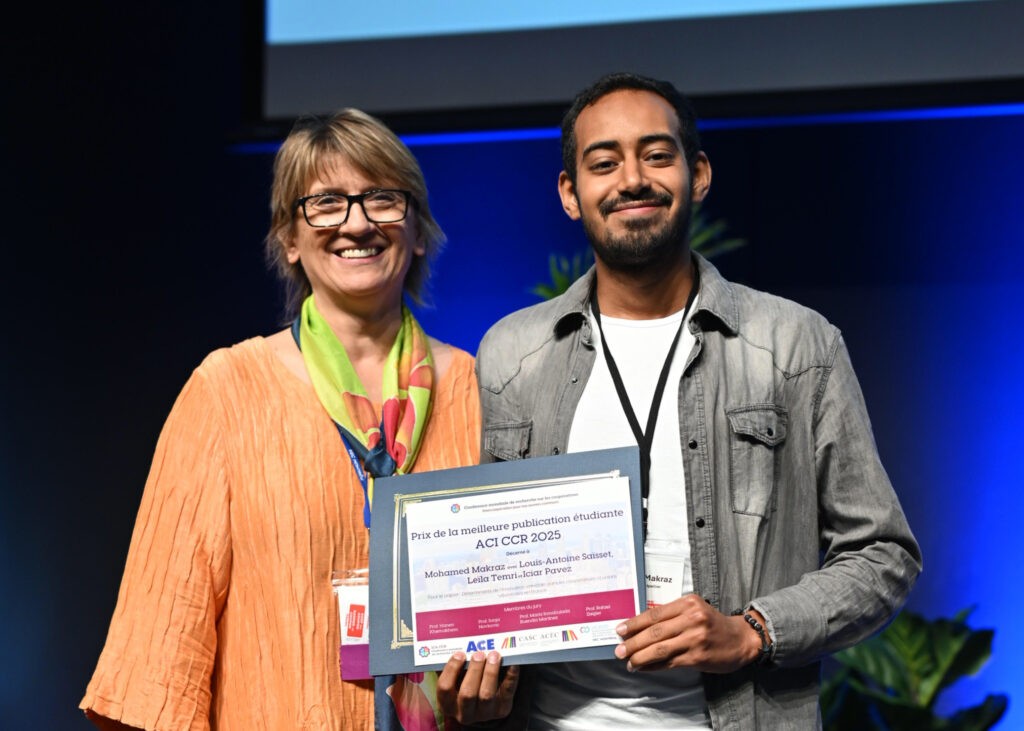
During the conference, awards were presented to researchers. “It was moving to receive the award for best student publication,” said Mohamed Makraz, a doctoral student at the Institut Agro Montpellier in France, who submitted a paper on the determinants of varietal innovation adoption in French wine co-operatives and co-operative unions.
A meeting place for co-operation
“Being able to exchange ideas, establish relationships, and renew them: it feels good to talk directly in person,” said Rafael Ziegler, explaining why this type of event is important. “Even in Quebec, some people reconnected during the conference. So it’s not just relevant for international relations.”
“I’m delighted to have the opportunity to come to Montreal again, because it’s a beautiful city, and Quebec is a very welcoming, dynamic, and emblematic place for co-operatives,” said Maryline Filippi, professor of economics at Bordeaux Sciences Agro and associate researcher at the Institut National de la Recherche Agronomique in Paris.
“With more than 300 participants,” said Louis-Antoine Saïsset, lecturer in finance at the Institut Agro Montpellier, “we can connect with people from all over the world. It’s very enriching to meet well-known authors and researchers, as well as others we didn’t know at all, and to make encounters and connections we never imagined.”
Call for papers
The conference was organised in partnership with the Canadian Association for the Study of Cooperation (Cacs) and the Association of Cooperative Educators (Ace), which took the opportunity to hold their annual meetings.
A workshop aimed at developing an international network for Indigenous co-operatives, organised by Arctic Co-operatives Limited and the Fédération des coopératives du Nouveau-Québec (FCNQ), was also held on 7 July.
Three publication opportunities were launched at the end of the conference: a special on Pushing forward the cooperative movement: managing new global and specific challenges, one on co-operative sustainability reporting.
In addition to the co-op tours, the conference was organised as an eco co-operative fair trade event, with catering provided by the HEC Coop with the support of Retournzy Coop to avoid plastic.
To revisit the programme and presentations (in English, French and Spanish) as well as the thematic collections on education and action research launched at the conference, visit PortailCoop