This article was originally published in Non Profit Quarterly and has been edited for length. It was written by founder of the Center to Support Immigrant Organizing (CSIO) and the Center for Cooperative Development and Solidarity (CCDS) Luz Zambrano, with the considerable research assistance of Ann Philbin, who conducted the initial interviews and wrote the first draft. Read the original article here
In the United States, we are living in very frightening and enraging times. This fear explains why some people included in this article are identified only by their first names.
Contrary to media portrayals, immigrants are often agents of transformation. Such is the case with immigrants actively involved in two community-based organisations in Greater Boston. One of these, which I helped found and where I currently serve as general coordinator, is the Center for Cooperative Development and Solidarity (CCDS) in East Boston. Another is Comunidades Enraizadas (Rooted Communities) Community Land Trust (CECLT), in nearby Chelsea.
There is an untold story of immigrants in the United States. In East Boston and Chelsea, it centres on connection and commitment to others.
CCDS and CECLT have their origins in responding to traumatic external economic events. For CECLT, that was the wave of foreclosures that took place during the Great Recession; for CCDS, it was the gentrification and displacement that followed.
In both periods, neighbours were turned out of their homes, lost jobs, and struggled to feed their families. Immigrants in East Boston and Chelsea worked to help one another, to share what we had, and to send the message that we were not alone, that we needed each other not just to survive but to create a world where we all can have dignified and happy lives.
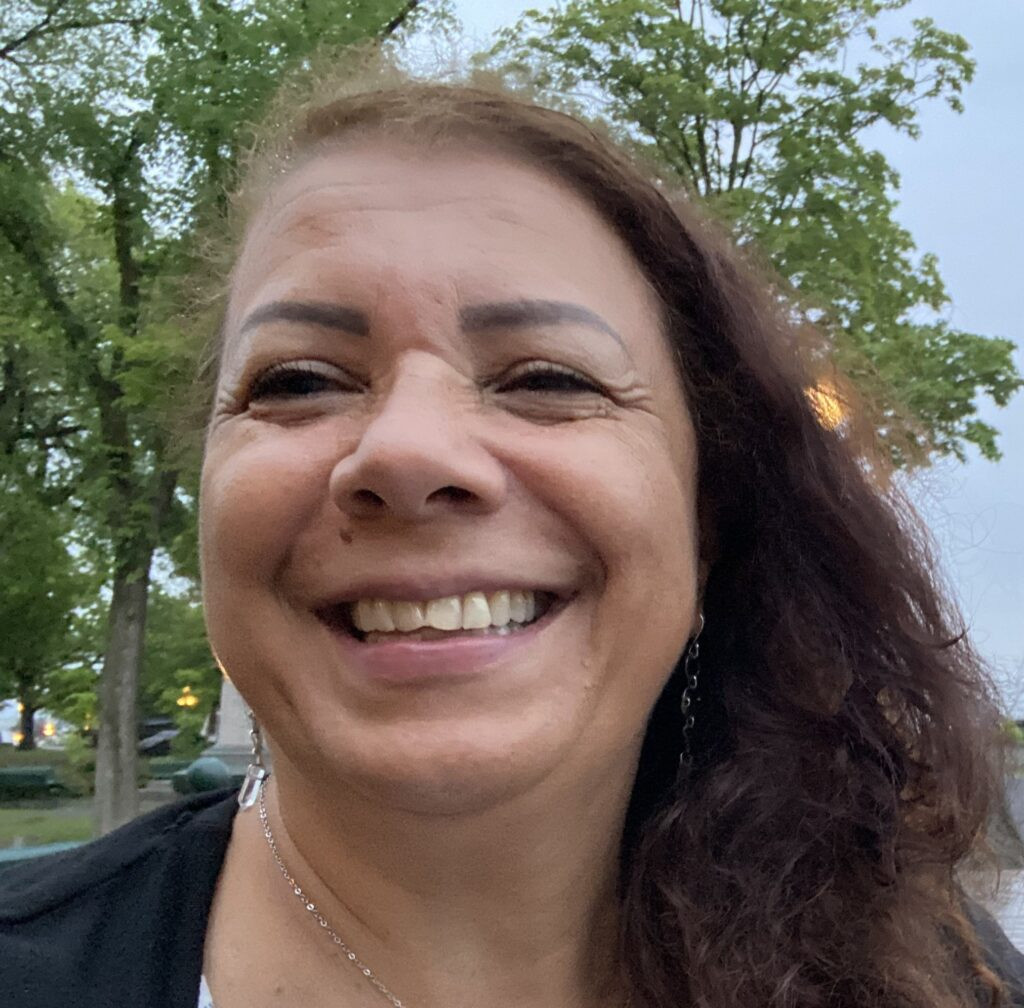
There is an untold story of immigrants in the United States [that] centres on connection and commitment to others.
Each organisation contains people, a vision, and a community. At CCDS, we are rooted in an ethos of co-operative values such as mutual support, respect for community, solidarity, equity, and the profound commitment to leave a better world for the new generations. We aim to create a path that is led by love.
What does “leading with love” mean? For us, it means that the pain and needs of one are the pain and needs of us all. That is reflected in the way we treat one another and look for solutions together, just like we are family.
The mission of CCDS is to provide “educational, technical, financial, human, intellectual and organisational support to groups of people in and around East Boston, mostly low-income immigrants, to explore the creation of worker-owned co-operatives as a vehicle to develop economic and social alternatives.”
Related: Immigrants facing gentrification in Boston speak the language of co-ops
We say that worker co-operatives are about far more than co-op development. Diana, a member-owner of the developing Wonder Kiddos childcare co-op, told NPQ that within the ecosystem of CCDS, “you know people care about how you are doing, not just economically, but emotionally … we learn from one another so we can build the world we want.”
So much of immigrant organising in the United States is about building a culture that mirrors our own cultures, ways of being, and vision for our lives.
CECLT originally set out to protect immigrant homeowners from foreclosure, and the initial dream was to build a housing co-op. But after much information gathering and learning, the group decided to create a community land trust that would own the land under multiple homes.
As Ana Vanegas-Rivera, current programme coordinator of CECLT, explained to NPQ: “The whole community is the owner of the land, but the CLT administers it. So, the person who buys housing is not buying the right to the land; it is always in the hands of the community.”
Vanegas-Riveras elaborated on the link between housing justice and community building: “We are not here to provide homes and see how many units we can get – we are here creating community, and that means finding the link that unites us all.”
The culture of supporting one another and building a sense of family – there during good times and bad – is part and parcel of our work at CCDS as well.
Sayra Pinto, a longtime supporter and board member of CCDS, who grew up in Chelsea, told NPQ, “The story of the community in East Boston and Chelsea for the last 40 years is the story of the endurance of a message about connection. The message is, ‘We are all in this together.’ Everybody’s business is their business; every kid is their kid.”
For Pinto, “The way you do the thing is the thing – that is the culture. You need to create
a shared culture and build consciousness through connecting people to that way of seeing the world.”
In the United States especially, but in our home countries as well, capitalism has conditioned human beings to be individualistic, to compete against each other. This comes out immediately; we learn it from childhood.
Wilson, a Colombian immigrant who was an early supporter of CCDS and now serves on its business support group (grupo de apoyo in Spanish), acknowledged that his goal when first migrating to the United States was to “make money, and then return to my country. I was not thinking of anyone else.”
Diana, the childcare co-op member, expressed a similar experience: “I was a very individualistic person. I didn’t like sharing with others. I thought I could do everything alone.”
How can culture be transformed? No one organisation can change a culture, society, or economy, but a group of organisations can. This is the central insight of what is called the ecosystem approach.
The message of both of our groups is similar: We are not alone, and if we work and live in community, supporting each other, then we can have what we need and thrive.
Immigrant groups like ours are very impactful. But the work isn’t easy. Some of our challenges include organising against the culture of capitalism, having to learn as you go, and financial pressures.
Often, during the “startup” phase, those working to launch co-ops must have other paid work to support themselves and carry out the co-op building effort on their own time. The goal, however, is not profit, but rather to build a solidarity economy and a co-operative community with enough resources to have a happy, healthy, and fruitful life for this generation and the ones to come.
The community land trust also faces severe financial constraints. As Vanegas-Rivera observed: “If we had enough resources, we could buy directly from the market. Then, we could get homes to those who are most in need. But we don’t have the money now – and have to form other partnerships in order to do this work. That is a big barrier.”
When CCDS began, the hope was to offer people the chance to transform themselves, their community, and the world around them. Now, 10 years later, we have started to see results, as individuals take leadership roles in our team, committees, and co-ops. Their voices and contributions are respected in our community. And we can begin to share our knowledge, experience, and the results of our struggle with confidence.
In the context of the brutal repression that the current presidential administration is perpetrating on immigrant communities today, the work of groups like CECLT and CCDS is all the more important and hopeful.
The message of both of our groups is similar: We are not alone, and if we work and live in community, supporting each other, then we can have what we need and thrive. But in this message is also a warning. We know that not just our two organisations, but the world at large must learn to survive in community or perish. Let us hope that this message resonates and that the circle of solidarity grows ever larger.