The government has launched its Local Power Plan, which pledges up to £1bn to “grow local and community-owned clean energy across the UK”.
The scheme, welcomed by organisations including Community Energy England and the Local Government Association, promises “funding, hands-on support, better business models and policy ambition and regulatory reform so that local projects can be developed at scale across the UK”.
As the government works towards its 2030 Clean Power targets, and policymakers and campaigners look for ways to ensure a more inclusive energy transition, the plan, says the government, will ensure that ”communities directly benefit from the energy they help to produce”.
The plan includes direct funding, “to overcome the barriers of access to finance and funding certainty. This will include support to help projects become financially robust and ready for investment, with the potential to mobilise private capital and, where appropriate, enable future refinancing or risk‑sharing through partners such as the National Wealth Fund to help reduce costs and improve long‑term viability”.
Ministers will also put in place a team of experts “to help communities plan and build their projects”, alongside support from Great British Energy (GBE) with capacity-building, upskilling and building expertise and resource within community groups.
Related: How a London energy co-op is trying to bring power to the people
The government also promises “a long-term plan to attract more investment into local and community energy by developing repeatable business models and exploring new ideas such as aggregation.
Policy and regulatory changes will also be made, says the government, “to foster an environment that promotes the growth and success of local power”.
The plan aims to support over 1,000 projects, in a mixture of locations, size, and technologies.
Other commitments include making the market more accessible for community energy so it can earn reliable income to enable long term growth; consulting on mandatory shared ownership by communities in the vast growth of clean energy generation; working with partners to help community energy projects connect to the grid; and reforming the planning system to better enable ‘community-led’ initiatives.
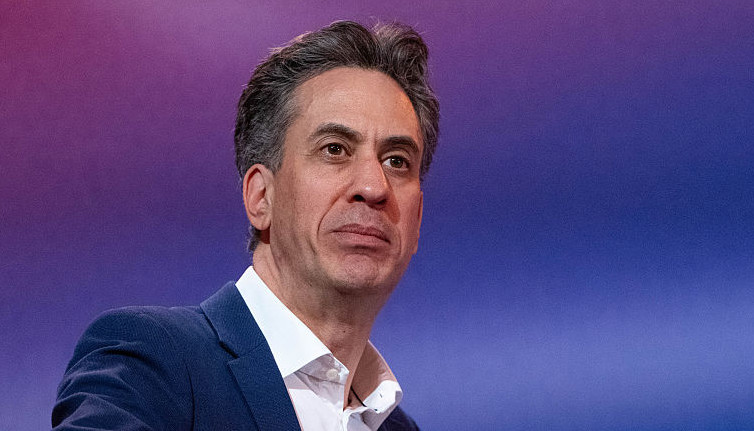
Ed Miliband, secretary of state for energy security and net zero, said: “This is about working hand in hand with community groups, local authorities and the devolved governments right across the UK to realise a bottom-up vision not just of publicly owned power, but of power owned and controlled by communities themselves.”
Paying tribute to co-op and community ownership, he added: “Ownership is a transformative tool to build the wealth of local areas – giving people a stake in the places they live and generating pride, respect and local prosperity that can’t be dismantled.
“We see that in community-owned pubs, leisure centres and libraries; in the UK’s thousands of co-operative businesses and its proud co-operative movement; and in the pioneering community energy projects we already see across Britain, from Lawrence Weston in Bristol to the Isle of Skye Cooperative in the Hebrides to Westmill in Oxfordshire to the Geraint Thomas Velodrome in Wales.”
Pointing to other countries where community energy “is already the norm”, Miliband noted that more than half of wind in Denmark and half of solar in Germany is citizen-owned.
Related: Sector report on UK community energy highlights role of co-ops
“But despite its huge potential,” he added, “for too long community energy in this country has been held back by a lack of funding, advice and government support”.
Miliband called for a devolved energy future, not built from Westminster “but place by place, community by community, as we get off the rollercoaster of fossil fuel markets in a way that truly takes back control for the British people”.
He said the Local Power Plan sits alongside the Pride in Place programme, the Community Right to Buy and our government’s commitment to double the size of the co- operative and mutual sector.
The plan has been welcomed by Community Energy England (CEE), which says it is working with GBE to share knowledge and best practice across the sector.
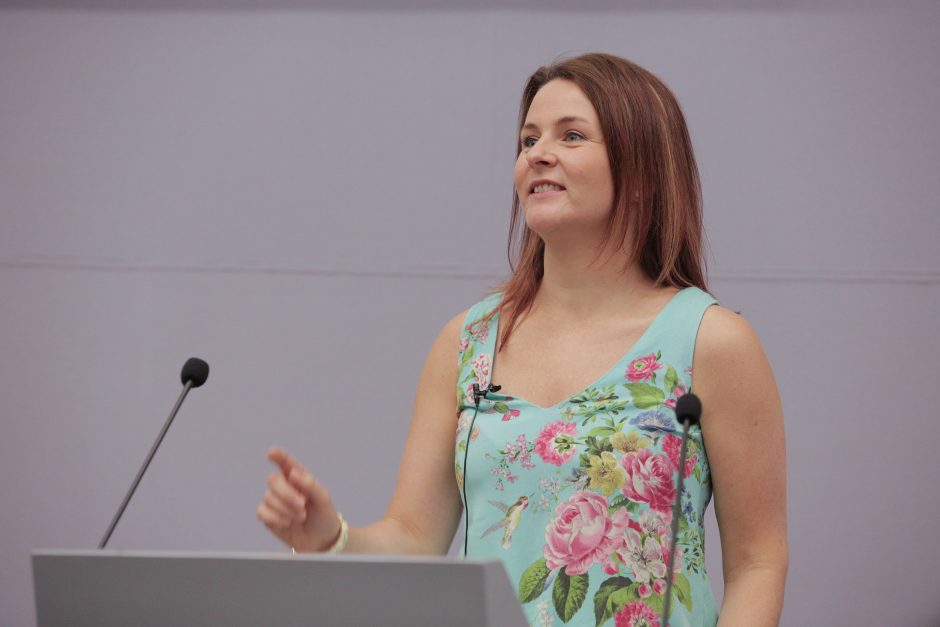
“This is great news for communities across the country,” said chief executive Emma Bridge. “£1bn of investment in local and community energy is a huge vote of confidence in what people can achieve when they’re given the chance to lead the energy transition themselves.
“Community energy delivers far more than clean power – it keeps value local, cuts bills, creates jobs and helps make the energy system fairer. The Local Power Plan shows a clear commitment to putting communities at the heart of our energy future, and we’re excited to continue working with Great British Energy and the government to turn this funding into real projects on the ground as quickly as possible.”
Bridge said the community energy sector is committed to developing smart local energy systems’ (SLES) – “holistic projects that do ‘more than generation’, supporting energy saving and demand management, meeting the challenge of low carbon heat and transport, tackling fuel poverty and building retrofit.
Related: Rescoop musters support as it campaigns for inclusive EU planning
“The Plan commits to exploring the potential of ‘Smart Community Energy’ as it renames SLES, and what benefits it can offer, including cost-saving to the wider energy system.”
EnergyAll, which helps communities set up energy projects, said: “The Local Power Plan represents a significant policy development with the potential to transform the landscape of community energy in the UK. The commitment of substantial resources alongside clear intent provides a good foundation for the next three years.
“However, the ultimate measure of this plan will be its implementation. Policy ambition must translate into operational reality: renewable energy projects delivered, and communities tangibly benefiting from ownership.”
Joe Fortune, secretary general of the Co-op Party, said: “For too long, our energy system has been completely dominated by private profit. Communities have faced spiralling bills while billions flow to distant shareholders, even as vital local spaces struggle to keep the lights on.

“That all changes today. Through the Local Power Plan’s record investment, communities will have the opportunity to build, own and benefit from renewable energy. Our movement has campaigned for this ownership shift for decades, and today’s announcement marks the beginning of a new era where communities own the things that matter most.”
Cllr Arooj Shah, chair of the Local Government Association’s Neighbourhoods Board said: “We support the Government’s ambition to back local and community energy and give people a real stake in the clean energy transition. Investment that helps communities co-own generation, cut bills and reinvest returns locally is a positive step.
“We now need clear detail on delivery, funding access and timelines so councils can work with partners to turn ambition into bankable projects.”